Why Agentic AI Is Suddenly Everywhere in Sales
Agentic AI is quickly becoming the new buzzword in revenue circles for a simple reason: it does things, not just answers questions. Instead of waiting for a rep to ask for help or click through a workflow, an agentic system can plan steps, make decisions, and take action across tools and channels with far less hand-holding. Think of it as an AI-powered junior operator that can run a sequence end to end inside your sales automation platform.
Traditional AI assistants mainly respond. You ask for an email draft, they give you one. You ask for a list of accounts, they generate ideas. Agentic AI goes a step further, stitching those steps into workflows: researching accounts, enriching contacts, queuing outreach, and routing follow-ups, all under the rules you define. For sales and revenue leaders, that promises more meetings booked, more qualified pipeline, and less repetitive work on the shoulders of your team.
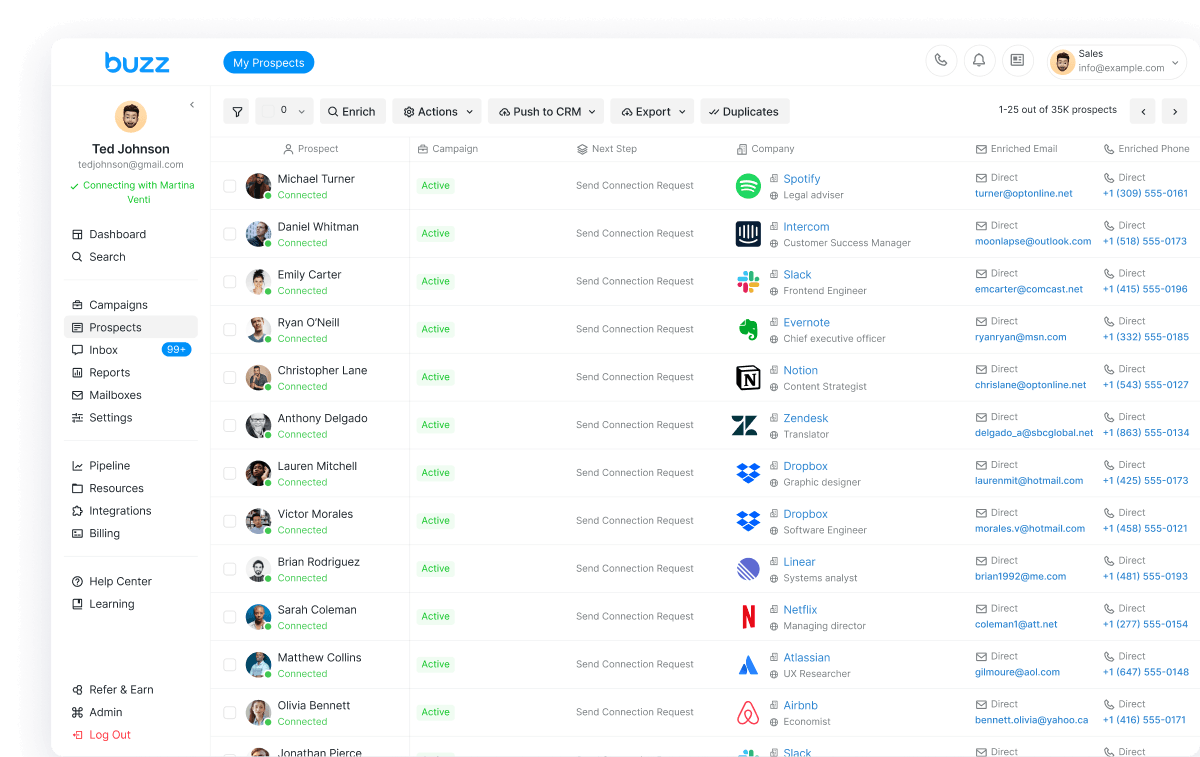
At Buzz.ai, we are leaning into this shift. We are preparing AskBuzz, a coming-soon agentic experience built to live inside a modern sales automation platform, so you can orchestrate multichannel outreach with plain-language requests. For now, we want to help you understand what agentic AI means for your team, where it actually works, and what risks you should watch closely.
Key Trends Shaping Agentic AI for Revenue Teams
The first big trend is the move toward multichannel, end-to-end workflows. Instead of separate tools for research, email, social outreach, and dialing, agentic systems are starting to coordinate all of it. An agent can:
- Research accounts that fit your ideal customer profile
- Enrich contacts with emails, roles, and firmographics
- Draft personalized email sequences and social messages
- Queue call tasks for reps, complete with suggested talk tracks
Second, AI is getting closer to your actual go-to-market. Models are being trained or tuned on your ICP, your messaging, your win and loss patterns, and your CRM history. That means an agent can act more like a junior revenue operator than a generic chatbot, making decisions that match how your company actually sells instead of guessing.
A third trend is human-in-the-loop by design. Agentic AI in sales is rarely about full autopilot. Instead, reps and managers stay in control by approving sequences, templates, or video scripts while the agent handles the heavy lifting around research, drafting, and routing. You keep the judgment, the AI handles the grunt work.
Behind the scenes, the broader ecosystem is shifting as well. CRMs, enrichment providers, and engagement tools are racing to offer APIs that agents can safely call. That connectivity is what makes it realistic for an agentic layer, like the one we are building with AskBuzz on top of Buzz.ai, to orchestrate email outreach, social messaging, and calling tasks in one place.
Practical Use Cases Across Email, Social, and Dialer
Agentic AI becomes real when we talk about use cases your team runs every day. One of the biggest is smarter prospecting and list building. Instead of downloading a CSV from one tool and cleaning it in another, you could have an agent that:
- Pulls potential accounts from several data sources
- Scores them against your ICP
- Enriches contacts with verified emails and roles
- Flags duplicates and keeps CRM and engagement tools in sync
That automatic data hygiene has a direct impact on deliverability and rep productivity. Fewer bounces, fewer bad records, and fewer hours wasted cleaning lists.
On the outreach side, agentic systems can help you run multichannel campaigns that still feel human. For example, an agent can:
- Draft tailored email sequences based on job role, industry, and recent intent signals
- Propose social messages that reference relevant content or activity
- Suggest call talk tracks aligned to the prospect’s stage and challenges
Instead of rigid cadences, the agent can adjust in real time. If a prospect opens and clicks but does not reply, the agent can slow down and change the messaging. If a call goes well, it can automatically create follow-up tasks, trigger a recap email, and log structured notes into your CRM.
Pipeline acceleration is another strong fit. After a meeting or call, an agent can summarize the conversation, draft follow-up emails, and push clear next steps into your engagement stack. When all of this runs inside a connected sales automation platform, the outreach, enrichment, and reporting stay tightly aligned instead of spread across five disconnected tools.
This is the kind of workflow we have in mind for AskBuzz. You could say, "Find me 50 EU prospects for our new offer and launch a compliant, multichannel campaign," and have AskBuzz assemble the target list, propose the emails, social touches, and dialer tasks, then present the full plan for your approval.
How Agentic AI Changes the Day-to-Day for Sales Leaders
Agentic AI shifts what sales leaders and operators spend time on. Instead of building sequences step by step or exporting reports every week, leaders can focus on strategy: refining ICPs, adjusting territories, setting messaging direction, and letting agents operationalize those decisions inside the sales automation platform.
Managers get new visibility as well. Rather than micro-managing daily activity, they can monitor AI-driven playbooks through dashboards, comparing performance across agents, segments, and channels. That frees up time for coaching reps on conversations, not on admin work.
This shift also raises the bar on data quality and process. An agent is only as good as the CRM, enrichment, and engagement data it can see. If your records are messy or incomplete, your AI will operate with blind spots. A tightly integrated sales automation platform helps by giving the agent a single, up-to-date source for email outreach, social messaging, dialer tasks, and activity history.
Reps and RevOps teams develop new skills in this world. Reps learn how to "coach" agents, using clear prompts, goals, and feedback instead of building every asset from scratch. RevOps becomes more about orchestrating tools, permissions, and data flows that agentic systems depend on, and less about manually configuring one-off campaigns.
Risks, Guardrails, and Compliance Considerations
Agentic AI is powerful, but it is not risk-free. The first area to watch is brand and relationship risk. If you over-automate, you can end up with off-brand or tone-deaf messages going out at scale. That is why strong guardrails are critical, like:
- Approved templates and style guides baked into the agent’s logic
- Mandatory approvals for new messaging angles or high-value segments
- Limits on volume and frequency for different channels
Data privacy, consent, and compliance are another major area. Any agent that operates inside a sales automation platform should respect email regulations, regional privacy rules, and do-not-contact lists by default. That means automatically honoring opt-outs, do-not-call flags, and consent indicators before taking any action on email, social outreach, or dialer queues.
There is also the classic AI risk of hallucinations and errors. An agent might misinterpret context or fabricate a detail if it is not anchored in reliable data. To reduce that risk, many teams:
- Ground agents in CRM and verified enrichment data
- Use AI for drafting outreach, not for changing contract terms or pricing
- Require human review on any high-impact communication
Finally, there is operational risk if you turn on too much autonomy, too fast. It is better to start with contained, high-value workflows, like lead research and first-draft outreach, then expand gradually. Pilot groups, A/B testing against current processes, clear KPIs, and regular tuning help you introduce agentic AI without overwhelming your team.
Getting Ready for Agentic AI in Your Sales Stack
Preparing for agentic AI starts with an honest audit of your current outreach engine. Look at your email deliverability, your existing engagement sequences, and your social outreach playbooks. Where are reps copy-pasting the same tasks every day? Where are leads slipping through the cracks after a call or demo?
You will also want to inspect your data enrichment pipelines and CRM hygiene. If an agent is going to research, enrich, and act on your data, it needs to be able to trust what it is seeing. That may mean cleaning fields, consolidating duplicate records, and clarifying which system is the source of truth for contacts and accounts.
Next, design your guardrails-first approach. Decide:
- Which tasks always require human approval
- Which low-risk actions an agent can perform automatically
- Volume caps per channel, per segment, and per rep
- Minimum personalization standards for outbound messages
Finally, keep an eye on what is coming. At Buzz.ai, we are building AskBuzz as an agentic layer on top of our multichannel sales automation platform so revenue teams can move from reactive campaigns to proactive AI-orchestrated outreach. AskBuzz is coming soon, and we are excited for teams to experiment early with agentic AI for lead generation, sales engagement, and data enrichment. The teams that adopt it thoughtfully, with clear guardrails and good data, will pull ahead of those that wait until it is standard.
Drive Predictable Revenue With Smart Sales Automation
If you’re ready to streamline outreach and close more deals with less manual work, our sales automation platform is built to help you get there. At Buzz.ai, we combine powerful automation with data-driven insights so your team can focus on the conversations that matter most. Tell us about your goals and we’ll help you design a workflow that fits your pipeline. Have questions or need a tailored walkthrough? Just contact us to get started.