Why Most AI Lead Gen Feels Smart but Lands Flat
AI lead generation tools promise pipeline on autopilot. Many teams stack them up, hit send, and wait for meetings to roll in. But reply rates drop, reps get frustrated, and leaders still see missed quota.
The core issue is simple: most tools chase volume and speed, not buyer context. They know who to email, but not why that person should care right now or how they want to talk. So the outreach looks clever on the surface yet still feels robotic.
When we say “buyer context,” we mean the mix of timing, role, business priorities, buying stage, and channel preference that makes a message feel like it was written for a real person. In this article, we will walk through how AI lead generation tools often get that context wrong, what it costs your brand and pipeline, and how teams can rebuild outreach around data, thoughtful workflows, and more human messaging.
The Hidden Cost of Context-Blind Outreach
Volume without context does not just miss the mark; it creates risk.
When tools only care about sending more, you get:
- Oversending that leads to spam complaints
- Bounces from bad lists
- Unsubscribes from people who could have been good fits later
Those issues do not live inside one campaign. They pull down deliverability for your whole domain. The emails your marketing team depends on start landing in spam at the exact time you need more pipeline, not less.
Then there is fake personalization. Swapping in a first name, company name, and one line from a bio is not context. Senior buyers see dozens of those messages every day. They know when you only spent three seconds on them.
Real relevance sounds more like: “We saw your team is expanding into a new market, and that usually raises these three problems. Here is one simple idea that might help.” That comes from understanding their world, not just filling in data fields.
There is also a quiet cost that never shows up in a CRM report. Prospects may never reply, but they remember the brand that pinged them with tone-deaf emails all spring. That memory shows up later in:
- Lower response rates on future campaigns
- Fewer referrals and warm introductions
- Candidates thinking twice when they see your company name
Leaders care about brand equity and long-term trust. Context-blind outreach chips away at both.
Where AI Lead Generation Tools Misread Buyer Context
Many AI lead generation tools start with static data. They lean on firmographics like company size, industry, and headquarters and treat that as context. That misses what is really happening right now.
Roles change. Teams get reorganized. New funding comes through. Products launch. Priorities shift after one board meeting. If your data is not enriched and refreshed often, AI will make confident but wrong guesses about who to contact and what to say.
Another common gap is channel preference. A lot of tools still push email-first playbooks even when buyers show they respond better to phone, social outreach, or short videos. Modern buyers leave plenty of digital breadcrumbs:
- Email opens and link clicks
- Replies and meeting attendance
- Post reactions and comments on social
- Website visits and content downloads
If your system does not read those signals, you end up doing things like calling someone who has only ever answered by email, or chasing a cold prospect while a warm account is lighting up your pricing page.
Then there is buying stage. Many platforms group people by persona or industry and ignore where they are in their journey. A curious researcher needs light, educational touches. An active evaluator expects specific answers and proof. A ready-to-buy champion needs clear paths to decision and low-friction next steps.
Running the same aggressive sequence for all three creates a mess: early-stage prospects unsubscribe, and late-stage buyers get bored waiting for you to catch up.
Rebuilding Outreach Around Real Buyer Context
Fixing this starts with better data. AI can only be as smart as what you feed it.
You want data that is:
- Clean: verified emails, direct dials, current roles
- Rich: decision-making level, tech stack, relevant projects
- Fresh: continuous enrichment to catch role changes, new offices, new leaders
When your records stay current, everything gets better: targeting, messaging, deliverability, and rep focus. Reps stop wasting time on dead contacts and start focusing on accounts that match your real goals.
Next, use intent and behavior to guide timing and touchpoints. If someone downloads a playbook, that calls for a value-first follow-up. If they visit your pricing page twice, that is a strong buying signal. If they watch a demo recording, a short custom video follow-up makes more sense than a generic email step.
AI should help you stack rank accounts based on these signals, not only on ICP tags. Let the model say, “These 25 people deserve attention today,” then let your team decide the best way to engage.
AI is great at drafting emails, summarizing account notes, and suggesting next steps. But humans have to own the story. We recommend using AI to propose angles tied to industry trends or prospect behavior, then having reps edit tone, add context, and choose the right ask.
Making Email and Social Outreach Context-Aware at Scale
You cannot scale context if your email system is burning your domain. Protecting deliverability is a strategic move, not just an ops concern.
Smart teams:
- Set sending limits so they do not flood a single day
- Warm up new domains before big pushes
- Track spam complaints and bounce rates closely
Sequences should adapt. If deliverability metrics dip, slow the pace or shift to more value-driven content. If a prospect only shows light engagement, keep touches soft and helpful. Mix insight emails, benchmarks, and invites with direct meeting asks so you do not look like a pitching machine.
Channel coordination also matters. A unified sales engagement workspace lets you see email, calls, social messages, and video all tied to one contact and account. This avoids moments where three reps ping the same buyer with three different stories.
Simple rules help, like:
- Do not call someone right after they spend time on a long resource, send a thoughtful recap email instead
If someone replies on social, adjust the sequence so email steps reflect that conversation
Pause outreach on other channels when a meeting is booked - Finally, treat every touch as data. Track which subject lines, call openers, social connection requests, and video formats work best for different buyer types. Review these patterns often and feed them back into your AI prompts and templates.
- Over time, your system becomes a context engine. Outreach does not just move faster, it gets smarter with each interaction.
- How Buzz AI Helps Teams Operationalize Buyer Context
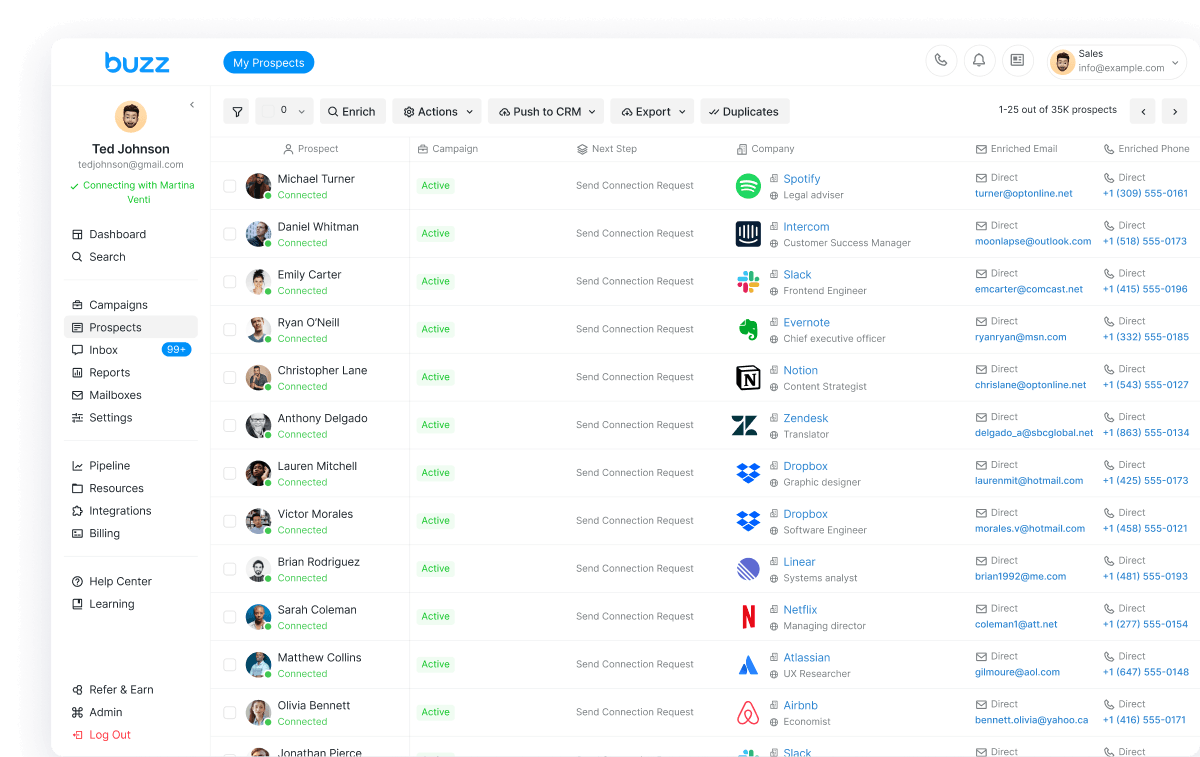
At Buzz AI, our focus is helping teams turn all of this into daily practice. We bring email outreach, social outreach, calls, and video into one sales engagement platform so teams can see the full buyer journey in a single workspace.
Reps can move from identifying prospects to enriching their data to launching multi-channel sequences without juggling a bunch of tools. For leaders, that means clearer line of sight into what is working, fewer gaps between teams, and less software bloat across the stack.
Sales intelligence and AI assistance are built in, so reps are not guessing who to contact or what to say next. AI can help handle conversations, respond to prospects, and book meetings in real time, keeping momentum going without manual back and forth.
Reps stay in control of the strategy and messaging, while AI supports the front lines by engaging leads and making sure opportunities do not slip through the cracks.
When you combine higher deliverability, better timing, and channel-aware outreach, you get better meetings from fewer, smarter touches. The goal is not more noise, it is more real conversations with people who are actually ready to talk.
Turn Smarter Lead Generation Into Revenue Faster
If you are ready to turn more qualified prospects into paying customers, our AI lead generation tools can help you streamline outreach and follow-up at scale. At Buzz AI, we use data-driven automations to keep your pipeline full while freeing your team to focus on closing. Share your goals with us and we will recommend a setup tailored to your sales process. If you have questions or want a custom walkthrough, just contact us.