Turn AI Sales Prospecting Tools Into a Real Revenue Engine
AI sales prospecting tools promise a lot: more leads, smarter outreach, and faster revenue. The real win happens when those tools connect the dots between your data, your messages, and the money that comes out the other side. That means every email, call, video, and social touch works off the same clean record, not four different versions of the truth.
Many teams are stuck in the middle right now. Tools do not talk to each other, enrichment is hit or miss, and no one can answer a simple question like, who last contacted this prospect, and what did they say? When pipeline pressure hits in late Q2 and everyone wants more meetings, that chaos turns into risk fast.
So let us slow down and look under the hood. We will break down three foundations that make AI sales prospecting tools safe and reliable for multichannel teams: data architecture, model guardrails, and audit trails. Get these right, and you can scale outreach hard without losing control of quality, brand, or trust.
Why AI Sales Prospecting Tools Live or Die on Data Design
Data architecture sounds like an IT problem, but for sales it is simply how prospect and activity data are collected, organized, and shared. It is the difference between a clean contact record and a messy list that burns time and domain health.
For a team working email, phone, video, and social, good data design looks like:
- One clear source of truth for each contact
- Enriched firmographic and intent data on every account
- Shared fields that feed every channel, not just email
When that backbone is weak, the pain shows up fast. Reps chase duplicate records with slightly different titles. Two people call the same prospect in the same week with different stories. Lists are full of bad emails, which leads to bounces and spam flags. It feels noisy, not focused.
Real-time enrichment is a big part of the fix. Job titles shift, people move companies, phone numbers change. If your AI is drafting messages off stale data, you get awkward intros, wrong roles, and a lot of ignored outreach. Fresh, accurate data keeps your messaging sharp and respectful of people’s time.
For revenue leaders, strong data architecture is not just a tech project. It directly cuts wasted dials and dead emails, boosts reply and meeting rates, and makes your reports on AI sales prospecting tools actually match reality. When you say a channel works, you can prove it.
Building a Clean, Connected Data Backbone for Outreach
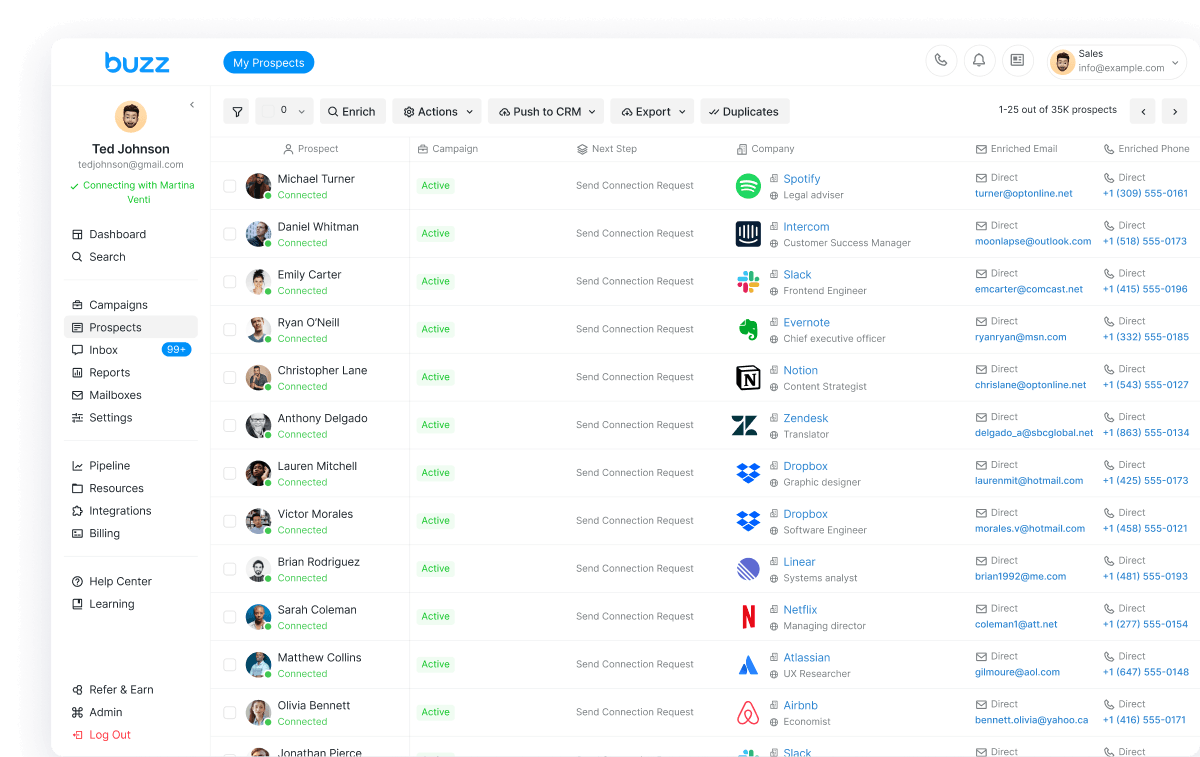
Let us walk through the basic flow most teams need. You capture leads from forms, events, partner referrals, and inbound interest. Those records get enriched with company size, industry, location, and key contacts. Then everything syncs into your CRM and into your sales engagement platform, where sequencing and outreach live.
The goal is a single workspace view, not a maze of tabs. A rep should be able to open an account and see:
- Every email sent and replied to
- Call notes and dispositions
- Video views and link clicks
- Social actions like follows, comments, or connection attempts
When this sits on one timeline, people work faster and smarter. No more guessing if someone already sent a pricing note, or digging through old threads to see the last objection.
To keep that system clean, you need guardrails on the data itself:
- Automatic checks for bounced emails and bad domains
- Respect for opt-outs and unsubscribe requests across every channel
- Duplicate detection for both contacts and accounts
- Rules to pause or slow sequences if bounce rates spike
These checks matter even more during mid-year and late-summer pushes, when teams crank up outbound to hit second-half targets. Without a strong data backbone, a big email surge in hot weather can cook your domain reputation for the rest of the year.
The upside of doing this right is simple: cleaner lists, more accurate numbers, and messages that feel timely. Reps hit more valid inboxes, connect on more calls, and use firmographic and behavioral data to talk about real problems, not generic fluff.
Model Guardrails That Keep AI Helpful, Not Risky
Model guardrails sound technical, but think of them as house rules for your AI. They tell the system what it is allowed to say, what it must avoid, and how it should speak when it drafts emails, call openers, or social messages.
Without guardrails, AI can get weird. It might guess at facts it does not know, mention details that feel way too personal, or send messages that do not sound like your brand at all. That is how trust breaks, both with your team and with your market.
Practical guardrails for sales teams usually include:
- Content policies, for example no false claims, no fake deadlines, no mentioning private data
- Brand voice templates, so tone, word choice, and structure stay consistent
- Safe personalization rules that focus on public job details, company news, and role-based pain, not someone’s hobbies or family
These rules matter even more in regulated spaces. You do not want AI hinting at guaranteed results, giving anything that sounds like legal or medical advice, or ignoring consent and opt-out language. Guardrails act like bumpers on a bowling lane, so the ball stays in play even when volume is high.
The best AI sales prospecting tools pair strong generation with strong control. Leaders can set policies once, then trust that thousands of drafts will respect them, without needing to read every line before it goes out.
Audit Trails That Show Every Touch Across Every Channel
As soon as your team works across email, phone, video, and social, simple questions get harder to answer. Who last talked to this account? What did we promise? Did they already see this offer?
That is where audit trails come in. An audit trail is a searchable history of every touch, across every channel, tied back to both a prospect and a rep.
A solid audit trail should include:
- Timestamps for each interaction
- The channel used (email, call, video, or social)
- The actual message content and versions, including AI-generated drafts
- Engagement data like opens, clicks, views, and call outcomes
- The person on your team who took each action
Without this, you risk double-emailing people with different offers, calling right after someone unsubscribes, or sending mixed messages to buying groups. If a complaint comes in, or marketing asks what actually went out, there is no clear record.
With an audit trail, leaders can coach on real conversations, not guesswork. You can see which sequences work across channels, which AI templates land well, and where prospects tend to stall. It protects your brand and helps during internal or external reviews.
Turning Data, Guardrails, and Trails Into Daily Team Habits
All of this only helps if it shows up in daily work. As a simple starting point, revenue leaders can:
- Review where prospect data lives today and how it flows between tools
- Document what AI is allowed to write, send, or edit in your current outreach
- Check what any rep can see for a single account, across all channels
From there, keep the changes practical and shared. RevOps, sales, and Marketing can agree on core fields for enrichment, like industry, size, and main persona. Teams can standardize a set of email and call templates, then decide when AI drafts first versus when a rep writes from scratch.
Mid-year is a natural time to do this cleanup. Before you push into heavy second-half campaigns, it pays to tidy your data, tighten your AI rules, and make sure your audit history is complete. That way, when volume jumps, quality and control come with it.
At Buzz AI, we built our platform around these ideas, so multichannel teams can work from a single workspace with clean data, clear guardrails, and full visibility. AI sales prospecting tools are no longer just about sending more; they are about sending smarter from a system you can trust.
Turn More Cold Leads Into Warm Conversations Today
Transform how your team finds and qualifies prospects using our intelligent AI sales prospecting tools built to fit your current workflow. At Buzz AI, we help you focus on the right accounts so you can spend more time closing and less time chasing dead ends. If you are ready to see what this looks like in your pipeline, reach out and contact us to get started.