Rethinking Shortcuts in a Slowing B2B Market
Revenue feels harder than it used to. Budgets are tighter, deal cycles drag on, and every buying committee has more people asking more questions. When that pressure hits, the quick fix a lot of teams grab is simple: buy more data, faster.
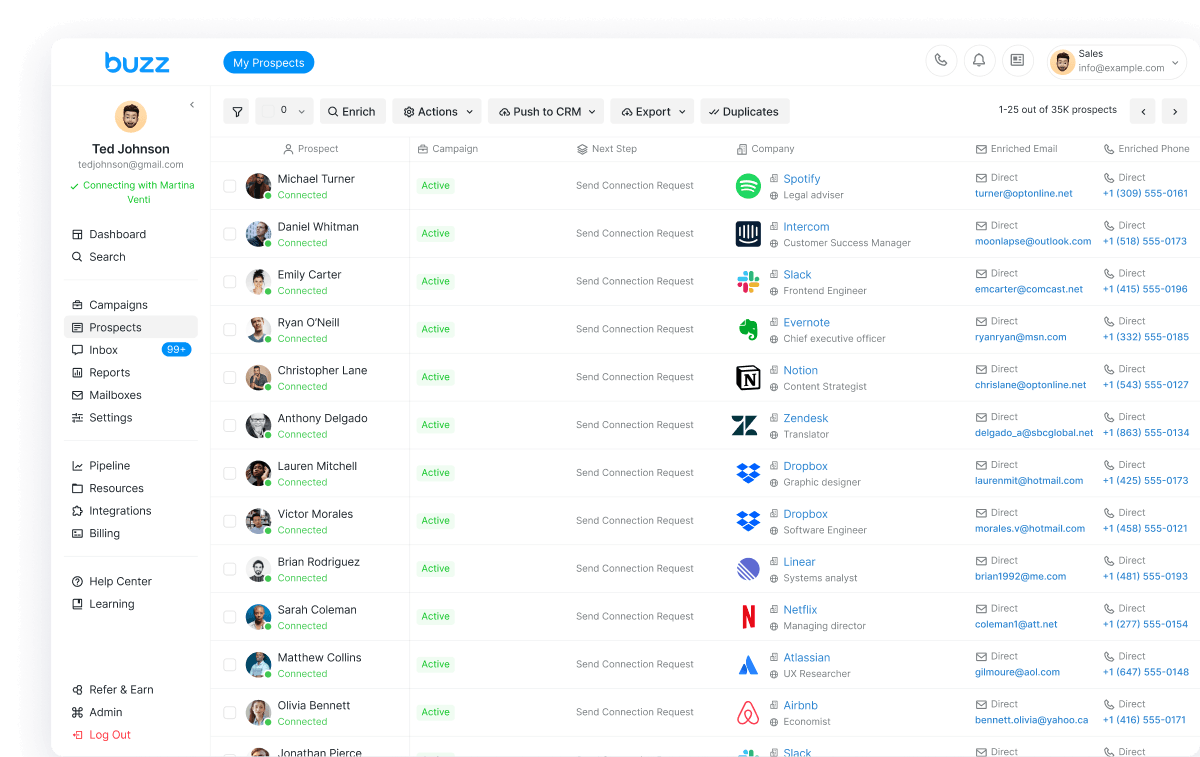
That is where B2B lead enrichment comes in. In plain terms, enrichment means taking a basic prospect record like name, and email and adding more details. Things like company size, industry, tech stack, seniority, and location. The goal is to slice and dice your lists, score leads, and send better-targeted outreach.
But there is a hard question we all need to ask: is B2B lead enrichment actually a revenue shortcut, or just a pricier way to repeat the same broken motions? Our goal here is to give a clear, simple way to tell the difference. We will walk through what enrichment really gives you, where it goes wrong, and how to plug it into email and social outreach in a way that actually creates meetings and pipeline, not just bigger spreadsheets.
What B2B Lead Enrichment Really Gets You Today
Most enrichment tools today promise very similar things. When you send in a list, you usually get back fields like:
- Titles and seniority
- Company size and industry
- Tech stack or tools the company uses
- Location and sometimes department
- Basic buying signals or light “intent” tags
For revenue leaders, the upside sounds pretty good. With that data, teams can:
- Build cleaner, more focused lists faster
- Cut out bad or bounced emails that damage deliverability
- Aim email copy at the right roles and pains
- Avoid hitting tiny companies when you really sell to mid-market or enterprise
This is all helpful, as long as we remember what enrichment does not do. It can tell you who someone is and what they look like on paper. It does not tell you why they might care right now or how you should win that account. That still comes from your positioning, your message, and your sales process.
Mid-year, when pipeline feels light and leaders feel the heat of the second half, enrichment can look like a magic lever. Buy a big data package, feed the team more contacts, and hope meetings spike before the next big push. Without a plan, that rush is where a lot of money goes to hide.
When Lead Enrichment Becomes a Costly Distraction
Enrichment starts to hurt when it comes before the basics. We see some common patterns:
- Messy CRMs with no clear fields or naming rules
- No shared definition of ICP, so teams enrich anyone with a pulse
- Giant cold lists that never get more than a single weak email
In these cases, the “shortcut” adds friction. Reps scroll through extra fields instead of actually doing focused email or social outreach. Operations teams manage more tools. Data starts to decay almost as soon as it is added, so that shiny “fresh” data feels old a few months later.
There is also the illusion of personalization. With more fields, it is easy to think, “Great, we will personalize at scale.” In practice, that often means simple mail merges: drop in job title, company name, maybe industry. Most buyers can feel that this is surface level. It rarely moves reply rates or qualified opportunities in a real way.
At the end of the day, enrichment spend should be tied to hard revenue outcomes, such as:
- More meetings booked from the same volume of outreach
- Higher conversion from first reply to qualified opportunity
- Faster movement of good accounts through your funnel
If the only clear outcome is “we added more contacts,” you are not getting what you paid for.
Turning B2B Lead Enrichment Into a Revenue Multiplier
Used with intention, enrichment can absolutely speed up revenue. The first step is a simple decision check for CEOs and revenue leaders:
- Do we have a clear ICP and a few priority segments?
- Are our email domains warmed and healthy, with low bounce rates?
- Do we have at least one outreach motion that already converts for a segment?
If the answer is no on any of these, fix that first. Enrichment multiplies what is already there. If you multiply chaos, you just get more chaos.
Once that foundation is set, enrichment works best when it supports strong execution:
- Build lists by segment first, not by “everyone in the world with this title”
- Map message templates to roles, pains, and triggers, not just industries
- Plan multichannel follow-up, such as email plus calls plus social outreach plus maybe video, instead of one shot and done
Data discipline matters too. Most teams do not need 50 new fields. Pick the small set that directly support routing, scoring, and real personalization. Then set a simple schedule for updates, instead of constant one-off uploads that confuse reporting.
When you keep fields lean and outreach focused, enrichment starts to show its ROI. Campaigns feel less generic. Reps spend more time on accounts that fit your ICP. Time shifts from prospecting chaos to real conversations.
Building Smarter Outreach Workflows Around Data
So what does a modern, data-driven sales engagement workflow look like when enrichment is used the right way?
It usually starts with a clean import, filtered by your ICP. You segment by company traits and role, then build lists that match specific sequences. Each sequence speaks to a clear problem and outcome for that group, not just a broad pitch.
From there, email deliverability becomes a core part of the plan. Enriched data helps you:
- Remove known bad or risky domains
- Verify emails to cut down hard bounces
- Spread volume across warmed sending domains
- Keep complaint rates lower, so more of your best prospects actually see messages
Enriched fields also help you run smarter multichannel outreach. Senior executives in strategic accounts might get a tighter touch pattern that starts with a strong email and is quickly followed by a call and a short video. Mid-level operators in larger lists might get more email-first sequences, with light social messaging after a few touches.
The final piece is measurement. Track:
- Reply rates by list source and segment
- Positive response rates and meetings booked
- Conversion from meeting to opportunity by enrichment layer
When you report outcomes this way, it becomes clear which data sources and fields actually move revenue and which are clutter.
A Practical Playbook for Mid-Year Revenue Teams
As you head into the second half of the year, it helps to keep things simple. A quick checklist for leaders:
- Trim tools that your team does not really use
- Find the segments and sequences that already performed best earlier in the year
- Use B2B lead enrichment only where it clearly unlocks more of what is already working
Then run a phased approach. Start with one or two proven segments. Enrich those lists, run controlled outreach with clear goals like meetings and pipeline created, not just opens. If it works, expand with confidence. If it does not, you have limited the risk.
Strong alignment is the last key. Sales, marketing, and RevOps should agree on how enriched fields will be used in targeting, routing, and messaging before any big enrichment push. That way every added field has a job, and every enriched contact has a real chance of moving toward revenue.
At Buzz AI, we think of enrichment as fuel, not the engine. When it feeds focused, disciplined multichannel outreach across email, calls, social, and video, it can absolutely help teams win more deals. When it replaces strategy and process, it just becomes another shortcut that was never really a shortcut at all.
Turn Raw Leads Into Revenue-Ready Opportunities
If you are ready to turn partial records into high-converting accounts, our B2B lead enrichment solution can help you unlock the full potential of your funnel. At Buzz AI, we combine accurate firmographic, technographic, and behavioral data so your sales and marketing teams always know who to target and how. Reach out to our team to discuss your use case and see exactly how enriched data can fit into your existing workflows. If you are ready to move forward, contact us and we will help you get started quickly.