Why Most Sales Intelligence Tools Collect Dust
Sales teams do not skip quota because they are lazy. They miss because they are buried. Tabs everywhere, tools everywhere, pings and popups screaming for attention, all while spring selling is in full swing and the calendar is packed with meetings. A rep can have three sales intelligence tools open and still not know who to reach out to next or what to say.
That is usually not a data problem. It is a workflow problem. Many tools feel like they were built for managers who love dashboards, not for reps who live in their inbox. The result is predictable: noisy alerts, clunky clicks, outdated records, and insights that never turn into actual outreach.
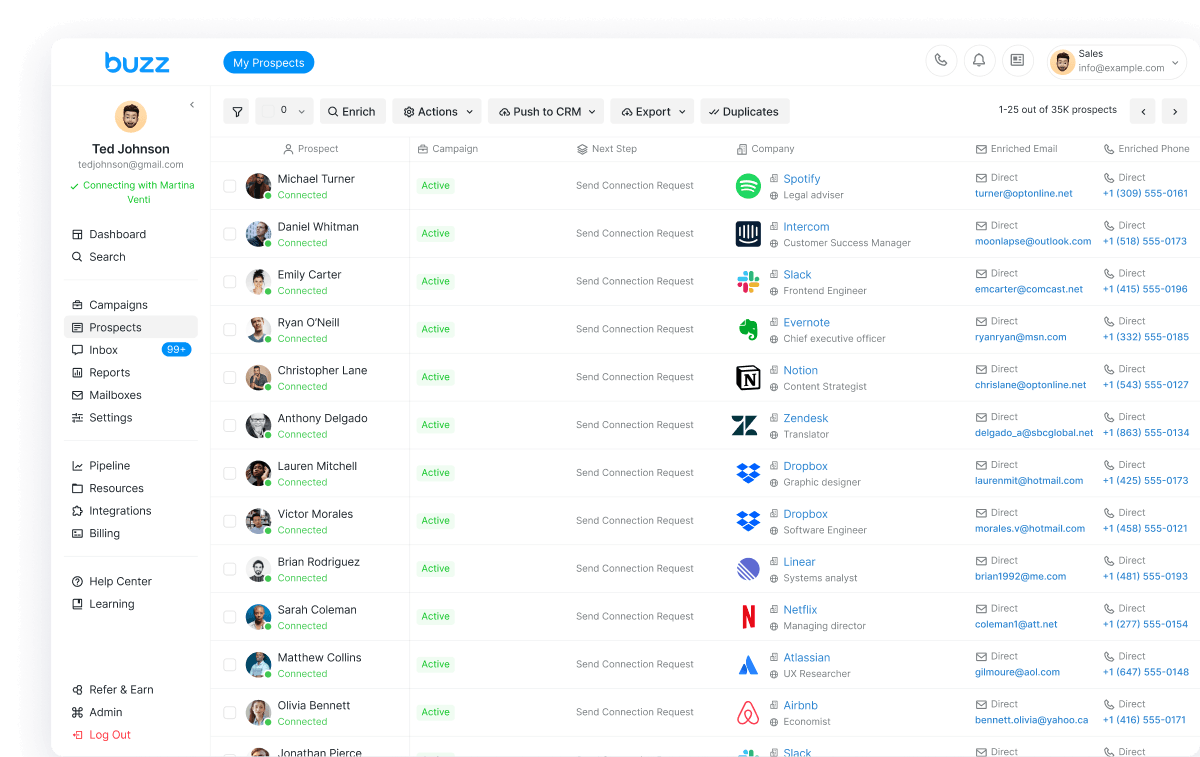
A sales intelligence platform only drives revenue if reps actually want to live in it every day. When everything that matters is in one place, adoption stops being a fight and starts being the natural choice. That is the approach we care about at Buzz AI, where we focus on one workspace that pulls together prospecting, enrichment, and multichannel engagement so reps can just sell.
Starting with the Rep’s Real Day, Not a CRM Schema
Too many tools are built backward. Someone starts with CRM fields, reporting needs, and complicated data structures. Then they push a front-end on top and call it a sales intelligence platform. To the rep, it feels more like a compliance checklist than a selling copilot.
If we start from the rep’s actual spring day, it looks more like this:
- Planning a territory and deciding which accounts to prioritize
- Researching those accounts a bit so outreach does not sound generic
- Building and tweaking sequences for email, social, phone, and maybe video
- Following up on warm threads and no-shows
- Logging notes, updating the CRM, and scrambling between meetings
Now picture that as one smooth flow instead of tool-hopping. In a rep-first setup, they can:
- Discover new prospects in their patch based on clear filters and intent
- Enrich those records instantly with contact details and firmographic data
- Drop them straight into email, social, phone, or video workflows with almost no extra clicks
Practical UX choices matter more than fancy charts:
- Minimal clicks from insight to action
- Recommendations shown in context, right where reps already work
- A unified inbox that pulls together replies from email and social and ties them back to calls and video
That is how a platform starts feeling like a daily sidekick, not a report generator.
Design Principles for a Platform Reps Actually Like
A simple benchmark we use is “insight to action in under 10 seconds.” If a rep sees a high-intent prospect, they should be no more than one or two clicks away from sending an email, queuing a call, dropping a LinkedIn message, or recording a quick video.
To get there, a sales intelligence platform needs a few clear principles:
- Speed: no lag when reps are crushing outreach during busy spring campaigns
- Clarity: plain language like “This account opened your last email three times” instead of jargon
- Trust: transparent data sources and clear logic behind scores and suggestions
Personalization is another big one. Reps sell differently, and that is fine. They should be able to:
- Filter by segment, deal stage, or persona, based on how they run their book
- Create saved views that match their style, while managers still get common reports
- See the same core data but in an order and layout that makes sense to them
Adoption does not happen by accident. Smart platforms build in:
- Gentle in-app guidance that shows the next best step without being annoying
- Playbooks that are not hidden in PDFs, but woven right into tasks and queues
- Small, fast wins, like helping a rep book a meeting in April within their first few sessions
When reps feel those wins during key months like spring, they keep coming back.
Connecting Data, Channels, and Context in One Workspace
Modern selling is not one channel at a time anymore. Email alone is not enough. Social alone is not enough. Phone alone is not enough. Reps need all of it, working together with smart timing.
A strong sales intelligence platform pulls several pieces into a single AI-powered workspace:
- Prospect identification, so reps always have new people to talk to
- Enrichment, so those people come with up-to-date details
- Scoring, so reps know where to start
- Outreach, across email, social, phone, and video, all in one place
Multichannel orchestration means each touch builds on what came before. For example:
- An email is guided by recent website visits
- A LinkedIn message refers to content the prospect engaged with
- A call happens when the account is actively visiting key pages
At Buzz AI, we focus on stitching this context together right when a rep is about to act. Before a rep sends a message, they can see:
- Past conversations from any channel
- Notes and outcomes tied to that account
During a spring campaign, AI can help map out a smart sequence. Reps still stay in control, but they are not starting from a blank page every time.
Data Quality, Guardrails, and Earning Rep Trust
Reps will forgive a tool for a clunky menu. They will not forgive bad data. One wrong phone number or a title that is clearly off, and trust cracks. Once that happens, it is hard to win back, especially when teams are pushing for big Q2 and Q3 numbers.
To keep data quality high, a strong platform needs:
- Multiple enrichment sources instead of a single database
- Ongoing checks and updates, not a one-time import
- Simple ways for reps to flag bad records right in their flow
Governance also matters if you want reps to feel safe using the tool:
- Respecting opt-outs and keeping contact preferences current
- Staying aligned with email and calling rules across regions and states
- Setting AI guardrails that stop spammy, off-brand outreach before it goes out
Transparent scoring makes a big difference. When a prospect is marked high priority, reps should be able to see why, such as:
- Recent engagement on the site
- Fit with the ideal customer profile
- Response patterns on different channels
When the “why” is clear, reps know when to double down, and the platform earns a spot in their daily routine.
Rolling Out a Platform That Becomes a Daily Habit
Even a great sales intelligence platform will flop if rollout is messy. The shift should feel like a helpful upgrade, not “one more thing” to juggle.
A simple way to launch is:
- Start with a focused pilot team, like one region or one agency pod
- Pick a clear spring campaign, such as a new offer or a seasonal push
- Choose a few adoption metrics, like daily active users, sequences launched, and meetings set
The platform should plug into existing CRMs and tools, so reps get a smoother feel instead of extra logins. Syncing data both ways helps keep records clean without asking reps to double-enter anything.
Change management comes down to people:
- Identify rep champions who like testing new workflows
- Share wins weekly, like a meeting booked from a new playbook
- Adjust sequences and views based on what reps actually use, not just what leaders think they should use
At Buzz AI, we care about continuous improvement. Analytics inside the platform provide a general view of playbook performance, segment engagement, and overall activity. Over seasons, that helps teams refine targeting, tweak channel mix, and keep the workspace aligned with how they truly sell, not how a spec sheet says they should.
Turn Smarter Sales Insights Into Revenue Growth
If you are ready to equip your team with data they can act on, our sales intelligence platform gives you a clear view of the accounts and signals that matter most. At Buzz AI, we help you uncover opportunities earlier, prioritize the right buyers, and personalize outreach at scale. Tell us about your goals and we will show you how our technology can fit into your current sales workflow. To explore next steps or request a walkthrough, simply contact us.