Turn Every Email Into a Smarter Next Touch
Most teams do email outreach, social outreach, and calling in totally different tools, then try to make sense of it all in a giant spreadsheet. By the time the report is done, the moment has passed, and reps are already chasing the wrong people. The data is scattered, the feedback loop is slow, and lead scoring ends up more guesswork than science.
Closed-loop outreach analytics fixes that. In simple terms, it means taking everything that happens in your email outreach, calls, social messages, and CRM, then feeding it back into one system so the next touch is smarter than the last. Every open, click, reply, connection, call note, and opportunity update helps shape who gets scored higher and where that lead is routed.
Done right, this creates more qualified pipeline, less wasted time, and a clear picture of which accounts deserve attention next week and later in the year. But there is a trap. If we only optimize for easy replies, like out-of-office or polite brush-offs, we train our models and our playbooks toward low-value leads. This article is about how to get the value of closed-loop analytics without falling into that bias.
Why Your Current Outreach Data Is Lying to You
For most revenue teams, outreach data lives in silos. You have:
- Email metrics in one platform
- Call notes buried in a dialer
- Social outreach in another tool
- Real revenue outcomes only in the CRM
No single screen shows which touch actually helped close a deal. So leaders end up staring at vanity stats. A subject line that drives lots of opens looks great, even if those opens never lead to meetings. Reply rates feel strong, until you realize many of those replies are out-of-office or quick “not interested” messages.
Seasonal swings make this worse. Around the middle of the year, auto-replies jump as people travel or take time off. You see more “circle back later this year” notes that look like positive engagement but rarely turn into real opportunities. If lead scoring leans too hard on reply volume, it will give those contacts inflated scores, even though the chances of closing are low.
This creates a real risk at the CEO level. Leadership might think a segment is hot because the inbox is loud and full of replies. Budget gets pushed into that segment or channel, while quiet but qualified segments get ignored. The data is not wrong, but it is incomplete, and that can send strategy in the wrong direction.
Building a Closed-Loop Outreach Foundation
To fix this, we need a simple, connected data foundation. At a basic level, that means tying together:
- Email engagement: delivered, opens, clicks, reply type
- Social engagement: accepts, replies, profile views
- Call and video outcomes: connected, voicemail, meeting booked
- CRM lifecycle data: qualified, opportunity, pipeline value, closed-won or closed-lost
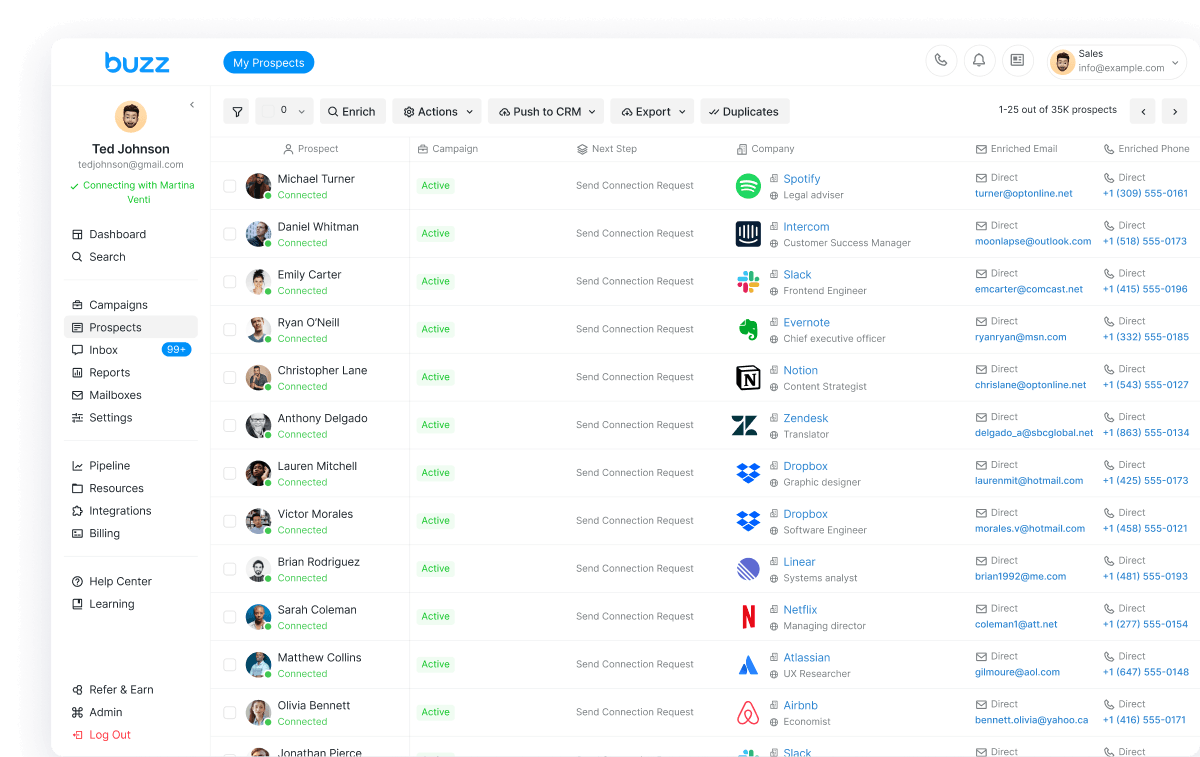
The flow should be clear, even for non-technical teams. Every outreach touch, whether it is an email, a social message, or a call, writes a standard activity to one central system. Each activity is linked to a contact, an account, and when relevant, an opportunity. Over time, you can scroll a “revenue influence” timeline and see which touches showed up before real deals.
Data hygiene and enrichment matter here. If we send to bad email addresses, deliverability drops and reporting gets fuzzy. If we do not enrich contacts, we cannot tell the difference between a junior person who clicks everything and a senior decision maker who replies once with a real question. Clean, consistent fields keep analytics from turning into manual spreadsheet work.
This is where an all-in-one workspace helps. When reps work from one place for sequences, calls, social outreach, and video, data capture is automatic. Nobody has to remember to log a call in the CRM after scrambling between tabs. The result is better data with less admin, which is the only way closed-loop analytics sticks.
Smarter Lead Scoring That Ignores Fake Positives
Traditional lead scoring leans heavily on behavior. Opens and clicks get big points, while real outcomes, like qualified meetings, often show up late or not at all. Closed-loop analytics lets us rebalance the model so we score what actually leads to revenue.
A simple way to think about engagement is to group it:
- High-intent signals: meetings booked, pricing questions, multi-threaded replies inside the same account, forwards to another stakeholder
- Neutral noise: out-of-office, “send some info,” casual clicks with no reply
- Negative signals: unsubscribe, “remove me from this list,” support-only questions from non-buyers
In a practical scoring model, we give more points to patterns that keep appearing in closed-won deals. For example, multiple touches across email outreach, social messages, and calls, combined with replies from senior roles and positive meeting outcomes. At the same time, we cap the score for low-intent replies so the system does not chase polite rejections.
Email outreach is still the backbone, but it gets stronger when combined with other channels. A person who opens one email is mildly interesting. A person who opens several, clicks, connects on social, and picks up a call starts to look truly engaged. With closed-loop analytics, we can also set smart throttles, so we slow or pause sending when engagement turns negative and protect deliverability over the long run.
Routing Rules That Match Reality
Even with good scoring, routing can break everything. Many teams send leads to whoever is next in line or whoever owns the territory, no matter how strong or weak the intent is. High-potential accounts land with overloaded reps, while low-intent but chatty leads soak up attention.
Closed-loop data lets us reshape routing around reality. Instead of guessing, we look at historical conversion in the CRM. Which segments, roles, and engagement patterns actually turned into revenue in the last few quarters? Those patterns should drive routing rules, not just which inbox is loudest.
You might end up with rules like:
- High-intent sequences that have a strong history of revenue go straight to senior AEs
- Lower-intent but high-volume reply patterns get sent to SDRs or into an automation-heavy nurture track
- Existing customers with engagement that mirrors past expansion deals route to account managers
Mid-year is a perfect time to adjust this. When summer hits and plans shift, we can use first-half data to refine how we route for the second half. Top reps focus on the personas and plays that are most likely to create year-end revenue, not just conversations.
Keeping AI Helpful and Honest
AI sits on top of all this. It can scan thousands of email threads, social exchanges, and call notes to spot patterns humans would never see. It can suggest next-best actions, recommend sequences, and help score leads in real time.
But there is a big risk: if models are trained mainly on reply volume, they will favor subject lines and messages that produce lots of fast, low-intent replies. You end up with outreach that feels busy but does not fill the pipeline.
To keep AI honest, we need to:
- Train it on outcomes tied to CRM stages and closed-won deals, not just on who replied
- Weight training data by opportunity value and sales cycle length, so small, quick wins do not dominate the pattern
- Review which replies and sequences the AI is favoring and compare them with the pipeline they actually created
Leaders should also have clear control. You should be able to see why a sequence is recommended, how a lead got its score, and tweak thresholds as markets shift, budgets tighten, or your ideal customer profile evolves.
Turning Closed-Loop Outreach Into a Habit
Closed-loop outreach analytics is not a one-time project; it is a habit. The playbook is simple in business terms: capture every touch in one workspace, connect outreach outcomes to CRM stages, score leads based on revenue instead of replies, and route them according to what has really closed.
A simple review rhythm helps keep this alive:
- Monthly: look at which sequences, personas, and channels drive the most qualified meetings
- Quarterly: refresh scoring weights and routing rules based on updated pipeline and closed-won patterns
- Mid-year: tighten focus on the segments and plays that are statistically most likely to drive year-end results
For leaders, the first steps are clear. Audit where your outreach data lives today, define the signals you truly care about, standardize how you label reply types, and choose a single workspace where your team can run and measure email, phone, video, and social outreach together.
At Buzz AI, we built our all-in-one sales engagement platform around this closed-loop idea, so every email outreach, call, and social touch feeds smarter scoring and routing instead of louder vanity metrics. Teams that make this shift head into planning season with a clear, data-backed view of what to scale, instead of guessing based on the noisiest inbox.
Boost Conversions With Smarter Email Outreach Today
If you are ready to turn cold prospects into warm conversations, we can help you build a targeted email outreach system that actually gets replies. At Buzz AI, we use data-driven insights to craft sequences that match your audience, timing, and goals. Our team will work with you to refine your messaging and automate follow-ups so you never miss an opportunity. Have questions or need a custom plan, just contact us and we will walk you through the next steps.