Cold calling isn't dead. Despite the rise of email automation, LinkedIn outreach, and AI-powered chatbots, over 50% of B2B leads still originate from cold calling. The channel works because it forces real-time human interaction in a world where prospects can ignore emails indefinitely.
The catch? Most sales reps approach cold calling with outdated scripts, weak research, and no clear strategy beyond "dial until someone picks up." This guide cuts through the noise with proven cold calling techniques backed by data from millions of calls, showing you how to turn cold outreach into predictable pipeline generation.
What Is Cold Calling?
Cold calling is unsolicited outbound prospecting via phone to previously uncontacted prospects. The goal is meeting generation, not closing deals on the spot. You're interrupting someone's day to introduce yourself, demonstrate relevance, and secure a follow-up conversation where real discovery can happen.
This differs from warm calling, where you've already established some connection through email, social media, or referrals. Cold calls start from zero, which means your first 30 seconds determine whether the conversation continues or ends with a dial tone.
Does Cold Calling Actually Work in 2026?
The numbers tell a clear story. Average cold calling success rates hit 4.82% in 2024, double the previous 2% benchmark. 82% of buyers accept meetings from salespeople who proactively reach out, and 57% of C-level executives prefer phone contact over other channels.
Top-performing teams achieve 6-10% success rates through improved targeting, timing, and technique. The difference between average and excellent cold calling comes down to preparation, personalization, and persistence. It takes an average of 8 call attempts to connect with a single prospect, which means most reps quit too early.
Cold calling works because prospects must respond in real time. There's no delete button, no "mark as read" option. 70% of one sales leader's clients resulted from cold calling, proving the channel remains viable when executed correctly.
Cold Calling Rules: Legal and Compliance Requirements
FTC Telemarketing Sales Rule
The Federal Trade Commission sets clear boundaries for cold calling. You can only call residential numbers between 8 a.m. and 9 p.m. local time. Miss this window and you're violating federal law.
Never call people listed on the National Do Not Call Registry. Scrub your lists regularly because B2B data decays at approximately 2.1% per month, totaling about 22.5% annually. Telemarketers must transmit their telephone number and name to caller ID, so spoofing numbers or hiding your identity creates legal exposure.
TCPA and Auto-Dialer Regulations
The Telephone Consumer Protection Act governs automated calling systems. You must have prior express written consent before using auto-dialers or leaving pre-recorded messages. Most B2B cold calls are exempt from federal Do Not Call regulations, but state laws may be more restrictive.
Violators face fines up to $51,744 per incident, making compliance non-negotiable. The good news? Business-to-business calls generally receive exemptions unless they involve retail sales of office or cleaning supplies.
International Cold Calling Considerations
GDPR in Europe restricts unsolicited calls, requiring legitimate interest or explicit consent before dialing. Canada's National Do Not Call List mirrors U.S. regulations but includes strict record-keeping requirements. Different countries have unique laws, so research local regulations before launching international campaigns.
Must-Haves for Effective Cold Calling
Quality Lead Data and Accurate Contact Information
Sales representatives waste 27.3% of their time due to bad contact data. Inaccurate information doesn't just kill productivity; it costs companies up to 12% of their revenue.
Phone-verified mobile numbers ensure 87-98% accuracy. Direct dials beat switchboard numbers because they eliminate gatekeepers and connect you straight to decision-makers. Prioritize data sources that verify numbers in real time rather than relying on stale databases.
Pre-Call Research and Prospect Intelligence
Spend about one hour per day researching top-tier target accounts. The 3x3 Research technique keeps this manageable: limit yourself to 3 minutes or less per prospect. You're looking for 3 surprising details the prospect wouldn't expect you to know.
Check LinkedIn for recent activity, company websites for news announcements, and industry publications for relevant trends. 71% of consumers expect personalization today, and surface-level research like "I see you work at Company X" doesn't cut it.
Cold Calling Scripts and Talk Tracks
Structure your 30-second opener around three elements: full name and company, connection point showing research, and pain point reference relevant to their role. State the reason for your call immediately because this increases success rate by 2.1x.
Scripts provide guardrails, not verbatim text. You need flexibility to respond naturally while maintaining structure. Avoid product pitching in your opener. You're selling the meeting, not the solution.
The Right Sales Dialer or Cold Calling Software
Power dialers eliminate manual dialing, maximizing rep talk time. AI-powered dialers can save reps 4-7 hours weekly on average by automating the mechanics of outreach. CRM integration matters because it automatically logs activities, syncs contact data, and creates post-call tasks without manual entry.
Local presence features match your caller ID to the prospect's geography. This simple tactic can double pickup rates versus unknown or toll-free numbers.
Cold Calling Tips to Book More Meetings
Master the First 30 Seconds
State your full name and company name upfront to maintain control and command respect. Weak openings like "Did I catch you at a bad time?" make you 40% less likely to book a meeting.
The first 30 seconds determine whether prospects engage or hang up. Lead with confidence, establish credibility immediately, and give them a reason to keep listening. Your tone matters more than your words because 93% of communication over the phone is tone.
Control the Conversation with Questions
Asking between 11-14 questions yields a 70% success rate. The person who asks questions controls the conversation. Balance open-ended, closed-ended, and reversal questions to move from interrogation to natural dialogue.
Most successful reps talk 40-50% of the time during cold calls, with prospects talking the other half. This differs from discovery calls where listening dominates. On cold calls, you need higher talk-to-listen ratios to maintain momentum and guide the conversation toward a meeting.
Sell the Meeting, Not the Product
The goal of cold calling is moving from interruption to scheduled meeting. Don't mention your product until the end of the call. Focus on planting seeds and asking for follow-up conversations where real discovery can happen.
Position the meeting itself as valuable. Frame it around value alignment, timing, and curiosity rather than drowning prospects in features. There typically isn't enough time or context on a cold call to properly sell your solution.
Use Pattern Interrupts and Permission-Based Openers
Pattern interrupts disrupt expectations and give prospects control. Instead of launching into your pitch, try: "I know this is out of the blue. Can I take 30 seconds to explain why I called?" This permission-based approach disarms defensive reactions immediately.
Unexpected openings work because they break the script prospects expect from salespeople. Just don't overdo it. Gimmicky interrupts feel manipulative and erode trust.
Personalize at Scale with the 3x3 Research Method
Find one surprising detail the prospect wouldn't expect you to know within your 3-minute research window. This could be a recent LinkedIn post, a company announcement, or a mutual connection. 80% of buyers are more likely to purchase when businesses offer personalized experiences.
Personalization shows respect for their time and demonstrates genuine interest. Generic openers like "I was browsing your website" signal lazy prospecting. Specific references prove you've done homework.
Leverage AI to Generate Call Summaries and Next Steps
Using AI to summarize your calls reduces post-call admin from 10-15 minutes to under 2 minutes, letting you make more calls per day without sacrificing quality.
Conversation intelligence tools analyze tone, pacing, and conversion trends to replicate top performer behaviors. They surface patterns you'd miss manually reviewing calls.
Advanced Cold Calling Techniques
Ask Open-Ended Discovery Questions
Focus on three key factors: time (when they need a solution), money (budget availability), and impact (desired outcomes). Ask questions about these areas without interrogating prospects.
Open-ended questions reveal motivations, pain points, and priorities. "What's driving this initiative?" works better than "Do you have budget?" Balance question types naturally to avoid feeling like an interview.
Handle Objections Like a Pro
The top 5 most common objections account for 74% of all objections. Master these first: "Not interested," "Send me information," "We're already working with someone," "Bad timing," and "No budget."
Apply the three-step framework: agree with the objection, incentivize continuation, and sell the test-drive concept. Most objections are reactions to the interruption, not your pitch. Agreeing makes it feel less adversarial: "I totally understand. Most people I talk to say the same thing initially."
Use Assumptive Closing to Lock in Next Steps
Replace "When would you like to meet?" with specific calendar proposals: "Does Thursday at 2 PM or Friday at 10 AM work better for you?" In successful cold calls, "Next Steps" consumed about half of the sales conversation.
Confirm acceptance before hanging up. Ask: "Do you have your calendar in front of you?" Then wait for them to accept the meeting invite. This prevents no-shows and demonstrates commitment.
Master Your Tone and Delivery
38% of spoken communication is comprehended by tone of voice. Smile while speaking because it comes through in your voice. Maintain calm, relaxed energy and avoid over-enthusiasm, which reads as suspicious.
Speak clearly and slowly. Rushed delivery signals nervousness and makes you harder to understand. Confidence comes from preparation, not volume or speed.
Cold Calling Best Practices for Timing and Volume
Best Time to Make Cold Calls
Late afternoon calls (4-5 PM) are up to 70% more effective than late-morning calls. Wednesday delivers the highest cold-call connect rates, up to 50% more conversations than other weekdays.
Mid-morning (10-11 AM) and post-lunch periods also yield strong results. Align call times with the prospect's local time zone. Calling New York prospects at 9 AM Eastern beats calling them at 6 AM when you're on Pacific time.
How Many Cold Calls Should Reps Make Per Day?
Most successful sales professionals average around 60 cold calls per day. Prioritize call quality and meaningful conversations over sheer volume to avoid burnout. Focus on targeted outreach with proper research rather than high-volume spray-and-pray tactics.
Sixty calls with 3 minutes of research per prospect equals about 5 hours of work when you factor in dialing time, conversations, and follow-up tasks. This balances efficiency with effectiveness.
Ideal Call Length and Duration
Average cold call length is between 2-3 minutes. Success rates drop by 61% if calls exceed 5 minutes. Keep calls concise and purposeful.
Clearly state your value proposition within the first minute to maximize engagement. Long calls don't correlate with better outcomes. They signal poor qualification or inability to control the conversation.
How Many Attempts Before Moving On?
It takes an average of 8 call attempts to connect with a single prospect. Making 6 or more calls can boost contact rates by 70%. Persistence precedes conversion.
Spread attempts across different days and times. Calling the same prospect at 10 AM every Tuesday teaches them when to avoid your calls. Vary your approach to increase connection probability.
Multi-Channel Integration: Combining Calls with Email and LinkedIn
Reps using cold calls alongside email and LinkedIn see 28% higher conversion rates. Sales teams using coordinated sequences see up to 37% more conversions compared to single-channel outreach alone.
Email first, call second, social outreach third creates optimal multi-channel sequences. The email warms them up, the call creates urgency, and social outreach reinforces credibility. Each channel serves a different purpose in the buyer journey.
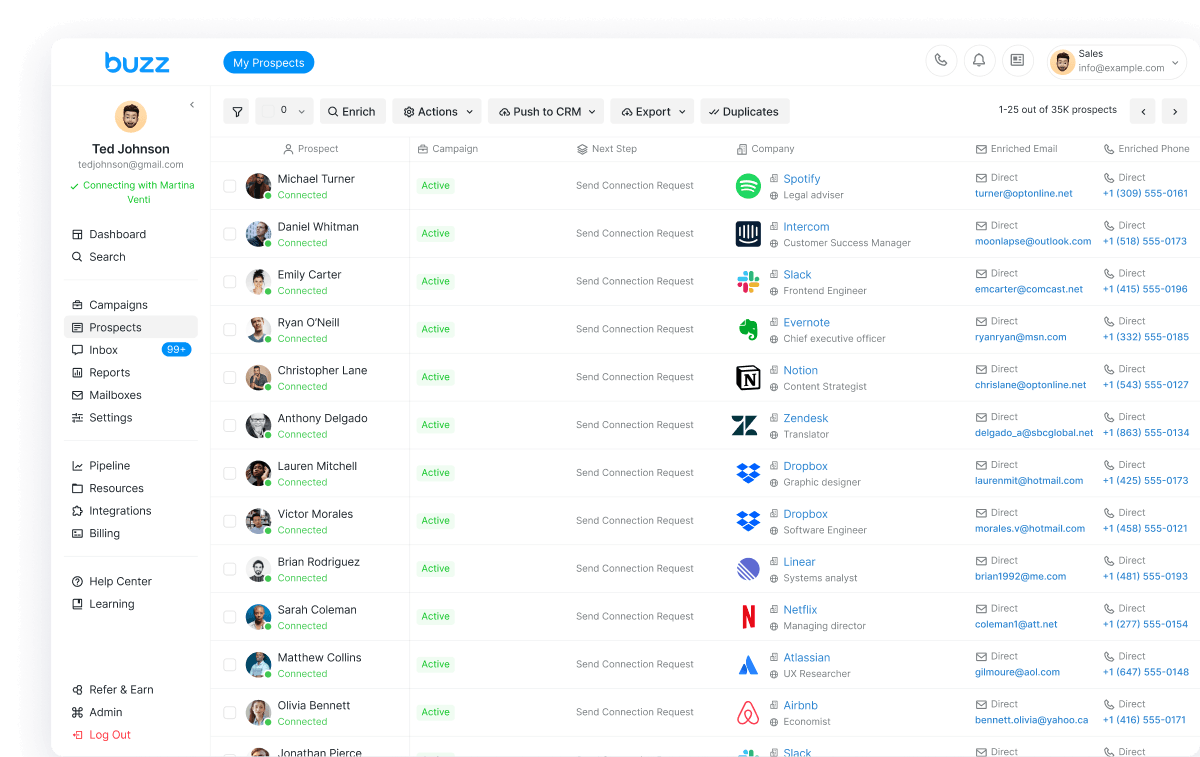
Buzz unifies this approach with an all-in-one sales engagement platform that coordinates outreach across all channels. Instead of juggling separate tools for email, calling, and social selling, Buzz lets you orchestrate sequences from a single interface with CRM integration that eliminates manual data entry.
Measuring Cold Calling Success and Performance
Track connection rate as your primary metric. The average connection rate is 16.6%, meaning you'll connect with roughly 1 in 6 prospects you dial. Top performers achieve a 15% call-to-meeting booking rate.
Monitor attempts-to-connect as a leading indicator. If you're averaging 12+ attempts per connection, your data quality or timing needs work. Benchmark yourself against the 8-attempt average and investigate when you deviate significantly.
Conversation duration matters less than outcome quality. A 90-second call that books a meeting beats a 10-minute conversation that goes nowhere.
How Buzz Dialer Simplifies and Streamlines Cold Calling
Buzz Dialer makes cold calling faster, easier and more efficient by bringing everything you need into one seamless workflow. Instead of juggling tools, platforms, and phone systems, you can manage your entire outreach process directly inside Buzz.
With Buzz, you can purchase local dialing numbers from multiple countries to match your prospects’ geography. This helps you build trust, improve answer rates and create a more personalized outreach experience.
You can also add a dialing step directly into your campaign sequence. When it’s time to call, you can place the call instantly from within the platform. No manual tracking, no switching tabs, no extra setup.
By automating reminders and centralizing your calls, Buzz Dialer helps you stay organized, save time, and focus on what matters most: connecting with prospects and closing deals.
Common Cold Calling Mistakes to Avoid
- Opening with apologies ("Sorry to bother you") immediately positions you as an interruption rather than a valuable resource.
- Product-dumping before understanding needs alienates prospects and wastes everyone's time.
- Insufficient research makes personalization impossible.
- Weak objection handling lets easy wins slip away.
- Missing next-step confirmation means prospects ghost you after positive conversations.
- Calling without a clear goal beyond "touch base" signals amateur hour. Every call should have a specific objective: book a meeting, qualify budget, identify decision-makers, or confirm timing.
The Final Call: Mastering Cold Outreach
Cold calling still wins because it creates real conversations in real time. When it’s done with the right data, timing, tone, and follow-up, it becomes one of the most predictable ways to generate qualified pipeline. The teams that succeed in 2026 aren’t dialing harder. They’re dialing smarter, combining disciplined technique with tools that remove friction, surface insights, and keep reps focused on conversations that convert.
Want to turn cold calls into consistent meetings without juggling tools or wasting rep time?
Book a demo with Buzz to see how unified calling, email, social outreach, and CRM automation drive more conversations and better pipeline.