Rethinking Cold Email Software as a Revenue Operations Engine
Cold email software used to be simple. Load a list, write a few lines, hit send, and hope for replies. That worked when inboxes were lighter and buyers had more time. Now inboxes are packed, reply rates are slipping, and sales teams are under pressure to create more pipeline with smaller teams and fewer tools.
That is why treating cold email software as a single-channel sender is no longer enough. To grow in a tough market, we need something bigger: a revenue operations engine that connects data, channels, and workflows. In this article, we will walk through what is broken with legacy tools, what a true revenue engine should do, and how to start making that shift inside your own sales organization.
Why Legacy Cold Email Software Is Holding Revenue Back
Most teams still treat cold email software like a side app. It is where campaigns go to live and die, separate from everything else. The problem is, buyers do not experience you in a silo.
They see your emails, your social posts, your calls, your video touches, and your ads as one story. When your tools are split, that story gets messy.
Here is what usually happens with legacy setups:
- Email lives in one tool, calls in another, social activity somewhere else
- CRM data is out of date or only half synced
- Reps export CSV files, import them by hand, then try to keep notes updated
The impact is easy to feel:
- Fragmented prospect views, so no one sees the full history
- Duplicated outreach, so the same person gets hit from three places
- Inconsistent messaging, because each tool has its own templates
- Wasted spend on overlapping tools that do not really talk to each other
Data gets messy fast. Manual uploads, partial integrations, and shaky tracking mean leadership cannot trust what they see in reports. A CEO asks, "Which sequence actually created qualified pipeline?" and the answer is a shrug, a spreadsheet, and a guess. That makes it hard to plan headcount, make territory bets, or pick which channels to scale.
Then there is deliverability and compliance. Old-school tools focus on volume, not health. Lists do not get cleaned, domains are not warmed up, sending limits are set by gut feel, and during busy seasons, teams blast as many emails as they can. That can lead to:
- Higher bounce rates and spam complaints
- Damaged domain reputation that drags down every sender
- Risk around compliance rules and opt-out handling
When your email channel is shaky like that, all of revenue feels it.
What a Revenue Operations Engine Should Do for Sales
So what does it look like when cold email software grows up and becomes a revenue operations engine?
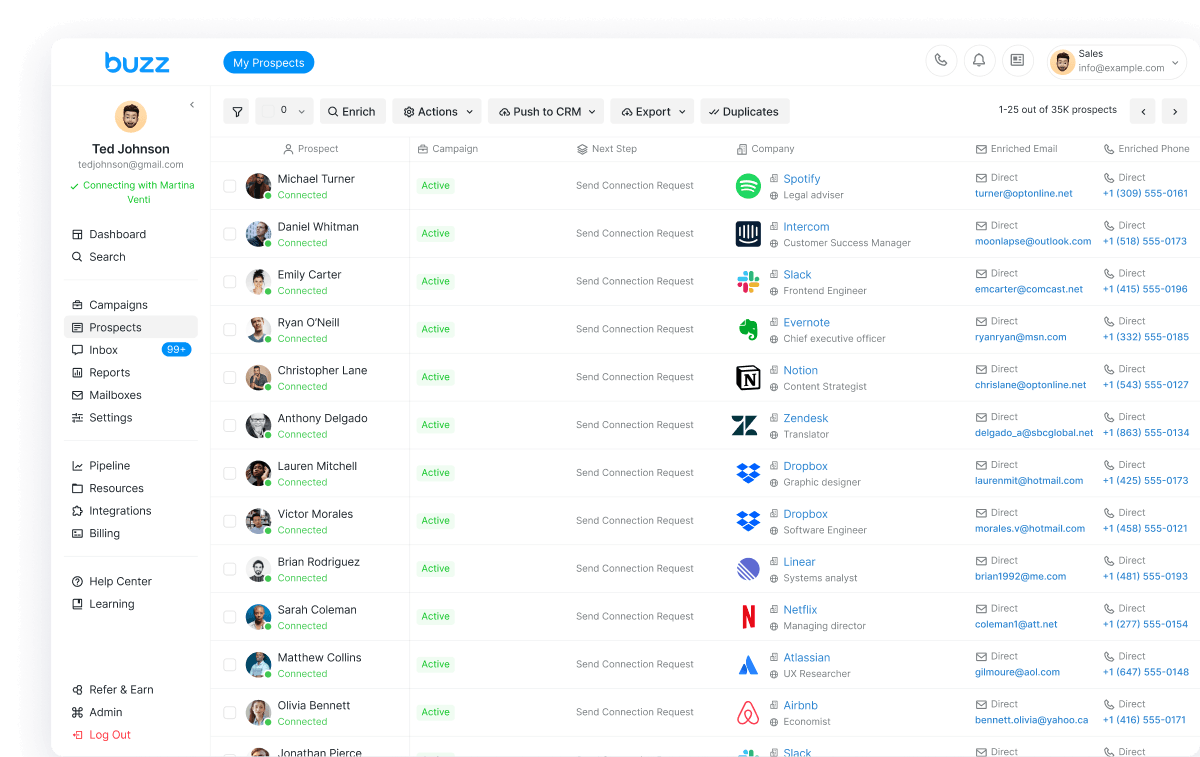
First, it pulls every outbound channel into one engagement strategy. From a single workspace, reps should be able to:
- Send email
- Trigger social outreach
- Make and log calls
- Share quick video messages
The power comes from how those steps connect. For example, if a prospect does not open an email, the next step might be social outreach. If they click but do not reply, the next step might be a quick call. Messaging stays consistent, but the path adapts to behavior.
Second, it runs on clean, enriched, current data. That means:
- Fresh contact details and titles
- Company size, industry, and tech stack
- Buying signals like recent growth or hiring
With AI lead generation and enrichment, records can update in the background so reps are not chasing people who left the company months ago. Outreach becomes more aligned with who is actually able to buy and when they might care.
Third, a revenue operations engine powers clear, revenue-focused analytics. Leaders should be able to see:
- Performance by channel, sequence, and segment
- Which messages move prospects forward, not just get opens
- Rep activity tied to real pipeline and closed revenue
For a CEO, that means fewer dashboards and faster answers to questions like "What is working?" and "Where can we cut tools without hurting growth?"
Turning Cold Email Software Into a Revenue Engine
To move from "sender" to "engine," we have to rethink how outreach is built.
Start by redesigning around the buyer journey. Instead of one generic outbound sequence, map out touches for each stage:
- Awareness: problem-focused emails and light social touches
- Problem education: helpful content and short videos
- Solution exploration: targeted case points and direct calls
- Vendor evaluation: more detailed messages and calendar-focused steps
Email, social, and calls should feel like one simple, human conversation, not random pings from different tools.
Next, bring in automation without losing human relevance. AI can handle:
- Drafting first versions of emails and social messages
- Suggesting subject lines and openers
- Adjusting tone to match your brand
Reps can then layer in quick personal notes based on role, industry, or recent company news. Guardrails help keep quality high:
- Approval flows for new messaging
- A library of proven templates
- Dynamic fields that pull live enrichment data into each touch
Finally, build deliverability and compliance into the base layer, not as an afterthought. That includes:
- Proper domain authentication and gradual warm-up
- Ongoing list verification to remove bad addresses
- Smart send limits that adapt during busy seasons
Continuous monitoring of bounces, spam complaints, and inbox placement should feed right back into your sending rules and copy testing.
Connecting Email Outreach to the Rest of Revenue Ops
When cold email becomes part of a bigger revenue engine, daily work gets a lot smoother. Reps can live in one workspace where they:
- Launch campaigns across channels
- Handle replies and book meetings
- Make calls and send quick videos
Leaders see benefits too: fewer vendors to manage, less training overhead, and less risk that data gets trapped in side tools.
Tight CRM integration is a must. Every touch, from the first cold email to the last video follow-up, should sync cleanly. That makes it easier for marketing, sales, and RevOps to see:
- Which accounts are active
- Which channels opened doors
- Which campaigns actually led to qualified pipeline
Sales intelligence should also plug in. When there are strong signals like website visits, product interest, or account changes, outreach should trigger automatically, but in a targeted and respectful way, not as a flood.
To keep everyone aligned, it helps to agree on a small set of shared metrics:
- Reply quality, not just reply rate
- Meetings set
- Qualified pipeline created
- Revenue influenced by each sequence and channel
When teams focus on these, debates about MQL vs SQL slow down, and more time goes into testing message-market fit and better sequencing across channels.
A Practical Roadmap to Modernize Your Cold Email Stack
You do not have to flip your stack overnight. A simple roadmap can keep things calm and focused.
Start with an audit. List every tool you use today for:
- Email outreach
- Social outreach
- Data enrichment
- Calling
- Reporting and analytics
Mark where features overlap, where data is missing, and where reps have to do manual work to keep things moving. Those are your biggest friction points.
Next, redefine your requirements around outcomes, not features. Instead of saying, "We need new cold email software," try questions like:
- How will this help us create more qualified pipeline?
- How does this improve deliverability and domain health?
- How does this bring channels into one plan, not separate ones?
- How does this reduce manual work for reps and RevOps?
- How does this make forecasting more reliable?
Then, phase into an integrated revenue operations model. One simple 90-day plan might look like:
- Weeks 1 to 4: Set up the new workspace, connect CRM, and clean your data
- Weeks 5 to 8: Run pilot sequences for one team or segment across email, social, and calls
- Weeks 9 to 12: Tune messaging, simplify reports, and start standardizing best plays across teams
As seasons change and outreach ramps up, an all-in-one, AI-powered sales engagement platform like Buzz AI can help keep everything steady. By pulling email outreach, social outreach, calling, video, enrichment, and analytics into one place, a tool like this can shift cold email software from a narrow sender into a true revenue operations engine that supports your next phase of growth.
Turn Data-Driven Outreach Into Real Conversations
If you are ready to move beyond guesswork and start sending emails that consistently get replies, our cold email software is built to help you do exactly that. At Buzz AI, we combine smart automation with personalization so you can scale outreach without losing the human touch. Get started today or contact us to see how we can tailor a setup to your sales team’s goals.