Make Faster, Safer Decisions on Your Next Lead Gen Platform
Choosing a B2B lead generation platform should not take months of back-and-forth. You need a fast, clear way to show leadership what you want to buy, why it matters, and how it pays off. That choice gets harder when every vendor sounds the same and every demo looks “pretty good.”
The real problem is simple: too many demos, too much hype, and not enough side‑by‑side criteria that a CEO or CFO can scan in a few minutes. Long decks and messy spreadsheets slow things down. Then, planning season hits, the weather turns hot, and everyone is busy putting out fires instead of reviewing one more 30‑slide presentation.
We want to fix that. In this guide, we share a one‑page executive decision memo template that folds in three things leadership cares about most: clear RFP criteria, a short risk register, and a simple 12‑month ROI model. You can copy the structure, plug in your numbers, and use it as your playbook for any B2B lead generation platform you are evaluating.
Build a One-Page Executive Memo Your CFO Will Actually Read
The goal of the memo is not to explain every feature. The goal is to make a simple decision easy: should your company invest in a B2B lead generation platform, and if so, which one.
We suggest a one‑page layout that includes a top‑line summary, a problem statement, the options you considered, your recommendation and rationale, a financial snapshot, and key risks with mitigations. Put differently, you are giving leadership the minimum information needed to approve (or reject) the purchase without digging through decks or chasing details across spreadsheets.
Top‑line summary
Keep this to one or two sentences that state the decision and the ask. For example: “We recommend investing in a unified B2B lead generation platform to improve pipeline creation and shorten sales cycles. We are requesting approval to move forward with Vendor A.”
Problem statement
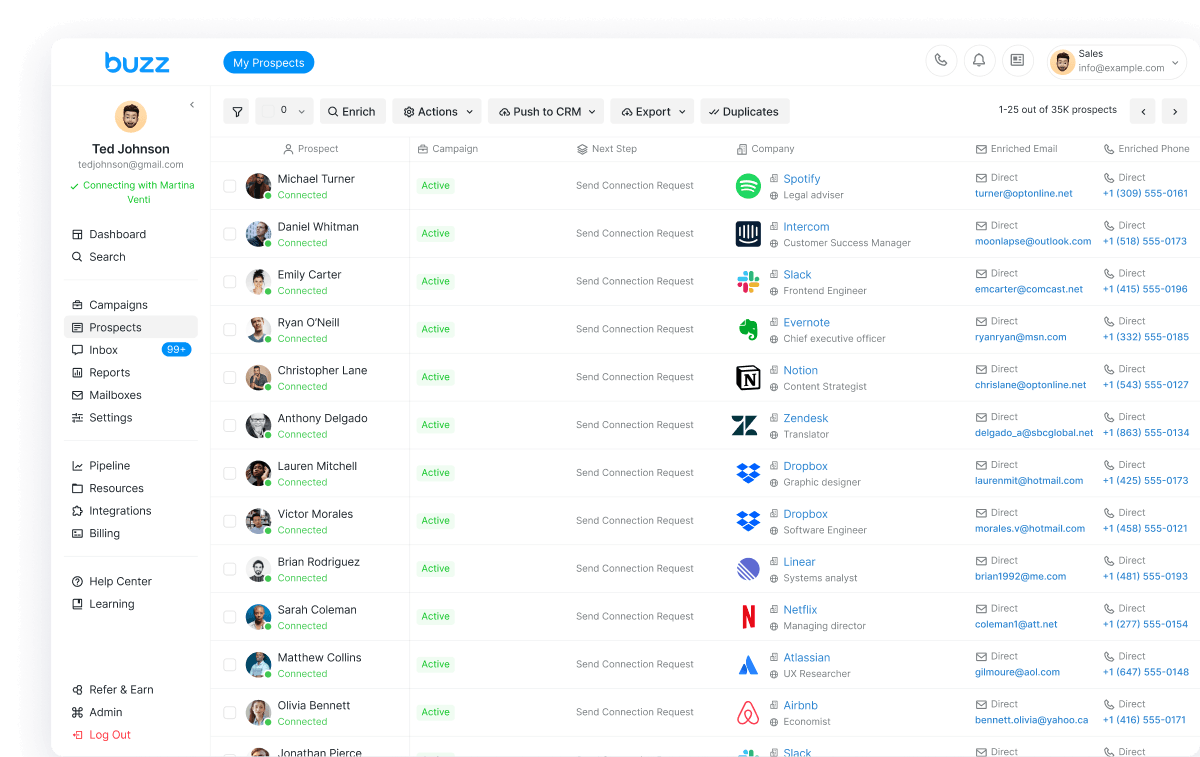
Explain the gaps in plain language, anchored in what is slowing pipeline creation today. Common examples include low-reply-rate email outreach that hits spam, little or no coordinated social outreach, weak or outdated contact data and enrichment, and reps juggling different tools instead of one sales engagement flow.
Options considered
Keep this section honest and short. Most teams are choosing between three paths, which you can present as a clear comparison:
- Status quo: stay with existing tools and manual work
- Partial tooling: add one or two point solutions
- Full platform: one system for data, outreach, and AI‑assisted engagement
Recommendation and rationale
Make one clear pick, not three “maybes.” Tie your reasoning to the outcomes leadership cares about most, pipeline impact, win rates, sales cycle length, and cost per opportunity, so the decision reads as a business case, not a preference.
Financial snapshot
Instead of paragraphs, use a tiny box with the core metrics leadership scans first:
- Expected incremental pipeline in 12 months
- Estimated closed‑won revenue
- Payback period
- 12‑month ROI percentage
Key risks and mitigations
Pull three to five high‑impact risks from your risk register and keep this crisp: one line per risk and one line per mitigation. Your CFO should be able to read the full memo in under five minutes without decoding jargon.
Define RFP Criteria That Go Beyond “Nice Demo”
Generic RFPs fail because they read like feature grocery lists. Checking boxes will not help you pick a platform that actually builds pipeline or fits your workflow. You need criteria that tie directly to revenue impact, operational fit, and risk.
Use a simple framework across five categories, and keep the sub‑criteria concrete so vendors can be scored consistently.
Data and intelligence
- Contact coverage in your target markets
- Intent signals that flag who is ready to talk
- Enrichment quality and refresh frequency
- Compliance controls for email and social outreach
Multichannel outreach
- Email campaigns, social outreach, phone, and video from one system
- Flexible sequences across channels
- Personalization support for emails and social messages
- Send‑time controls to help protect email deliverability
AI and automation
- AI agents for prospecting and follow‑up
- AI‑driven content suggestions for email and social
- Lead scoring based on signals and behavior
- Clear logic that non‑technical leaders can understand
Integrations and workflow
- Clean, reliable CRM sync
- Alignment with marketing automation tools
- Meeting scheduling support
- Features that support good CRM hygiene over time
Security, compliance, and scale
- Data security posture and role‑based access
- Audit logs for outreach and data changes
- Stable performance at higher sending volumes
To compare vendors, set a simple scoring model so the decision is transparent and repeatable. For example:
- Revenue impact: 30 percent weight
- Data quality: 25 percent
- Automation and AI: 20 percent
- Integrations and workflow: 15 percent
- Security and scale: 10 percent
Score each vendor in each category, then roll the weighted score into your one‑page memo as a single “RFP score” metric.
Map Your Risk Register Before Your Board Asks for It
If you do not map risks before you present the memo, your CFO, CRO, or board will do it for you, and they will usually assume the worst. A short, clear risk register shows that you have thought ahead and have owners ready to act.
Use a simple structure that is easy to maintain internally and easy to summarize in the memo:
- Risk description
- Likelihood (low, medium, high)
- Impact (low, medium, high)
- Owner
- Mitigation plan
Here are a few example risks to seed your list:
- Operational: sales team feels overwhelmed by new workflows or sequences
- Technical: CRM integration issues cause duplicated records or missed activities
- Compliance: mishandled opt‑outs or social outreach rules
- Financial: slower ramp to full license use than planned
- Performance: lower‑than‑expected email deliverability or weak enrichment accuracy
You might track all of these internally, but only surface the top 3 to 5 in the memo. For each, keep it to one line of risk and one line of mitigation, like “Run phased rollout by team and assign peer champions” or “Use warm‑up plans and shared sending rules to protect deliverability.”
Build a 12-Month ROI Model That Survives Finance Scrutiny
Finance teams care about two things: how fast this pays back and how solid your assumptions look. A simple 12‑month ROI model is usually enough if you build it on real baselines and honest ramp expectations.
Start with your baseline inputs so the model reflects your current reality:
- Average monthly pipeline created
- Average deal size
- Win rate
- Sales cycle length
Then set uplift assumptions driven by the platform. These should connect directly to how the platform changes activity quality and follow‑through:
- Higher reply rates from better targeting and content
- Higher meeting rates from smarter sequences
- Better conversion from lead to opportunity with AI‑assisted follow‑up
Next, layer in cost inputs so finance can see the full picture of what it takes to deploy and run:
- Licenses for the platform
- Onboarding and training time
- Internal admin time for RevOps
- Any data or deliverability add‑ons
Your outputs should include the metrics leadership expects to see for a purchase like this:
- Incremental qualified meetings
- Incremental pipeline
- Incremental closed‑won revenue
- Payback period
- 12‑month ROI percentage
Keep assumptions honest. Look at your own history, consider seasonality around summer and year‑end, and build in a ramp period for rep adoption. Then add three cases, conservative, base, and upside, and show those in a tiny table or chart on the memo so leaders can see the spread at a glance.
Turn This Template Into a Repeatable Selection Playbook
Once you build this memo, do not treat it as a one‑off. Turn it into a repeatable playbook for any future sales engagement or AI lead generation purchase so the next decision is faster and cleaner than the last.
A simple rollout plan:
- Host a short working session with sales, marketing, RevOps, and finance to tune criteria and ROI assumptions
- Standardize the memo and risk register so every vendor is compared on the same scale
- Revisit the ROI model every quarter, compare forecast to actuals, and tighten your next set of assumptions
At Buzz AI, we see teams move faster and feel more confident when they use a clear structure like this. Vendor decisions speed up, the odds of a bad purchase go down, and leadership gets a clear view of how a B2B lead generation platform should show up in pipeline and revenue, not just in a nice demo.
Turn High-Intent Prospects Into Your Next Revenue Win
If you are ready to turn anonymous traffic into qualified sales conversations, our B2B lead generation platform gives you the data, workflows, and insights to make it happen. At Buzz AI, we help your team focus on accounts that are actually ready to buy instead of guessing. Share a bit about your goals and challenges, and we will walk you through a tailored approach. To talk through what this could look like for your business, simply contact us.