Build Outreach Email Automation That Earns Trust
Outreach email automation can either be your best sales friend or the fastest way to get ignored. When inboxes are packed and filters are strict, blasting the same message to everyone is not just annoying; it can hurt your brand and your ability to reach people at all. Respecting the inbox is about sending fewer, smarter emails that actually feel helpful.
In this article, we will walk through how to design outreach email automation that earns trust. We will talk about consent, context, and value, and how AI can help you sound more human, not less. You will see how to build sequences, cadences, and data workflows that protect deliverability, keep unsubscribe rates low, and still grow pipeline in a healthy way.
There is a real tension here. Sales teams need scale, but over-automation burns out audiences and hurts long-term revenue. Respectful automation solves this by asking a simple question before every send: would we be glad to get this email ourselves?
Start with Permission, Not Just a Prospect List
The old habit is simple: collect a big list and hit send. That worked for a while. Now, with stronger spam filters and higher privacy expectations, the better move is to ask who actually wants or expects to hear from us.
Not all permission looks the same. Some contacts raise their hand clearly. Others show softer interest. A few are just a good, logical fit for B2B outreach. You can think about signals like:
- Explicit opt-in, like forms, waitlists, or event signups
- interest, like content downloads or webinar attendance
- Legitimate B2B interest based on role, company, and problem fit
Before any of these contacts enter an outreach email automation flow, they should be qualified. Data enrichment and sales intelligence can help you confirm:
- Correct role and seniority
- Company size and stage
- Tech stack and tools they already use
- Region and time zone
This protects both compliance and brand. Honor every unsubscribe right away. Avoid scraped personal emails. Do not put personal inboxes into heavy, high-frequency cadences. A focused list of a few hundred well-matched people is usually far more effective than thousands of random addresses.
Design Sequences That Feel Human at Scale
Spammy sequences are easy to spot. Too many steps, no real story, a wall of text, and timing that feels like a robot is watching the clock. A better path is to design a short, clear sequence that feels like a real person reaching out for a real reason.
One simple structure that works well:
- Email 1: short opener, one specific problem, and a quick proof point
- Emails 2 and 3: value-first follow-ups, like a short guide, a quick video, or a tailored insight
- Email 4: a polite break-up or a “choose your own path” option, like “not now” or “wrong person”
Timing matters too. Give people space. Spread messages by days, not hours. Avoid weekends and major holidays. Keep total touches across email and social at a level that still feels respectful.
AI can help here without taking over your voice. It can suggest angles by persona, offer subject line ideas, and create draft variations for different industries. But sales reps should always review, edit, and add personal nuance. Short paragraphs, simple language, and one clear call to action make it easy for buyers to decide what to do next.
Protect Deliverability Before You Scale Sending
If your emails do not hit the primary inbox, the rest of your strategy does not matter. Deliverability is just your ability to land where people actually look, instead of getting stuck in spam or promotions.
A few technical pieces need to be in place first. Your sending domains should be authenticated with SPF, DKIM, and DMARC. New mailboxes need to warm up with smaller volumes before you send at scale. Daily send limits per inbox should look like a human, not a bot.
Engagement also feeds deliverability. When people open, reply, and rarely mark you as spam, algorithms see your messages as safe. When they delete or complain, future emails from your domain can be blocked or pushed aside.
Practical habits that help:
- Clean your lists often, remove bounces and chronic non-openers
- Avoid spammy phrases and lots of tracking links in a single email
- Keep daily sends per inbox at a level a real person could handle
Modern sales engagement tools and AI workflows can do a lot of this in the background. They can throttle sending, pause sequences to risky domains, and flag copy that might trigger filters before you ever hit send.
Blend Email, Social, and Calling Without Overwhelming Buyers
Cold email alone is a shaky base. People respond in different places. Some like email, some reply on social, some prefer a quick call or a short video walk-through.
A respectful multichannel flow might look like:
- Start with a targeted email that sets context
- Send a light social connection or short note a few days later
- Add an optional call or brief video touch where the deal size makes sense
Each touch should build on the last. Instead of repeating the full pitch on every channel, you can say something like, “I sent over a quick summary by email yesterday,” then add one extra detail that fits that channel.
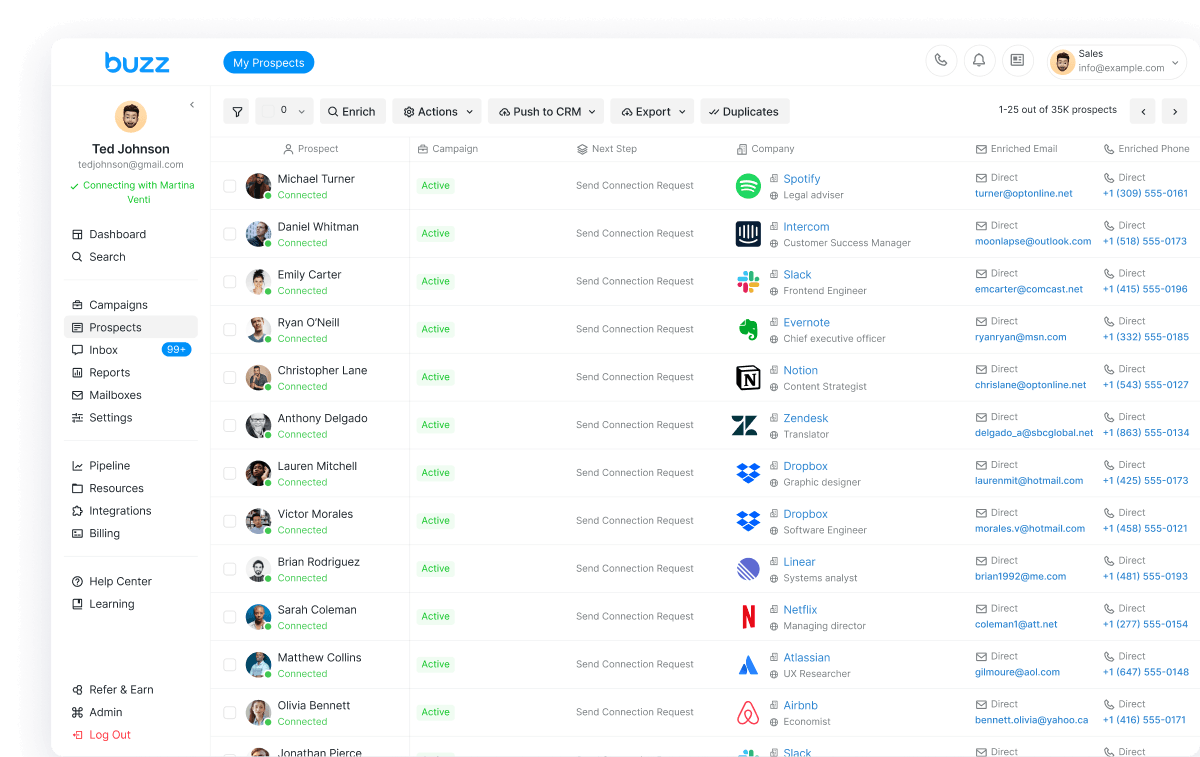
All-in-one sales engagement platforms help by keeping email, calls, and social messaging in a single workspace. That way, different reps are not tripping over each other or doubling up touches. AI can surface warm accounts based on opens, clicks, and replies across channels, so your team spends more time with people who are already leaning in.
Use AI to Personalize at Scale, Not to Mass-Produce Noise
AI is great at giving you a strong first draft. It can scan public information, summarize what a company does, spot recent news, and suggest hooks that match a persona or industry. That goes far beyond basic mail merge fields.
Shallow personalization sounds like: “Hi FirstName, saw you work at CompanyName.” Deeper personalization sounds like: “I noticed you are leading revenue operations and already using a modern CRM, so you might be dealing with…” That second version speaks to real context.
AI lead generation and data enrichment help you get there by pulling in:
- Firmographic data, like size, stage, and region
- Technographic data, like tools already in their stack
- Intent data, like topics they are actively researching
Still, a human should always be in the loop. Reps can quickly review drafts, fix tone, remove awkward lines, and add one or two custom sentences that show real research. We should avoid fake familiarity or claims that are not true. The goal is to be more accurate and respectful, not more sneaky.
Turn Outreach Data Into Smarter, Kinder Cadences
Every email you send is feedback. Opens, replies, and unsubscribes tell you what your audience likes and what they are tired of. Instead of guessing, we can let that data shape the next version of our cadences.
A simple rhythm helps. Once a month or at least once a quarter, review:
- Top subject lines by open rate
- Body copy that leads to real replies, not just clicks
- Send times and channel mixes that bring meetings, not complaints
Sales intelligence inside your platform can show deeper patterns, like which industries answer faster, which roles prefer very short emails, and which content offers lead to positive replies like “not now, but follow up later.” Those are all signs of respect on both sides.
Teams often find that shorter, value-heavy cadences win. Cutting a long seven-step series down to four thoughtful touches, adding better content, and using AI to test new angles can bring higher reply rates and fewer spam flags at the same time.
When we treat outreach email automation as a way to be more human at scale, not less, we earn our place in the inbox and build stronger pipelines that last.
Boost Outreach Results With Smarter Automation Today
If you are ready to scale your cold outreach without sacrificing personalization, Buzz AI can help. Explore how our outreach email automation streamlines prospecting, follow-ups, and testing so your team can focus on conversations that convert. Have questions about setup or integrations? You can contact us to get tailored guidance for your workflow.