The Silent Sales Killer Hiding in Your Inbox
Email deliverability sounds boring until it starts choking your sales pipeline. Your team keeps sending more outreach, sequences get longer, reps work harder, yet meetings still slip and everyone blames "cold leads" or says "email is dying." In many cases, the real problem is simple: your emails are not landing where buyers actually see them.
There is a huge difference between an email that is technically sent and one that shows up in the Primary inbox. Getting trapped in spam, promotions, or low-priority filters is like giving a pitch in an empty room. No matter how strong your offer is, it never has a chance.
When deliverability drops, revenue leaders feel it even if they cannot name it. Small changes in inbox placement can wipe out months of progress, waste expensive data, and quietly damage your brand. As teams plan mid-year and start thinking about Q2 and Q3 pipeline, this is the time to fix deliverability before big outbound pushes in late summer and fall.
We will break down common email deliverability myths that slow sales, explain what is really going on behind the scenes, and share practical steps sales leaders can act on right away.
Myth 1: "If IT Sends, It's Delivered"
Many teams stop caring once an email is marked "sent" and does not bounce. That feels like success on paper. But email platforms and corporate filters sort messages into many different buckets: primary inbox, promotions, low-priority folders, and spam.
Inbox providers do not only look at whether an address exists. They watch how people behave:
- Do they open your emails?
- Do they reply or forward?
- Do they delete without reading?
- Do they move you to spam?
If your outreach gets low engagement, filters learn that your messages are low value. You might still see sends and low bounce rates, but more and more messages quietly sink into places where humans never look.
This is why open rate alone can trick you. It might look "fine," while a growing part of your list never even gets a real shot. Better signals for leaders include:
- Inbox placement, not just sent and delivered counts
- Reply rate and positive engagement
- Performance by domain, not just at the sequence level
When a chunk of your list never sees your emails, every step of your funnel shrinks. Fewer replies, fewer meetings, fewer deals. Reps can look lazy or ineffective, even when they are doing everything you asked.
Some warning signs to watch:
- Sudden open drops across several mailboxes at once
- Certain domains underperforming while others stay steady
- "Cold" sequences that never warm up no matter how many steps you add
Myth 2: "More Volume Solves a Slow Quarter"
When pipeline looks thin, the natural reaction is "send more." Leaders ask for bigger lists, longer sequences, and extra touches. It feels like taking action, especially during slower spring or summer weeks.
But big, sudden spikes in volume often backfire. When your sending pattern changes overnight, filters notice. A flood of low-relevance or copy-paste messages tells inbox providers that your domain is risky. That can pull down your entire sender reputation.
On the human side, people are quick to delete yet another generic pitch. When prospects ignore or delete your messages, that negative pattern trains filters to keep placing you further from the main inbox.
A smarter volume strategy focuses on:
- Consistent daily sending, not random spikes
- Clear audience segments and relevant angles
- Warmed-up domains and mailboxes, especially before big pushes
You can lower pressure on email volume by pairing it with:
- Social outreach and connection requests
- Short voice touches for high-intent accounts
- Simple video messages that stand out in crowded inboxes
When channels work together, each one carries less weight, which helps protect email deliverability.
Myth 3: "Great Copy Beats Any Technical Issue"
Many teams put all their energy into copywriting and personalization. They assume that strong messaging will somehow cut through every filter. Good copy helps, but it does not erase weak technical basics.
Inbox providers still care about things like:
- Authentication records such as SPF, DKIM, and DMARC
- Age and history of your sending domain
- Health of your lists and how often they bounce
If you push old or purchased lists, you send risk signals. If you start blasting from a brand-new domain with no warm-up, filters get suspicious. If many people delete your messages without opening, or mark you as spam, that history follows you.
Clean, verified, enriched data plays a huge role here. Better data means:
- Fewer bounces and fake contacts
- More accurate targeting and relevance
- Stronger engagement signals from the right buyers
Work with your RevOps or IT team to shore up the basics first. Then layer on winning elements like clear value, short and honest subject lines, and simple, human language. Copy and technical health have to work together.
Myth 4: "Manual Sending Protects Our Domain"
Some leaders think automation is the enemy and that only hand-sent emails are "safe." The fear is that any kind of automation looks spammy. In reality, the problem is not automation itself; it is how it is configured and used.
Well-planned automation can actually protect your domain because it keeps you consistent. AI-driven workflows can:
- Spread sends across smart windows instead of random bursts
- Clean lists, manage bounces, and stop sending to risky contacts
- Adjust content by segment, intent, or persona so messages stay relevant
Using a single sales engagement workspace for email, social outreach, voice, and video helps you see the full picture. When you get more types of signals, it is easier to spot real interest and avoid over-emailing the wrong people.
If you set up warm-up, testing, and controlled scaling now, you can enter late summer and fall with email domains that are trusted, not stressed.
Myth 5: "Email Deliverability Is Just a Marketing Problem"
Email deliverability often falls into a gap between teams. Marketing thinks it belongs to sales, sales thinks it belongs to IT, and leadership only looks at booked meetings. Meanwhile, rep behavior shapes your sender reputation every single day.
Sales choices that affect deliverability include:
- Which templates they reuse and share
- How often they follow up and when they stop
- Where they source contacts and how clean those lists are
Sales playbooks, not just big marketing campaigns, feed the engagement signals inbox providers track. That is why marketing, sales, RevOps, and IT need a shared plan for:
- Which domains and subdomains handle what type of sending
- Acceptable daily volume across teams
- Joint reporting on deliverability and engagement, not just send counts
Sales intelligence is key too. When you use intent data, firmographics, and strong enrichment, reps can reach the right buyer at the right time, so they send fewer, higher-quality emails instead of spray-and-pray outreach.
At the executive level, deliverability metrics belong next to win rates and pipeline coverage. If your messages are not reaching buyers, the rest of the dashboard is distorted.
From Myths to Metrics: How to Fix This Quarter
The mindset shift is simple: stop asking "How do we send more?" and start asking "How do we send smarter so more of what we send is actually seen and answered?"
A quick leadership checklist:
- Are open and reply rates sliding even though your lead sources look the same?
- Are reps leaning on old lists from past quarters instead of fresh, enriched data?
- Do you have real visibility into inbox placement and domain health?
- Are your teams using a mix of email, social outreach, voice, and video, or just blasting email?
Helpful moves for the next few weeks:
- Pause low-performing sequences and retire stale lists
- Slow or stop sending to risky segments and warm new domains gradually
- Get sales, marketing, RevOps, and IT aligned on shared deliverability goals
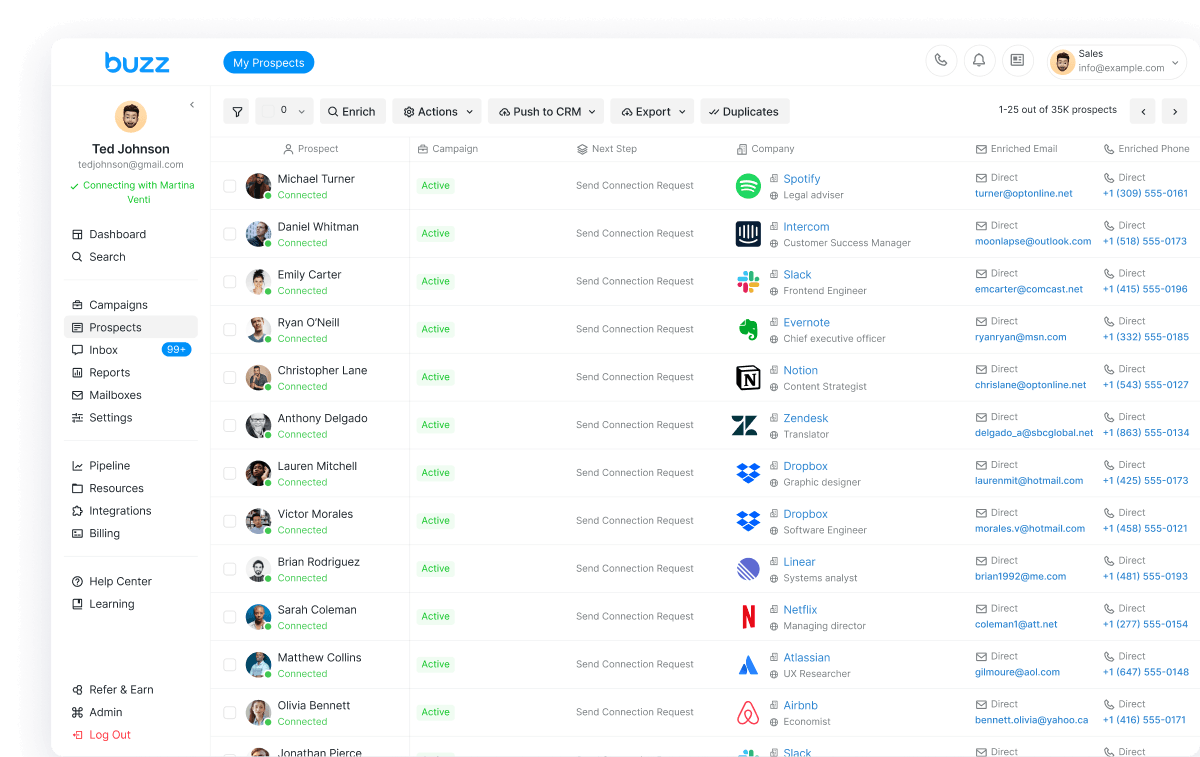
This is the kind of problem that rewards focus, not panic. With an all-in-one sales engagement workspace like Buzz AI, teams can keep data clean, orchestrate multichannel outreach from one place, and let AI guide smarter sending patterns. That way, more of your email outreach actually lands, more prospects respond, and your pipeline grows without adding more noise to crowded inboxes.
Improve Your Email Results With Reliable Inbox Placement
If you are ready to stop guessing whether your emails are reaching the inbox, we are here to help. Our email deliverability solution at Buzz AI is designed to identify issues, protect your sender reputation, and keep your campaigns performing. Partner with us to uncover what is holding your emails back and build a strategy that scales with your business. Have questions about next steps or implementation details, just contact us and our team will walk you through your options.