AI sales platforms promise big gains, but they can also create chaos if we are not careful. When your team already works across a dozen tools, one more tab can feel like one too many. This guide walks through how to evaluate an AI sales platform in a calm, structured way so you get more pipeline without burying your reps in tech.
We will look at how to spot stack overload, set clear outcomes before any demo, judge tools by real workflows, cut software sprawl with all-in-one engagement, and run a low-risk pilot that proves impact. Our goal is simple: help you make smarter AI choices that support your sales team through busy quota seasons, not slow them down.
Make Smarter AI Sales Choices Without Tech Chaos
Right now, AI in B2B sales is no longer a nice add-on. It is expected. But most revenue teams already feel stretched, jumping between email tools, dialers, social platforms, and data vendors while leadership asks for more pipeline with fewer resources.
That pressure gets intense in the middle of the year, when quotas are set, summer cycles kick in, and leaders want clear signals that their tech is actually helping. The tension is real: you want better targeting, smarter personalization, and higher output, but you do not want to rip up working workflows or overload reps with yet another login.
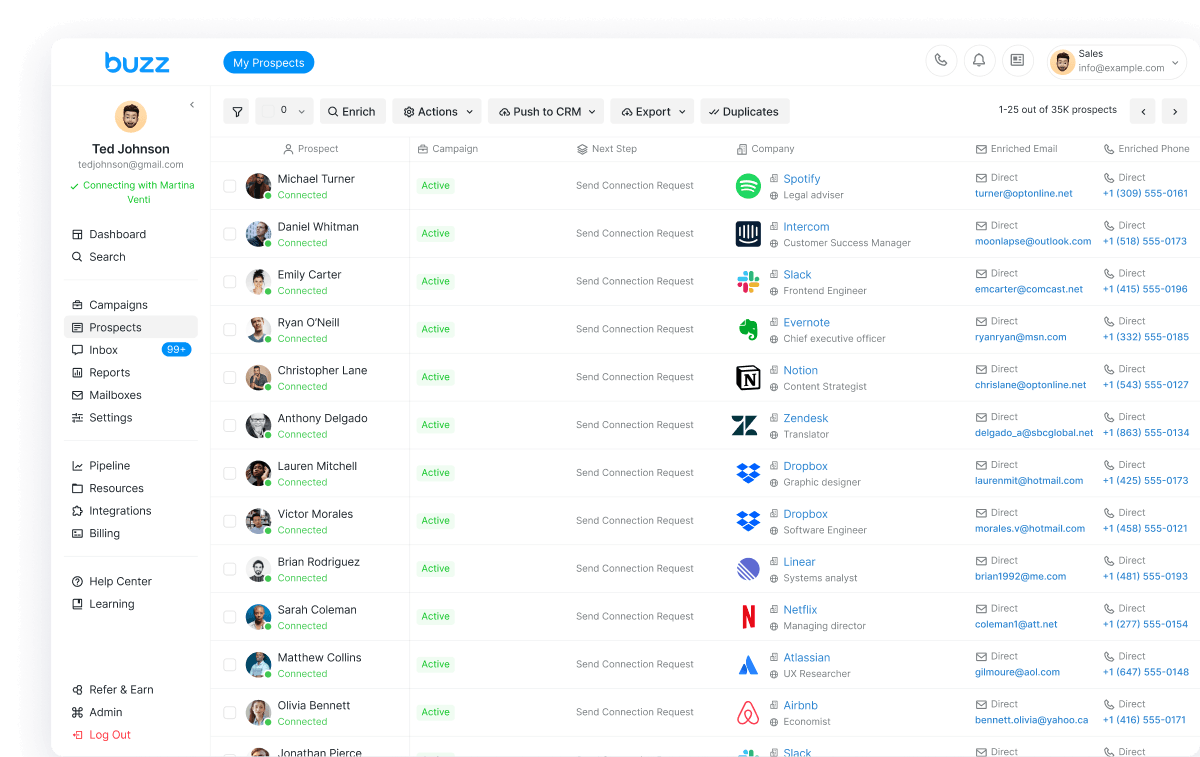
At Buzz AI, we built an all-in-one AI-powered sales engagement platform that pulls prospecting, enrichment, and multi-channel outreach into one place. We will use that kind of setup as an example, but the framework here is vendor-agnostic and works no matter which AI sales platform you are checking out.
By the end, you will have a simple lens to judge tools, the metrics that really matter, red flags to watch for, and a way to pilot AI that grows pipeline without growing chaos.
Recognize When Your Sales Stack Is Already Too Full
Before you add anything, you need to know if your current stack is already overflowing. Some warning signs show up in daily behavior, not in budget sheets.
Common signals of tech overload include:
- Reps clicking through several tools just to run one sequence
- Duplicate or conflicting records in your CRM
- Managers spending hours fixing integrations instead of coaching
- Constant confusion over which tool should be used for what
This kind of fragmentation quietly slows everything down. Context switching eats focus. Data gets messy. Deals stall because no one fully trusts the numbers.
Point solutions also bring hidden costs, even when each one seems small on its own:
- More onboarding and training for every new hire
- Extra admin work for RevOps to glue tools together
- Overlapping features that no one uses
- Shadow workflows created by reps who are just trying to keep up
Before you even schedule an AI sales platform demo, run a simple audit. List each tool with: primary function, who uses it, how often it is used, and how it ties to pipeline. Ask SDRs, AEs, managers, and RevOps what actually helps and what feels like busywork.
Early in the year is a good time for this kind of clean-up. You still have room to adjust before late-year budget talks, and you can align any AI trial with coming quota resets and territory tweaks.
Define Clear Outcomes Before You Demo Any AI Tool
Feature lists are shiny. Outcomes pay the bills. If you head into a demo without clear goals, every new feature looks helpful and you risk stacking tools just because they look impressive.
Start with 3 to 5 measurable outcomes. For example:
- Cut research time per prospect
- Increase quality outbound touches per rep
- Improve reply and meeting rates
- Replace several tools with one platform to simplify workflows
Then split what you see into must-haves and nice-to-haves. For many teams, must-haves look like:
- Reliable CRM sync
- Multi-channel engagement across email, social, phone, and video
- Compliance controls and role-based permissions
- Clear activity tracking and reporting
Nice-to-haves could be advanced charts, niche connectors, or cosmetic features that look cool but do not change results.
Map those outcomes to each role: SDRs want faster prospecting and easy personalization, AEs need context at the account level, managers want visibility into activity and pipeline, and RevOps needs clean data flow and strong governance.
Before any demo, build a quick checklist: your KPIs, pain points by role, the workflows you want to fix first, and what success in a 60 to 90 day pilot should look like. This keeps vendor talks focused and shortens your decision process.
Evaluate AI Sales Platforms Through Workflow, Not Hype
To really judge an AI sales platform, zoom in on daily workflows. Forget the buzzwords, walk through how a rep would work from start to finish.
Key questions to ask:
- Can reps find, enrich, and engage prospects in one interface?
- Does AI actually remove manual tasks like research and writing, or does it just add new steps to click through?
- Can the system adapt messaging by persona, industry, and season without constant admin rebuilds?
Dig into integration and data quality too. Ask how the platform connects to your CRM, how often data is refreshed, how it handles duplicates, and what enrichment sources it uses. You want clear, honest answers, not vague promises.
Look closely at how the tool balances automation with human judgment. Strong AI should:
- Suggest targets, but let reps adjust priorities
- Draft outreach, but keep it easy to edit
- Trigger follow-ups, but allow human control on timing and tone
Be careful with black box logic that cannot be explained. If you do not know why prospects are ranked or why messages read a certain way, it is hard to trust the system or coach your team.
Reduce Software Sprawl with All-in-One Engagement
One practical way to keep your tech stack calm is to consolidate. When you replace several point tools with one AI sales platform, you cut vendors, logins, and overlap.
In real terms, that can mean shifting from separate tools for:
- Email sequencing
- List building and prospect discovery
- Data enrichment
- Dialing and call logging
Into a single platform that covers prospecting, enrichment, outreach across channels, and performance insights. That is the type of approach we take with Buzz AI, pulling email, social, phone, and video engagement into one interface so teams do not have to juggle as much.
Consolidation also has cultural and operational ripple effects. When everyone works in the same system, managers get a clear view of activity and pipeline, RevOps spends less time chasing integrations, and new reps ramp faster because they learn one main tool instead of five.
To pick tools that are ready for consolidation, look for platforms that are modular, that plug cleanly into your CRM, and that offer structured migration support so you can move sequences, templates, and data without breaking live campaigns.
Launch a Low-Risk Pilot That Proves Real Pipeline Impact
Once you find a fit, resist the urge to roll it out to everyone at once. A focused 60- to 90-day pilot lets you see real impact with less risk.
Pick a small but representative group across segments and keep a control group on the old stack. Track both performance and adoption, including:
- Time spent on prospecting and research
- Quality outbound touches per rep
- Meetings, opportunities, and pipeline created
- Reply and conversion rates
- Daily active users and workflows launched
Run a short enablement program that zeroes in on key workflows instead of trying to teach every feature. Hold weekly check-ins to review data, gather feedback, and fine-tune sequences with your pilot reps. Partner closely with RevOps to watch data hygiene, sync behavior, and any odd records.
Before the pilot starts, write down a simple go or no-go framework. Include performance thresholds, user satisfaction goals, and financial markers like expected payback or tool consolidation savings. When the pilot ends, you can make a clear decision instead of going on gut feel.
If you want an example of a unified AI sales platform that aims to cut software sprawl while supporting email, social, phone, and video outreach in one place, Buzz AI was built for exactly that kind of evaluation process.
Boost Your Revenue With an AI-Driven Sales Workflow
If you are ready to turn more leads into customers with less manual effort, our AI sales platform is built to help you move faster and sell smarter. At Buzz AI, we use advanced automation and data-driven insights to prioritize your pipeline and personalize every touchpoint. You can explore our features to see how they fit your current sales stack, then reach out so we can walk through your specific goals. If you have questions or want a tailored demo, just contact us and we will help you get started.