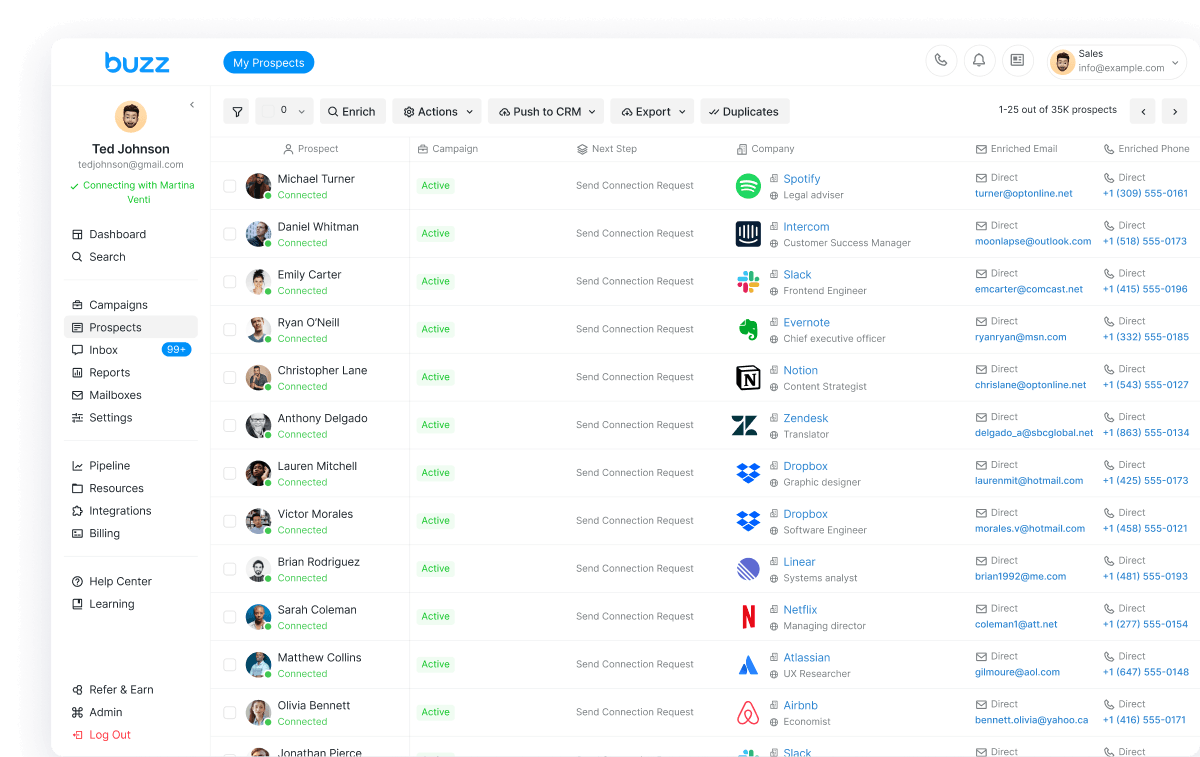
A short, focused pilot can tell you more about an AI sales engagement platform than months of deck reviews and demos. When we keep the scope tight and the questions clear, executives get real proof, not guesswork, and teams get a safe way to try something new without blowing up current plans.
In this guide, we walk through how to run a two-week pilot that makes sense to your CRO, your board, and your frontline reps. We cover timing, success criteria, stakeholder alignment, the day-by-day plan, what data to capture, and how to write a simple go/no-go memo that leads into a real revenue plan, not another stalled project.
Why a two-week pilot is a strategic advantage
A well-built two-week pilot does three big things for you. It reduces risk, speeds up decisions, and gives you concrete proof of what an AI sales engagement platform can do across email, social, calling, video, and more.
From an executive seat, the win is speed with control. You get:
- Clear goals set upfront
- Guardrails around data, reps, and accounts
- Real activity and results in days instead of long project cycles
By the end of the pilot, you should be able to answer a simple question: does this platform help us create and progress pipeline in a way that is worth changing how reps work?
Deciding if now is the right time to pilot
Mid-year is a strong window. June often comes with reviews, board updates, and pressure to tune the go-to-market engine before Q3 and Q4 pipeline sprints. A fast pilot fits well into that rhythm.
Signs you might be ready include:
- Stalled or lumpy pipeline from outbound
- Inconsistent rep activity and follow-through
- Heavy manual prospecting in spreadsheets or inboxes
- Low response rates to cold email
- Fragmented tools for calling, social, email, and video
You also need a basic level of readiness. That means leadership sponsorship, at least one manager willing to champion the pilot, a small group of reps that reflect your real motion, and CRM data that is at least clean enough to know who owns what.
Defining sharp success criteria before you start
A pilot without clear success criteria turns into a debate. To avoid that, start with the business problem. For example, are you trying to?
- Increase meetings booked per rep?
- Improve outbound efficiency per hour of activity?
- Raise personalization quality without slowing reps down?
- Reduce tool chaos so reps work from one workspace?
Then, turn those goals into simple pilot metrics, such as:
- Response rates to outbound sequences
- Meetings set per rep during the pilot window
- Time to first touch for new leads that arrive during the two weeks
- Share of prospects touched across at least two channels
- Estimated time saved by automation and AI-generated steps
Set clear ranges so your leadership team can decide fast. For example, you might label results as good, great, or exceptional based on meeting lift or productivity gains. The labels matter less than having them aligned before day one.
Mapping stakeholders and designing the two-week plan
Strong pilots live or die on stakeholder alignment. At a minimum, you want:
- CRO or Head of Sales for sponsorship
- Sales Ops or RevOps to connect CRM and reporting
- IT or Security to clear data and access questions
- Marketing to align on messaging and target segments
- Enablement to handle quick training
- Frontline managers and a small, trusted rep group
Clarify who owns what. Someone needs to own success criteria, someone needs to configure the sales engagement platform, someone needs to watch adoption and hygiene, and someone needs to compile results and write the decision memo.
Then set a focused calendar:
- Days 1, 2: Set up, integrations, safety checks, and training
- Days 3, 10: Active outbound with agreed sequences and call blocks
- Days 11, 12: Pull metrics and gather feedback
- Days 13, 14: Executive readout and go/no-go decision
Scope matters. Pick one or two sales segments, such as outbound SDRs in mid-market, and a realistic set of accounts. Do not try to cover every team, every region, and every scenario in two weeks.
Making the platform work for reps and capturing results
Reps will judge the platform on how it feels in real work. Start with familiar scenarios like:
- New logo prospecting into a clear account list
- Follow up from recent events or campaigns
- Re-engaging closed-lost or stalled deals
Focus on usability over novelty. In a two-week pilot, the big wins usually come from:
- Faster, cleaner list building and enrichment
- Simple, reusable multichannel sequences
- Easy call queues and follow up tasks in one place
Set a few non-negotiable habits for pilot reps, like daily login, sequence activity, social touches, and quick end-of-day notes. Those notes give you context when you review the numbers.
While the pilot runs, capture both data and stories. On the quantitative side, track:
- Meetings booked and opportunities created
- Contact and reply rates by channel
- Average touches per prospect before a response
- Time spent per activity or per meeting booked
On the qualitative side, listen for feedback about ease of use, how well managers can coach from the data, and whether Ops sees cleaner, richer records. Call out fast wins like accounts you had struggled to crack or prospects who finally replied after a multichannel flow.
Writing a go/no-go memo and turning it into a 12-month plan
Your decision memo should start with a single question: should you adopt this AI sales engagement platform to improve outbound productivity and pipeline creation over the next year? Then walk through a simple scorecard.
Keep it short and clear:
- Results vs. the good/great/exceptional targets you set
- Adoption levels across the pilot reps
- Impact by channel, such as email, calls, social, and video
- Any risk, security, or compliance findings
- Rep, manager, and Ops sentiment in a few short quotes or summaries
End with a straight recommendation: go, no-go, or go-with-guardrails. Guardrails might mean a limited team rollout, slower integration steps, or focusing on a few use cases first.
Finally, connect the pilot to a 12-month revenue story. Take the impact from your test group and map it, carefully and honestly, across your full team and full year. Show how a modern platform supports your go-to-market motion, hiring plans, and territory strategy, especially as work ramps in the warmer months and teams push to close strong after mid-year.
At Buzz AI, we built our all-in-one sales engagement platform to make this type of focused, fast pilot possible, from prospect identification and enrichment to multichannel engagement in a single workspace. When you design your two-week test with intention, you give your leadership team something rare: the confidence to make a big technology decision in days, backed by real work, clear data, and a path to revenue over the next 12 months.
Accelerate Meaningful Sales Conversations With AI-Powered Precision
If you are ready to modernize your outreach and close more opportunities with less manual effort, our sales engagement platform is built to help your team move faster and sell smarter. At Buzz AI, we combine automation with real-time intelligence so your reps can focus on the conversations that matter most. We work closely with each organization to tailor workflows, sequences, and analytics to their unique sales motion. Have questions or want to see what this looks like for your team in practice? Just contact us and we will walk you through the next steps.