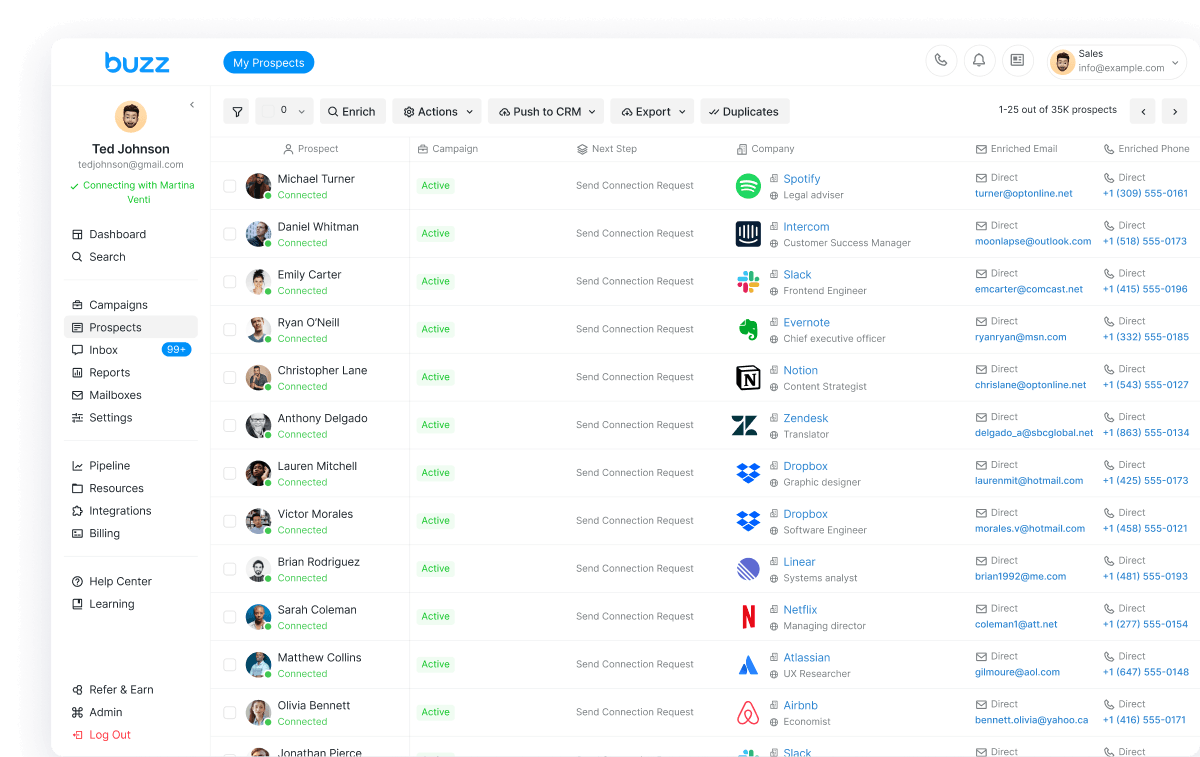
Sales teams that win today are the ones who spot in-market buyers early and move fast. High-intent prospect signals let us see who is serious, who is just browsing, and who needs follow-up right now so we do not waste time on low-value activity.
This playbook walks through how to find those signals, score them, and route them to the right reps in real time. We will talk about buyer behavior across email, social, phone, and video, and how modern sales intelligence platforms turn scattered signals into a clear picture of who is ready to talk.
Turn Buyer Signals Into Revenue in Real Time
Budgets are tighter, deal cycles feel longer, and every new opportunity is harder to open. After early-year planning, April often becomes a key window, when teams start active research before mid-year budget resets. That is when intent goes from nice-to-have to non-negotiable.
High-intent prospect signals are real actions that show a buyer is in the market, like:
- Pricing or plan page visits
- Trial or freemium sign-ups
- Replies to outbound sequences
- Direct message replies on social or video
The promise of this playbook is simple: create a repeatable way to catch these signals across channels, score them, and route them so reps focus on accounts that are ready for a real conversation. Modern sales intelligence platforms bring these workflows into one place so teams are not jumping between tools or losing context.
What High-Intent Prospect Signals Really Look Like Today
Not all engagement is equal. A newsletter click is not the same as a demo request, and a casual social like is not the same as a reply that asks for pricing.
Think of two buckets:
- Low-intent: generic blog views, passive webinar registrations, likes on a social post
- High-intent: repeat visits to product pages, trial activations, calendar bookings, direct responses to outreach
To make this clear, it helps to group signals into four main categories:
- Behavioral: site visits, content downloads, webinar or live event attendance, repeat logins to a free tool
- Conversational: email replies, social DMs, call outcomes like "interested" or "needs follow up," responses to video messages
- Firmographic: company size, industry, region, buying center, target account status
- Technographic: tools already in their stack that pair well with your solution
The data that feeds these signals comes from a mix of sources. First-party data sits in your CRM or product, like usage and contact history. Third-party data shows up from review sites, partner ecosystems, and public intent signals. Then there are in-channel signals, like live activity on email, social, phone, and video, that sales intelligence platforms pick up and sync in real time.
Mapping Buyer Journeys to Signals That Actually Matter
To use signals well, we have to map them to buyer stages. A single blog view in early awareness is nice, but a pricing comparison in evaluation should ring a bell.
You might map it like this:
- Awareness: first website visit, top-of-funnel blog views, light social engagement
- Consideration: webinar attendance, product overview video, solution guide downloads
- Evaluation: pricing page views, comparison sheets, multiple product deep-dive pages
- Decision: demo requests, contract or security reviews, messages asking about timing
Context and timing matter a lot. For example, research spikes in April as teams prepare for mid-year changes, while December browsing might just be curiosity. Signals should have an expiration window so a hot account last month is not treated the same as one that engaged one hour ago.
The real magic happens when we connect channels. If a prospect:
- Opens multiple emails over a few days
- Views a rep’s LinkedIn profile and company page
- Takes a call and asks detailed questions
That pattern shows more intent than any single metric. Cross-channel patterns give a truer picture of where they are in the journey.
Building a High-Intent Scoring Engine That Your Reps Trust
A scoring engine turns messy signals into a simple answer: how hot is this prospect right now, and do they fit our ideal customer profile?
A simple scoring framework might weight:
- Actions by stage: demo request higher than webinar, webinar higher than blog
- Effort level: form fills and meeting bookings higher than passive views
- Proximity to revenue: conversations with budget owners higher than top-of-funnel contacts
- Account fit: firmographic and technographic match to your best customers
Sales intelligence platforms sit in the middle of all of this, centralizing multi-channel activity into one intent score per contact and account. As new signals stream in, the score updates so reps always see the freshest view.
To keep trust high, we need clear rules and regular check-ins:
- Hold monthly or quarterly reviews where sales and marketing walk through the top-scored accounts
- Adjust weights when some actions are overvalued or undervalued
- Watch for score inflation so reps do not start ignoring "hot" alerts
When reps see that top scores match real pipeline, they start to believe and use the model.
Smart Routing Rules That Put Reps in Front of in-Market Buyers
Once we know who is in-market, we have to get those buyers to the right person, fast. That means clear routing logic tied to intent scores and account type.
For example:
- Very high intent, high-fit accounts: route straight to an AE with an urgent alert
- Medium intent, good fit: send to an SDR for quick qualification and follow-up
- Low intent, strong fit: drop into a structured nurture track with watchful monitoring
Routing must also respect:
- Territory and region
- Industry or segment specialization
- Channel strengths, like which reps own video or social outreach
With a shared workspace, routing is not just assigning names. It is also triggering:
- Real-time alerts to account owners
- Auto-created tasks and prioritized queues
- Safeguards so weekend or holiday signals do not go stale before anyone sees them
Orchestrating Multi-Channel Plays Around Live Intent Signals
Once routing is in place, we can build plays around live intent. Think of a hot account that visits the pricing page, reads a case study, then replies to an outbound email. In a few hours, a coordinated response can go out by:
- A tailored email that speaks to their use case
- A LinkedIn touch from the AE, referencing the content they viewed
- A targeted call with a short, direct script based on their behavior
Different signal types call for different outreach. If someone is clearly doing competitive research, we speak to differentiation. If signals show renewal risk with another tool, we focus on switching and risk reduction. If they engage with video, we respond with a short video message, not just text.
Sales intelligence platforms act like a command center here, showing a single engagement timeline, suggesting next best actions, and giving channel-specific templates so reps can move fast without bouncing between systems.
Launch Your High-Intent Signal Playbook in 30 Days
Rolling this out does not have to take forever. A simple 4-week plan can get a first version live:
- Week 1: Inventory your data sources and pick the must-track signals
- Week 2: Set up basic scoring in your sales intelligence platform and connect channels
- Week 3: Configure routing rules, alerts, and queues based on score thresholds
- Week 4: Pilot with a small team, gather feedback, then refine weights and rules
To keep adoption strong, set clear follow-up expectations by intent tier, give managers simple dashboards, and hold short weekly standups to review wins and misses while behavior is fresh. Over time, you can add more signals and more advanced plays, but the core idea stays the same: catch real intent early, score it clearly, and get the right rep in front of the right buyer at the right moment.
Turn Your Sales Data Into Predictable Revenue Growth
If you are ready to move beyond guesswork and fragmented sales tools, our team at Buzz AI can help you put your data to work. Explore how our Salesforce integration and advanced sales intelligence platforms give your reps the insights they need exactly when they need them. Have questions about implementation, onboarding, or fit for your sales org? Simply contact us and we will walk you through the best path forward.