Rethinking Outbound as a Scalable Engine
Outbound can be a steady growth engine, or it can feel like random noise that annoys buyers and drains your team. The difference is not just talent. It is whether you treat outbound as a system that can be designed, measured, and improved. When you do that, you get clarity, focus, and a pipeline you can actually forecast.
Most outbound breaks down for a few simple reasons. Tools are scattered, so email sits in one place, calls in another, and social activity somewhere else. Reps are left to guess on messaging and timing. Leaders see activity but not real performance. The outcome is familiar: low replies, burned domains, and people saying outbound is dead.
A high-converting outbound engine looks very different. It is:
- Centralized, with prospects, sequences, activity, and reporting in one place
- Multichannel by default, so email, phone, video, and social touch work together
- Guided by real data, not gut feel and random hunches
Automation plays a key part when it is done right. Cold outreach automation should not be a robot spraying inboxes. It should handle the repetitive work, like follow-up scheduling and task reminders, so your reps can spend their time on live conversations. Guardrails like shared templates, rules, and approvals help protect your brand voice, even as volume grows.
Laying the Foundation with ICP, Segments, and Data
Before you worry about scripts or tools, you need to know exactly who you are trying to reach and why. That starts with a clear ideal customer profile, or ICP. Without it, even the smartest sequence is just guesswork.
You can tighten your ICP by looking at:
- Firmographics such as industry, company size, and region
- Tech stack, funding stage, or other easy-to-spot traits
- Pain signals like fast hiring, new markets, product launches, or compliance shifts
Put this into a simple one-page document that sales, marketing, and leadership all agree on. From there, break your ICP into 3 to 5 segments. For example, mid-market SaaS, professional services, and manufacturing might each have different use cases and languages. Map a few segment-specific problems you solve and the value you bring in each case.
Data quality is the next layer. You need a clean, enriched, and actionable database. That means:
- One central place where lead and account data live
- Fewer duplicates, messy fields, and stale records
- Enrichment that fills the gaps on role, seniority, direct phone, email, company size, and tech stack
Cold outreach automation is only as smart as the data underneath it. With strong data, your system can send targeted, relevant messages instead of generic blasts that miss the mark.
Designing a Multichannel Outbound Playbook
Once your ICP and data are tight, you can design a multichannel playbook that your whole team can run. Each channel has a different job in the buyer’s experience.
Here is a simple way to think about roles:
- Email as the main first touch for value, stories, and meeting asks
- Phone for real discovery, deeper questions, and warm follow-up on opens or replies
- Video as a pattern-breaker, especially for key accounts or senior contacts
- Social for light touches, content engagement, and timing cues from prospect activity
Instead of one-off touches, map a 10 to 15 touch sequence across 2 to 3 weeks. A simple flow could look like: email, social connection request, email bump, call, video message, resource email, then another call. Vary days and times, and let replies, opens, and clicks trigger the next best action.
Templates and playbooks keep this consistent across the team. You might standardize plays such as:
- Net-new ICP outreach
- Event or webinar follow-up
- Closed-lost reactivation
Save proven email templates, talk tracks, and social scripts so new reps can ramp faster. Cold outreach automation then makes sure every lead runs through the full playbook, not just the first touch that a busy rep has time for.
Crafting Messages That Get Real Replies
Even the best sequence fails if the message is weak. Strong outreach starts inside the prospect’s world, not with your product pitch. Subject lines and openers should speak to outcomes or risks they care about, such as missed revenue, long ramp times, or bad data that wastes headcount.
Aim each message at one clear problem. Drop the buzzwords and write as you talk in a short voicemail. That keeps things human and easy to scan.
Personalization does not mean rewriting every email from scratch. You can mix:
- Segment-level personalization, like role, industry, and common triggers
- Micro personalization for high-value accounts, such as a recent announcement or content they shared
Cold outreach automation can pull in dynamic snippets, like role, company, segment, or use case. That way, every message feels closer to 1:1 without forcing your reps to start with a blank page.
Make your calls to action low-friction. Ask for a quick time window, a 2-minute look at a resource, or a simple reply like “Not a focus this quarter.” Clear options help prospects respond faster, and your team can qualify and move on without endless chasing.
Protecting Deliverability and Channel Health
Volume without deliverability is just noise. If your emails land in spam, the perfect subject line does nothing. Poor list quality, high bounce rates, and constant complaints all hurt your sender reputation.
Basic hygiene matters. That includes authenticated domains, realistic sending limits, and gradual warm-up for new inboxes. On top of that, set smart sending rules across channels:
- Cap daily emails per sender to keep patterns natural
- Use more frequent touches only for high-intent or opted-in segments
- Limit calls and social touches so you are not hammering one person in a short span
Automation should protect your channels, not just push harder. Set your cold outreach automation to skip known bad or risky addresses, pause on unsubscribes and hard bounces, and stop after clear “not interested” replies. Regularly prune and refresh lists, and retire sequences that keep drawing spam complaints or very low engagement.
Operationalizing with Workflow, Roles, and Metrics
To turn outbound into a real engine, you need clear roles, repeatable workflows, and honest metrics. Many teams find it helpful to split work like this:
- SDRs or BDRs own prospecting, first-touch sequences, and early qualification
- AEs take over for deeper discovery, tailored demos, and deal strategy
- RevOps or enablement teams keep data clean, maintain playbooks, and tune the tech
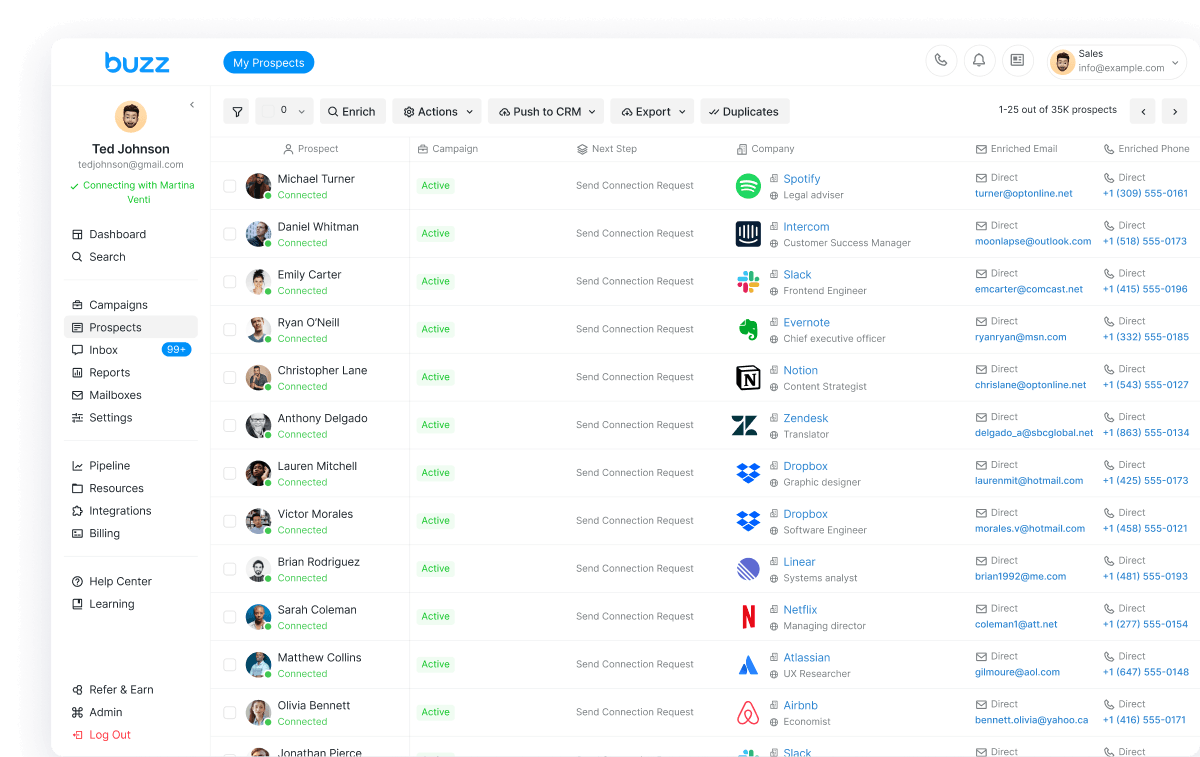
All of that works best in a single system where email, phone, video, and social activity live together. When every touch is logged in one place, reps keep context and leaders see the true story of each account. Less tool-hopping means more time actually running sequences.
Finally, track the numbers that matter: open rate, reply rate, positive replies, meetings booked, and pipeline created. Break these down by segment, channel, message, and sequence. Reports from your cold outreach automation can reveal best-performing steps and send times. Use those insights to tweak subject lines, reorder touches, or shift focus to segments that convert best so your outbound engine keeps getting stronger.
Start Turning Cold Prospects Into Real Conversations
If you are ready to scale your outbound without burning hours on manual tasks, our cold outreach automation is built to help you do exactly that. At Buzz AI, we focus on making your outreach smarter, more targeted, and easier to manage. Whether you want to explore a tailored setup or need help deciding if this fits your workflow, contact us so we can walk you through your best next step.