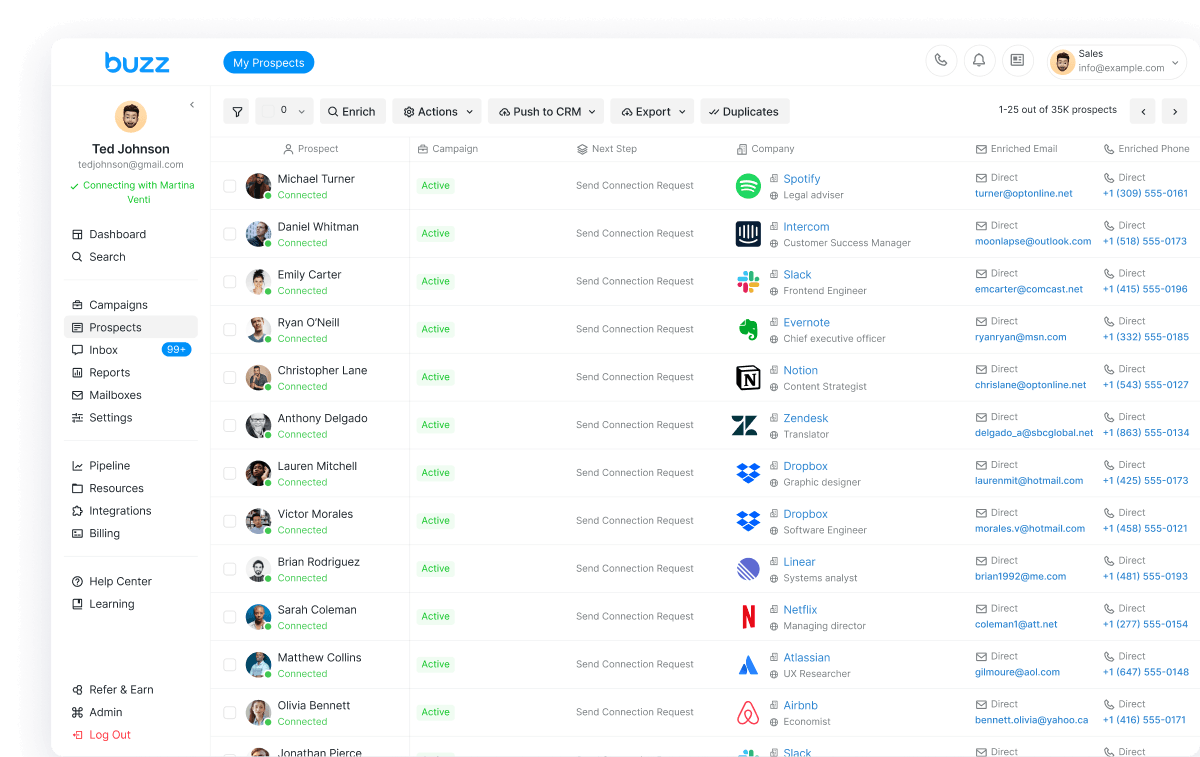
Your email outreach is not just about getting replies this week. It is quietly building a pool of data that can shape your whole revenue strategy. Every send tells you something about who cares, who ignores you, and which offers actually move people forward.
In this article, we will walk through how to treat email outreach like a long-term data asset instead of a one-off task. We will talk about what most teams get wrong, what signals to track, how other channels fit in, and how AI can turn all of this into better pipeline decisions.
Your Email Outreach Is Quietly Shaping Revenue
Most teams see email outreach as a volume game: write a sequence, push send, hope for meetings. But there is a better way to look at it. Think of every single email as a small data point that feeds a bigger revenue system.
Every action creates a signal:
- Sends and opens show reach and inbox placement
- Replies, positive or negative, show message and offer fit
- Bounces and spam complaints show list health
- Unsubscribes show when you are off-track with value
When we zoom out, those signals become a living map of your market. For revenue leaders trying to do more with fewer tools, owned outreach data becomes an edge. It is data that is yours, not rented from ad platforms, and it gets smarter over time if you treat it right.
Why Traditional Email Outreach Leaves Money on the Table
Traditional outreach habits waste that potential. Many teams still work off static lists and generic templates. They send the same copy to every title in every industry and call it a day.
Common patterns that hurt revenue:
- Spray and pray sequences to old, unclean lists
- Chasing vanity metrics like opens and total sends
- Little or no testing of angles, offers, or timing
- No shared system for tagging replies or reasons for no’s
On top of that, the tools often sit in silos. One tool for email, another for social outreach, a different dialer, another place for enrichment, and a CRM that gets partial data. Engagement history is scattered. That means:
- Weak deliverability and more spam filters
- Wasted paid leads that never get thoughtful follow-up
- Slow or broken feedback loops on what actually converts
- No learning system to steadily improve pipeline quality
You end up sending more, but not getting smarter.
Treating Email Outreach as a Compounding Data Asset
When we treat each campaign like a data experiment, email outreach turns into a feedback engine. The goal is not just meetings this week, but insight that improves every future send.
Key signals you can collect and standardize:
- Reply types: interested, not a fit, timing issue, wrong person
- Timing: days and hours tied to better response by segment
- Persona patterns: titles and roles that lean in or ignore you
- Account-level engagement: multiple contacts showing interest
- Content resonance: which offers, problems, and stories hit
Once that data is clean and consistent, revenue decisions get easier:
- Double down on industries and problems that reply with intent
- Retire offers that draw curiosity but not real next steps
- Shift resources from low-intent segments to higher-yield ones
- Route and prioritize accounts based on engagement, not guesses
This is how outreach starts to compound. The more you send, the smarter your targeting, offers, and sequencing become.
Unifying Email, Social, and Call Data for Smarter Plays
Of course, buyers do not live only in their inbox. They jump between email, social, phone, and sometimes video. Modern sales engagement works best when those touchpoints live in one view.
When email, social outreach, dialer activity, and video are tracked together, you see a full story:
- Email opens combined with profile views on social
- Call outcomes tied to previous email and social touches
- Video watches linked to follow-up emails and meetings booked
This unified picture helps teams run smarter plays:
- SDRs can pass accounts to AEs with clear context and history
- AEs can see which channels warmed an account before a call
- Marketing can line up content and outreach around the same signals
- Leadership can forecast based on real buying behavior, not just form fills
Instead of one team pushing emails and another team dialing in the dark, everyone works off the same engagement source of truth.
How AI and Enrichment Turn Engagement Into Revenue Insight
Once you have unified engagement data, AI can do the heavy lifting at a scale humans cannot match. AI can scan millions of interactions and surface patterns that would be hard to spot by eye.
Practical ways AI can support revenue teams:
- Suggest subject lines and angles that work for specific segments or regions
- Recommend follow-up wording based on the last email or call result
- Reorder sequences in real-time based on who opened, clicked, or replied
- Flag accounts that look like high-intent before they fill out a form
But AI is only as strong as the data you feed it. High-quality, enriched data from your email and social outreach matters more than massive, unqualified lists. Enrichment gives each contact real-world context.
Data enrichment can include:
- Titles and seniority
- Tech stack and tools they use
- Firmographics like size and industry
- Trigger events like new hires or product launches
With that, outreach feels more relevant, and the signals you get back carry more meaning.
Data Hygiene, Deliverability, and a Revenue-Grade System
Many leaders overlook the quiet multipliers: clean data and deliverability. If your emails never hit primary inboxes, all your clever copy and AI support are wasted.
Good data hygiene practices:
- Verified addresses before sending to new lists
- Regular removal of hard bounces and role accounts that never reply
- De-duplication so prospects are not hit from multiple angles at once
- Tracking role and domain changes so you do not send to stale inboxes
These habits protect your sender reputation and keep your outreach asset fresh. Over time, this feeds a stronger operating system for revenue, not just a series of one-off campaigns.
A revenue-grade outreach setup usually includes:
- Centralized engagement data instead of siloed tools
- Unified outreach across email, social, dialer, and video
- Shared rules for tagging replies and logging outcomes
- Embedded AI assistance that turns raw signals into next-best actions
Agencies, solo operators, and large teams can all follow the same pattern, just at different sizes. Start small, but keep the same mindset: every send should teach you something useful.
Turn Every Send Into a Strategic Asset
The real shift is simple: move from “send more emails” to “build a reusable, learning outreach dataset.” Once you see email outreach as a data asset, you stop chasing volume for its own sake and start building something that feeds your future pipeline.
A few smart next steps for revenue leaders:
- Instrument your outreach so every send, reply, and bounce is recorded
- Standardize how your team tags replies and reasons for no’s
- Centralize engagement data across email, social, calls, and video
- Pilot AI-driven insights on one segment, then expand what works
At Buzz AI, we focus on helping teams turn this mindset into daily practice, with sales engagement that pulls email, social, dialer, and video into one AI-supported workspace. As buying cycles get noisier and inboxes stay crowded, the teams that treat outreach as a long-term data asset, not just a numbers game, will be the ones that keep growing while others stall.
Start Turning Cold Prospects Into Warm Conversations Today
If you are ready to get more replies and booked meetings from your campaigns, let our AI-driven email outreach do the heavy lifting for you. At Buzz AI, we help you personalize messages at scale so your team can focus on closing deals instead of writing drafts. Share your goals and audience with us, and we will help you launch a high-impact strategy fast. Have questions or need a custom approach? Just contact us and we will walk you through the next steps.