Turn Spring Prospecting Into Multichannel Momentum
Spring is a great time to reset how we do outreach. Pipelines need a push, buyers are planning for next quarter, and old spray-and-pray sequences are clearly not enough. If our email, phone, and social touches feel random, prospects feel it too. They tune out, and we end up guessing what actually works.
In this guide, we are going to walk through how to build a simple, clear multichannel playbook that anyone on the team can follow. We will cover cadences, messaging frameworks, timing rules, and how a sales engagement platform powered by AI can keep everything in sync so reps do not live in ten tabs at once.
The big problem is that most teams still run outreach like this: a few cold dials when there is time, a couple of LinkedIn messages, and a batch of generic emails. Each channel is its own island, so results are spotty and hard to track. At the same time, buyers are researching everywhere. They read posts on social, open emails on mobile, watch short videos, and answer only the calls that feel relevant.
Multichannel in practice means more than “we use email and phone.” It means every touch is coordinated: what we say, when we say it, and how each channel supports the others. That is where technology comes in. With intent data, automation, and AI assistants, we can time outreach around real buyer behavior and keep everything running from a single workspace.
Map the Modern Buying Journey Before You Build Cadences
Before we stack steps into a cadence, we need to understand how our buyers actually move.
Most B2B buying can be broken into a few simple stages:
- Awareness: They are naming the problem and reading broad content.
- Consideration: They compare options and look at use cases.
- Decision: They narrow vendors and care about risk and next steps.
- Post-sale: They look at expansion, add-ons, and long-term value.
At each stage, behavior by channel shifts. Early on, people may like light social touches and helpful emails. As they move closer to a decision, phone and short video can help clear doubts fast. After the sale, email and social are strong for check-ins and expansion talk.
We also have to account for persona and account context. For example:
- Senior leaders may prefer fewer, higher-value touches.
- Operators may be fine with more frequent, tactical messages.
- Larger deals may justify deeper personalization and more channels.
Timing matters too. Intent tools, site visits, content downloads, and seasonal patterns like Q2 planning or Q4 budgeting all signal when to start or speed up outreach. When someone is active, we move faster. When they are quiet, we shift to lighter nurture.
It helps to actually sketch a buyer journey map. Mark what our prospect is thinking and doing at each stage, and then line up which channels and tones fit best. That way, we are not building cadences in a vacuum. We are building them to match how people really buy.
Design Multichannel Cadences That Do Not Feel Spammy
With the journey mapped, we can design cadences that are steady but still human.
A strong cadence has clear structure:
- Length: Usually 10 to 20 business days.
- Touches: Often 10 to 18 total.
- Channels: Email, phone, social, and sometimes video or SMS.
Warm inbound leads can get shorter, faster cadences. Cold outbound might be longer and more spaced out. Spreading touches over 2 to 3 weeks helps our name feel familiar without hammering their inbox daily.
Channel sequencing might look like:
- Day 1: Intro email plus LinkedIn profile view.
- Day 2: Call plus voicemail if no answer.
- Day 3: LinkedIn connection request with a short note.
- Day 5: Value email with a useful insight or resource.
- Day 7: Short video message.
We like the “rule of three”: small sprints of email, call, and social within 48 hours. This builds recognition. If we see opens with no replies, we may switch from email-first to call-first, or lead with social proof instead of direct asks.
Branching logic keeps this from feeling rigid. For example:
- If they reply, move to a meeting or nurture path.
- If they click but do not respond, trigger a call and follow-up email.
- If they engage on social, slow email and lean into comments and DMs.
A sales engagement platform can automate that logic, adjust for time zones, and pause touches around holidays or common quiet days so we stay respectful and compliant.
Build Messaging Frameworks That Scale Personalization
Good cadence structure means nothing if every touch sounds flat. We need a simple message framework that reps can learn and AI can support.
Each message, no matter the channel, can follow this flow:
- Hook: A quick pattern break, often tied to their role or trigger.
- Context: Why we are reaching out right now.
- Value: A clear outcome we help deliver.
- Proof: A short example or data point.
- CTA: A low-friction next step, like a quick reply or short call.
We can set three tiers of personalization:
- Tier 1: Deep 1:1 for top accounts, with custom insights.
- Tier 2: Persona-based tweaks, like role or industry language.
- Tier 3 (long tail): Smart AI-driven tweaks at scale based on intent and profile data.
Channel specifics matter:
- Email: Short subject lines, clean preview text, and 3 to 5 sentence bodies that highlight outcomes, not features.
- Phone: Natural 15 to 30 second openers, plus a few objection responses and simple voicemail lines.
- Social: Brief, friendly notes and thoughtful comments that add value before asking for time.
- Video: Quick intros that say their name early, show their world on screen, and close with one clear ask.
A sales engagement platform can store templates, suggest variants by persona or industry, and run tests without losing control. Reps keep their own voice while AI takes on the heavy lifting of research and first drafts.
Master Timing, Follow-up Rules, and Testing Rhythms
Now we bring it together with timing and follow-up rules that feel natural.
Basic timing windows:
- Email: Mid-morning or early afternoon in the recipient’s time zone.
- Phone: Local business hours, avoiding very early or late calls.
- Social: Early mornings, lunch breaks, and late afternoon scroll times.
Follow-ups should be steady but kind. After several touches with no response, we can:
- Send a polite break-up email.
- Shift to a lighter nurture track.
- Pause and let intent signals tell us when interest returns.
Intent-based timing is where AI shines. If someone opens, clicks, joins a webinar, or hits a pricing page, a sales engagement platform like Buzz AI can flag that and trigger the right next touch when they are most open.
We also respect seasons. Planning cycles, trade shows, and local holidays all change how people respond. Around big events, we might cluster outreach. During quiet weeks, we slow down.
Finally, we keep testing. Simple A/B tests on subject lines, CTAs, call openers, and send days, then track reply rate, meeting rate, and new opportunities. Over time, small tweaks turn into big gains.
Turn Your Playbook Into a Revenue Engine with Buzz AI
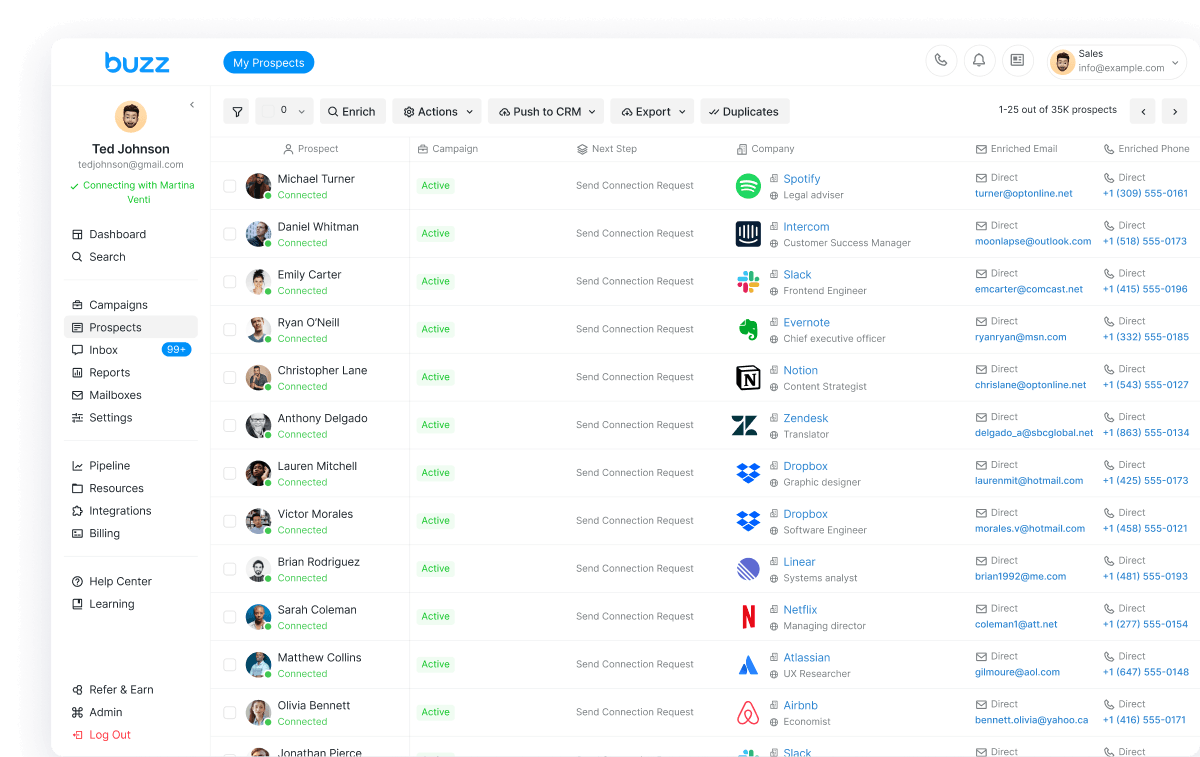
A playbook only works if it lives where reps actually work. That is why we built Buzz AI as an all-in-one AI-powered sales engagement platform. Our goal is to take the cadences, messaging frameworks, and timing rules you design and turn them into live, automated workflows in one shared workspace.
Email, phone, social, and video all run from the same place, so you get:
- One clean view of every touch across the account.
- Consistent reporting and cleaner data.
- Less copy-paste and manual admin for the team.
AI assistants inside Buzz AI can suggest next best actions, enrich records, draft first-pass messages, and prioritize call lists based on real intent and engagement signals. Reps focus on having better conversations, not on juggling tools.
Turn Cold Prospects Into Meaningful Revenue Conversations
If your team is ready to do more than just send emails, it is time to put a sales engagement platform at the core of your outbound motion. At Buzz AI, we help you orchestrate every touchpoint so your reps can focus on real selling instead of manual busywork. Share your goals and constraints, and we will show you a concrete path to a faster, more consistent pipeline. If you are ready to talk specifics or see what this could look like for your team, contact us today.