Turning AI Signals Into Meetings, Not More Noise
Sales teams have more AI scores, intent alerts, and enrichment data than they know what to do with. The real problem is not getting signals; it is turning those signals into real meetings and real pipeline. When AI just adds more color to a dashboard, it feels like extra noise, not help.
Many teams live in this gap. Reps bounce between tools, look at different scores, and still ask the same question: who should I talk to right now? While they think, high intent accounts go cold, low fit leads get spammed, and leadership feels the pressure of a midyear pipeline crunch.
When we treat AI as part of our operating system, not a side project, that changes. Signals feed clear rules, rules drive fast outreach, and outreach gets tested against old list-based prospecting. In this article, we will walk through SLA-driven workflows, simple experiment design, and how to measure real incremental lift from lead generation with AI.
From Static Lists to Live AI Signals
Traditional list-based prospecting is simple but blunt. Someone pulls a CSV from a CRM, filters by job title, company size, maybe a past campaign, adds some basic enrichment, and calls it a day. That list might stay in use for weeks, even as buyer behavior changes by the hour.
With AI signals, lead gen can be live, not static. Instead of only asking who fits our ideal profile, we can ask, who is acting like a buyer right now. Things like:
- Email opens and link clicks
- Replies, even soft ones like "not now"
- Website visits and page depth
- Content downloads or webinar signups
- Repeated views from the same account
When those behaviors are scored and ranked, they become AI signals. These can look like:
- Engagement scores for contacts or accounts
- Propensity-to-buy scores
- Account-level intent strength
- Contact-level fit scores
- Channel preference predictions, like email vs phone
The goal is not to obsess over the model. The goal is to give reps a ranked list that tells them, with simple logic, who should get attention first. That is what leaders care about: faster speed-to-lead, more meetings per rep, and better use of every workday.
A common quick win is re-ranking a stale list that never really converted. Once those contacts are scored by live engagement and fit, the team starts at the top, not the top of a spreadsheet someone built months ago.
Designing SLA Rules That Reps Actually Follow
AI scores only work if they drive clear, simple actions. This is where service level agreements, or SLAs, come in. We take signal tiers and turn them into rules that any rep can follow without thinking too hard.
For example:
- Hot leads: outreach within 2 hours, using email, phone, and social, and at least 3 touchpoints in the first day
- Warm leads: added to a multi-channel sequence within 24 hours, with the first touch personalized
- Cold leads: light nurture with weekly touch, focused on helpful content and soft asks
Short, plain-language rules remove debate. A rep does not have to ask if a hot lead can wait until tomorrow. The SLA says no.
Routing should also reflect how your team actually works. AI signals can route based on:
- Territory or region
- Company size or segment
- Product line
- Rep strengths, for example high-volume outbound vs slower, complex enterprise conversations
The key is to stop cherry-picking. When everyone just grabs the leads they like, hot accounts get ignored and performance looks random. Routing rules plus SLAs create fairness and focus.
Then we make it visible. Simple dashboards help:
- Show time to first touch by signal tier
- Flag missed SLAs, like hot leads without calls
- Compare channel mix for hot vs warm leads
- Let leaders coach on activity, not just results
When the team knows SLAs are tracked and respected, AI stops feeling like a toy and starts feeling like the playbook.
Structuring Experiments to Beat List-Based Prospecting
Most leaders eventually ask one simple question: is this AI-driven motion actually better than our old lists? The cleanest way to answer is to treat AI signal workflows as a test, not a belief.
Set up a basic experiment:
- Group A: traditional static list, pulled by your usual filters
- Group B: the same persona and segments, but prioritized and routed by AI signals
Keep everything else as close as you can:
- Same buyer personas
- Similar messaging themes
- Same number of touches per contact
- Same time window, often 4 to 6 weeks
The only major difference is how prospects are ranked and who gets called first.
Measure a small, executive-friendly set of KPIs:
- Reply rate
- Meetings booked per 100 prospects
- Sales-qualified opportunities per 100 prospects
- Time-to-first-touch by tier
When those metrics move, leaders are more willing to change process, training, and goals. The experiment gives cover to do things differently.
Measuring Incremental Lift with Revenue-Focused Metrics
It is easy to say we booked meetings; AI works. That is not enough. The better question is, did we book more meetings than we would have without AI signals?
That gap is incremental lift. To see it clearly, compare outcomes per fixed volume, like 1,000 prospects.
For each motion, list:
- Meetings booked
- Total pipeline value created
- Closed-won deals from that motion
Then look at the difference between the AI-signal group and the list-based group. Even a modest lift at scale can matter for a quarter, especially in a season when response rates usually drop and teams feel the heat to do more with the same headcount.
This view also connects to broader funnel economics:
- Cost to acquire a customer (CAC)
- Payback period on your sales and marketing spend
- Productivity per rep
Better routing and fast reaction to hot signals helps keep the funnel steady when outbound feels slow, like during summer months when many buyers are out of office.
Making AI Signals Operational in One Workspace
All of this is hard when your data and tools live in different places. One tool for enrichment, another for calling, another for email, another for intent, and spreadsheets to glue it all together. Reps lose context, SLAs slip, and AI signals get ignored while people log in and out.
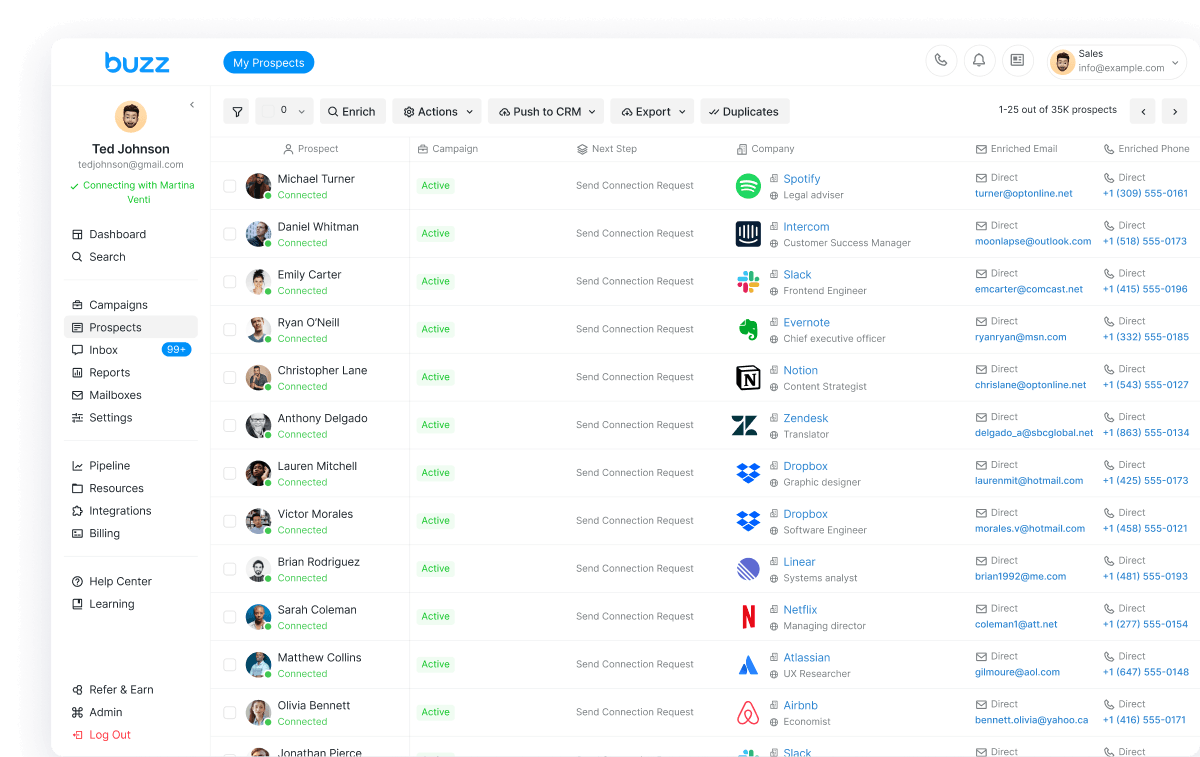
When enrichment, sales intelligence, and engagement live in one workspace, the AI signals do not sit on the side. They sit right where work happens. Reps can:
- Build call blocks sorted by signal strength
- Triage inbox replies by intent, not time received
- See account and contact insights while they write emails
- Trigger social outreach for hot accounts without copying data around
The goal is not more AI. The goal is more meetings per rep, better forecasts, and cleaner data that keeps improving with every touch. Modern sales engagement platforms make it realistic to route and engage high-signal prospects across email, phone, and social outreach from a single place, instead of juggling tools all day.
At Buzz AI, we care about making this practical. Lead generation with AI should feel like a clear daily plan for your reps, not another dashboard they ignore. When signals, SLAs, routing, and outreach sit together in one workspace, AI becomes part of how your revenue team works, every day.
Turn AI-Powered Leads Into Predictable Revenue Growth
If you are ready to build a repeatable, scalable pipeline, our team at Buzz AI can help you operationalize lead generation with AI tailored to your sales goals. We work with your existing tools and data to design workflows that surface higher intent prospects faster. Share a bit about your objectives and challenges, and we will map out a clear next step for implementing an effective AI-driven lead engine. To explore what this could look like for your organization, contact us today.