Are Your Lead Gen ROI Numbers Too Good to Be True?
Automated lead generation software sounds like a dream. The pitch is simple: flip a switch, load a list, and watch your pipeline explode while your team sits in spring planning meetings feeling like heroes. But when we talk with sales leaders, many say those big ROI promises did not match what really hit the forecast.
This gap matters a lot during spring budgeting and mid-year planning. Tools you commit to now can shape the rest of the year. If the ROI math is off, you are not just wasting spend, you are burning your team’s time, your domain reputation, and sometimes your brand trust.
In this article, we will question the common claims around automated lead generation software, show where the numbers often break, and walk through a more grounded way to judge performance so your revenue plans are built on reality, not wishful thinking.
How Automated Lead Generation Software Really Makes Money
Let us keep this simple. Most automated lead generation tools are built to do a few core things:
- Send cold and warm email sequences
- Automate social outreach and follow-ups
- Do basic web or database scraping to find contacts
- Trigger reminders for calls or social messages
- Score leads based on opens, clicks, or replies
On the surface, more sends and more contacts should mean more revenue. But that is only true if the right people see the right message in the right channel at the right time.
The real revenue engine lives in the details. It depends on whether your data is accurate and enriched enough to reach the right role at the right company, whether your email deliverability is strong enough to land in primary inboxes instead of spam, and whether you are generating positive, relevant replies that convert into meetings. From there, meetings need to turn into real, qualified opportunities that actually enter the pipeline.
If even one of these pieces is weak, the whole funnel changes shape. You might start with 1,000 prospects and expect dozens of meetings. But if 30 percent of the emails bounce, another chunk goes to spam, and most of your messages are too generic, you may only end up with a handful of useful replies. Suddenly, the promised ROI looks very different.
The Hidden Costs Behind Shiny ROI Dashboards
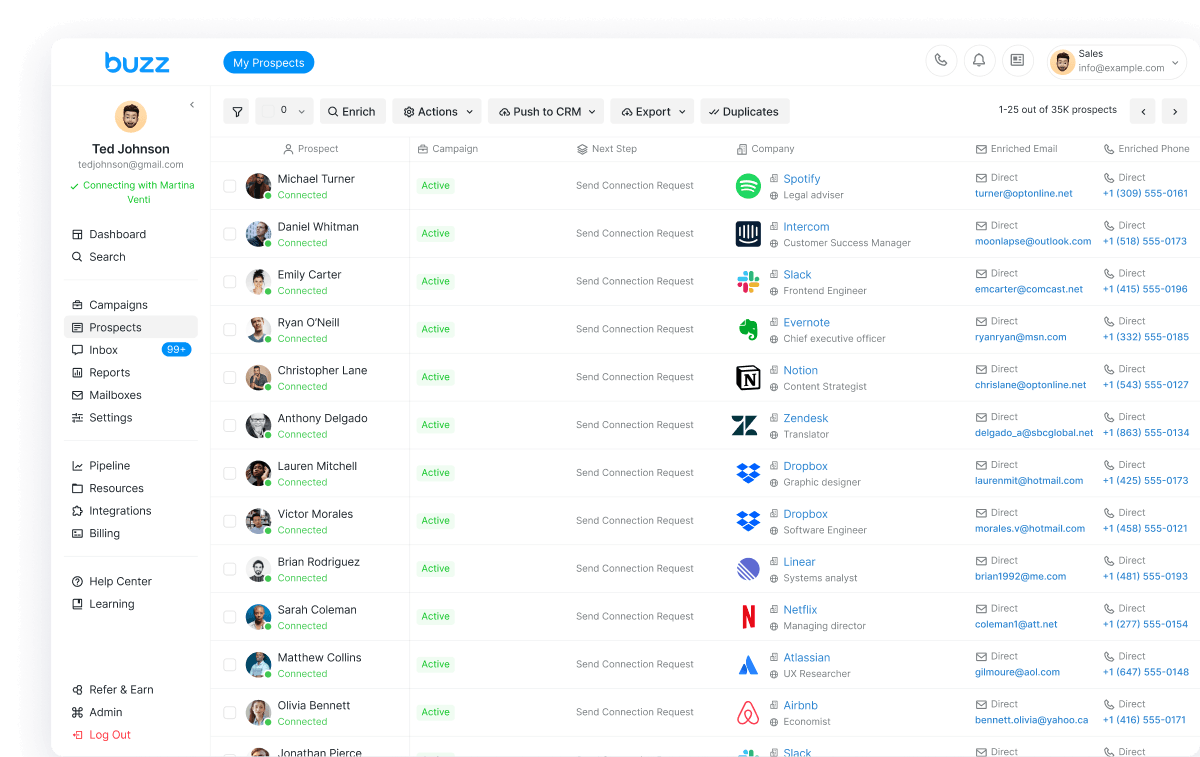
Most tools want to show you a pretty dashboard. They count almost any signal as a “lead.” Someone opened an email? Lead. Someone clicked a generic link? Lead. Someone visited a page once and never came back? Also a lead.
For a busy revenue leader, those numbers can feel exciting. But when we look closer, many of those “leads” are outside your ideal customer profile, not decision makers, not showing real buying intent, or missing critical data like company size or tech stack.
On top of that, there are hidden operational costs that rarely show up in vendor demos. Your team might spend hours each week:
- Cleaning lists and removing duplicates
- Fixing bounced emails and bad formatting
- Rewriting weak sequences that do not match your brand
- Manually enriching accounts with missing context
- Switching between disconnected tools for email, phone, and social
Then there is the risk you cannot see on a chart. High volume, low quality sending can damage your domain reputation. Once inbox providers see you as spammy, even your best emails have a harder time landing. Add in compliance questions around consent and local rules, and that “set-it-and-forget-it” promise can turn into a long headache.
Where the ROI Math Often Breaks Down
This is where we see a lot of broken math. The software might show a very low “cost per lead,” but it quietly ignores a bunch of real expenses. Many tools do not factor in extra enrichment tools your team buys to fix bad data, partial contacts with missing phone or social info, or the time your sales team spends chasing people who will never buy.
On paper, the funnel can look strong: lots of demos booked, plenty of “interested” leads. But when revenue leaders review closed deals, a different story appears. Many demos were with people who had no budget authority, were outside your target segment, or had missing firmographic data needed for good follow-up.
Seasonality plays a role too. For many B2B teams, Q2 and Q3 outreach can show higher open and click rates because people are active with budgets and planning. But if the outreach is not targeted, if the messaging is generic, those opens do not turn into signed contracts. The numbers look good in a deck, yet bookings stay flat.
A Smarter Way to Evaluate Automated Lead Gen ROI
So how do we keep our heads clear when every vendor claims huge ROI? We like starting from the bottom and working backward. Instead of asking, “How many leads did we generate?” we ask, “How much revenue did this motion actually help close?”
From there, we look at things like:
- Change in sales cycle length
- Change in win rate for leads touched by the tool
- Opportunities created that match our ICP
Then we trace that back up to channel stats. Some simple but powerful KPIs include:
- Inbox placement rate and spam rate
- Bounce rate on outbound campaigns
- Positive reply rate by segment
- Meetings held per 100 contacts reached
- Opportunities created per 100 meetings
- Cost per qualified opportunity, not just per lead
Data quality sits under all of this. Enriched contact records that show role, buying signals, tech stack, and preferred channels are far more useful than a massive, thin list. For B2B teams, a smaller list of highly relevant contacts, reached with thoughtful multichannel outreach, usually produces better long-term ROI than blasting a huge cold database.
What a High-ROI AI Lead Generation Stack Looks Like
When we think about a strong, modern setup, it is not about stacking more tools. It is about one clear system of record that pulls everything together. In our view, a high-ROI stack looks like:
- Unified prospect data from multiple sources, in one place
- Rich enrichment so your team knows who they are talking to
- Outreach across email, phone, video, and social, all connected
- Automation that helps human reps work smarter, not disappear
AI is powerful here, but mostly in quiet ways. The best gains come from things like:
- Smarter targeting and list building based on real behavior
- Send time optimization so emails match when people are active
- Message suggestions that help reps personalize faster
- Lead and account scoring that pushes high-intent contacts to the top
When AI lead generation, sales intelligence, and multichannel sales engagement live together, tool sprawl goes down. Reps spend less time copying data between systems and more time in real conversations. That makes ROI easier to track and less of a guess.
At Buzz AI, this is the type of system we care about, especially for teams that deal with fast-changing markets, shifting budgets, and unpredictable seasons.
Make Your Next Lead Gen Purchase ROI-Proof
Before you lock in a new automated lead generation platform during spring planning, it helps to slow down and ask sharper questions. A simple checklist for vendor conversations might include:
- How do you support email deliverability and domain health over time?
- Where does your enrichment data come from and how is it kept fresh?
- What guardrails exist around social outreach and volume?
- How do you define a “qualified” lead in your reporting?
- What conversion benchmarks can you share for meetings and opportunities?
Whenever possible, we also recommend running a controlled pilot. Focus on one segment that matters for your business. Compare:
- Meetings held versus your current process
- Opportunities created that match your ICP
- Time saved for reps and ops
- Any impact you see on domain or brand reputation
When we question big ROI claims, demand clear definitions, and focus on quality engagement instead of brute volume, automated lead generation software becomes far less of a gamble. It shifts from a shiny line item in your budget to a steady part of your growth engine, one that supports your team, protects your brand, and gives you numbers you can stand behind in any boardroom.
Convert More Prospects Into Customers Starting This Week
If you are ready to stop guessing and start scaling, our automated lead generation software can help you fill your pipeline with qualified opportunities on autopilot. At Buzz AI, we use data-driven targeting and smart outreach to keep your sales team focused on closing instead of chasing cold leads. Tell us about your goals and we will help you build an outbound engine that matches your growth targets. Have questions or want to see what this could look like for your team, just contact us today.