Questioning Sales Prospecting Software in a Noisy Inbox World
Sales prospecting software is supposed to help us start more good conversations. Yet for many teams, it feels like we are just adding to the noise. Outboxes are full, inboxes are ignored, and everyone is tired of the same automated messages.
This matters for revenue leaders who are under pressure to grow pipeline while also trimming tech stacks. If the tools we pay for only send more generic outreach, then we are burning time, budget, and goodwill with buyers. Let us look at what is really broken, and what a smarter approach can look like.
Why Sales Prospecting Feels Broken Right Now
Inboxes are crowded with automated sales emails. Social accounts get flooded with copy‑paste connection requests. Phone calls from unknown numbers often go straight to voicemail. At the same time, budgets are under more review, and every new tool in the stack gets questioned.
Yet many teams respond by buying more sales prospecting software and adding more sequences. The result:
- Reply rates slide even as send counts climb
- Meeting accept rates get lower and harder to earn
- Reps feel pressure to send more instead of sending better
So where is the real problem? Is it the tools themselves, the tactics we use, or how we run automation and AI in our prospecting? The answer is usually a mix of all three. To fix it, we need to rethink our tools, our data, and our outreach so we build pipeline without adding more noise.
The Noisy Inbox Reality Sales Leaders Cannot Ignore
A lot of outreach looks the same. Long sequences. Weak subject lines. Vague value props copied from a template. When every seller runs the same play, buyers tune out.
Over‑automation and copy‑paste messaging show up as:
- “Spray and pray” email blasts to giant lists
- Generic social outreach that never mentions real context
- Mass calling that ignores buyer readiness
Prospects feel digital fatigue. They unsubscribe, hit spam, or just ignore us. Then teams spend more time cleaning up bad lists, fixing bounced emails, and updating records than actually selling.
Buyer expectations have changed too. People want outreach that:
- Shows you understand their role and industry
- Connects to something real, like a hiring push or product launch
- Respects their time and current priorities
Many buyers now research quietly, talk to peers, read content, and only respond when outreach feels timely and helpful. That makes outbound more sensitive to tone and relevance. Noisy outreach does not just fail, it hurts.
There are hidden costs:
- Brand damage with key accounts that feel spammed
- Reps juggling tools, deliverability issues, and low‑intent leads
- Managers chasing reports instead of coaching better conversations
Noisy prospecting is not a minor annoyance. It is a drag on revenue.
What Great Sales Prospecting Software Should Actually Do
Good sales prospecting software should not just send more messages. It should act like an intelligence and orchestration layer. The goal is to help teams contact fewer people at better moments, across the right channels.
Instead of being only a send engine, the right platform should help you:
- Spot patterns in who actually replies and converts
- Guide reps toward higher‑intent accounts
- Keep messaging consistent while still personal
One big shift is connecting intent data with real prospect behavior. That can include:
- Content engagement, like who reads or shares certain topics
- Website activity, such as repeat visits to pricing or product pages
- Event triggers, like job changes or new locations
When reps work from signals, they are not reaching out blind. They are starting from some proof of interest or fit, which cuts noise and raises the odds of a real conversation.
Great software also makes it easy to orchestrate outreach across email, phone, social, and video. A strong sequence might look like:
- A tight, relevant email opener
- A short social message that adds a small insight
- A focused call with a clear reason
- A short video with a tailored point of view
Done right, it feels cohesive, not repetitive. Mid‑year, when teams are planning for stronger Q3 and Q4, is a perfect time to test new channel mixes and refresh these plays.
Data Quality, Deliverability, and the Myth of More Leads
If your data is bad, even the best message will fail. Outdated titles, wrong companies, missing context, or duplicate records all cause trouble. Reps waste time on people who are not a fit, and buyers get messages that miss the mark.
Poor data leads to:
- Higher bounce rates and domain risk
- Off‑target messaging that feels clueless
- Confusing records in the CRM that are hard to trust
Email deliverability should be a strategic focus, not an afterthought. Put simply, deliverability is your ability to land in the inbox instead of spam. It depends on:
- Domain reputation and warm sending habits
- Clean lists that are updated and enriched
- Reasonable send volume and cadence
- Real personalization that signals human intent
More leads is not always better. Smarter B2B lead generation uses sales intelligence and data enrichment to sharpen your ideal customer profile. Useful data includes:
- Firmographics like size, location, and industry
- Technographics like key tools and platforms in use
- Buying signals that show change or interest
With this, you can build tighter segments and more relevant campaigns, instead of giant lists that hurt both brand and performance.
Using AI Without Sounding Like a Robot
AI should do the heavy lifting, not the talking. That means letting AI:
- Research companies and summarize websites
- Enrich contact data and flag gaps
- Draft starter messages and suggest angles
Then humans bring the judgment, tone, and final edits. Reps stay in control of what actually gets sent.
Personalization at scale can still feel human when AI is used to find patterns, not copy lines. For example, you can:
- Cluster accounts that recently raised funding and speak to growth
- Group companies launching new products and speak to launch pressure
- Spot leadership changes and connect outreach to new goals
The key is to keep the core message aligned to the segment, then tweak short openers or call‑to‑action lines so they feel real and specific.
Leaders also need clear guardrails for automation:
- Caps on sequence length and touch frequency
- Style rules for tone, length, and value in each touch
- Regular audits of templates and reply quality
When signals drop, do not just send more. Pause, review, and fix the root cause.
Building a Unified Sales Engagement Workspace
Many teams juggle separate tools for email outreach, social messaging, calling, video, and data enrichment. Each tool has its own rules, views, and reports. Reps hop between tabs, and leaders try to stitch together a clear picture.
This fragmentation leads to:
- Inconsistent messaging across channels
- Double touches on the same accounts from different reps
- Messy reporting that makes it hard to see what actually works
A unified sales engagement workspace gives everyone one view of the buyer. SDRs, AEs, and marketing can see:
- Which accounts are being touched, and how
- Which signals matter most for conversion
- Where pipeline is truly coming from
When outreach lines up with revenue strategy, executives get clearer dashboards and better attribution. Handoffs between teams feel smoother, and there is less risk of prospect fatigue.
Most importantly, a unified space makes it easier for reps to do the right thing. They get:
- Fewer tools to manage in their day
- Clear workflows that guide next best actions
- AI-driven recommendations inside one workspace
Mid‑year is a smart time to trim tech sprawl, reset processes, and give teams a stable base before the end‑of‑year push.
Turning Down the Noise and Turning Up the Pipeline
The mindset shift is simple: modern sales prospecting software should focus on precision, timing, and intelligence, not just volume. The best outbound feels relevant and respectful, not loud and pushy. When you connect better data, smarter AI, and unified workflows, you can send fewer, better messages and book stronger meetings.
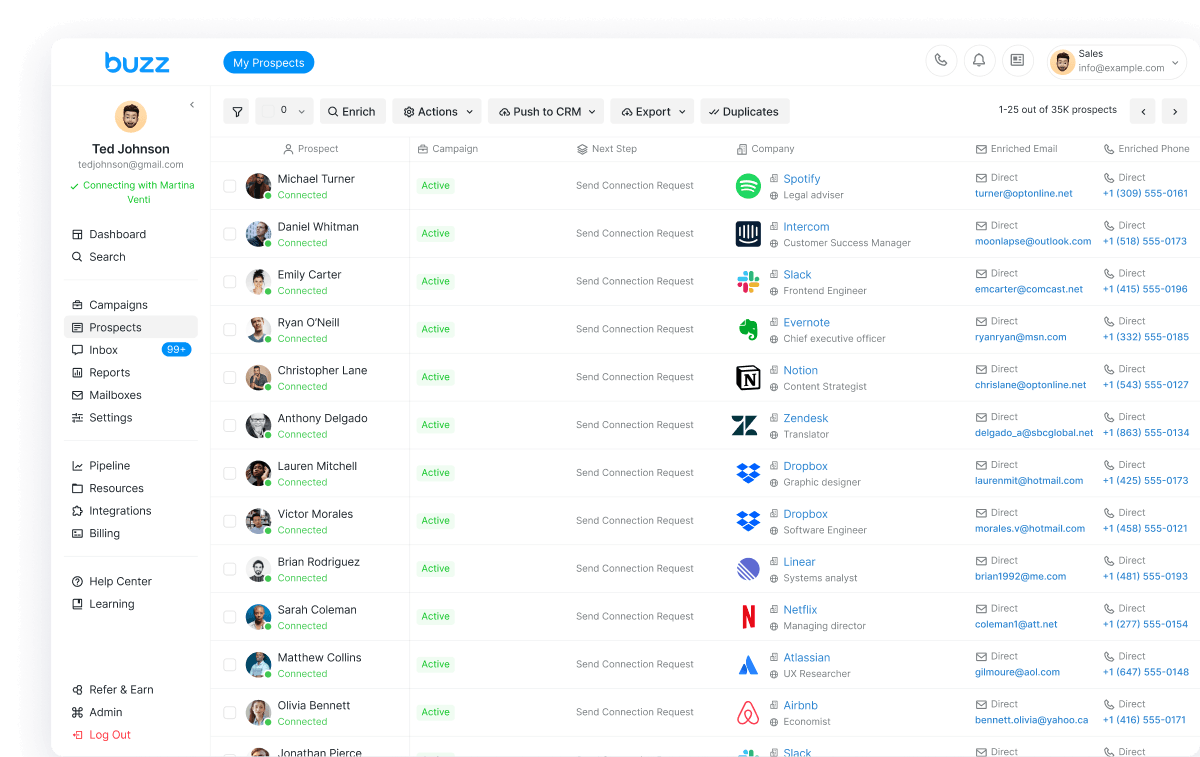
Buzz AI is built around this idea: one workspace for intent data, enrichment, outreach across email, phone, social, and video, and AI assistance that helps reps sound more human, not more robotic. Used this way, sales teams reduce noise in the market and create more room for real conversations with the right buyers.
Turn Cold Outreach Into Consistent Revenue Growth
If you are ready to upgrade from manual prospecting to a smarter, scalable approach, our sales prospecting software is built to help your team book more meetings with less effort. At Buzz AI, we combine data, automation, and proven workflows so you can focus on conversations that actually lead to revenue. Tell us about your goals and challenges, and we will show you how our platform can fit into your current sales process. If you want to explore next steps or get a tailored walkthrough, simply contact us today.