Turn Your Tool Sprawl Into a Revenue System
Most B2B sales teams are not short on tools. They are short on a system that actually works. When every rep is bouncing between 8, 12 different B2B lead generation tools, it gets harder to build real pipeline, even if everyone is working hard.
By late spring, this pain is loud. Leaders are checking H2 forecasts, the weather is getting warmer, and the big question pops up in every review: Are all these tools actually helping us hit our number, or just slowing everyone down?
Here is the truth many teams are feeling: tool sprawl creates friction. Data lives in different places, outreach is messy across email, social, calling, and video, and small gaps turn into missed targets. The shift that high-performing teams are making is simple to say, harder to do: stop thinking in tools, start thinking in terms of a single, unified revenue system that runs from one workspace.
In this article, we will walk through how to spot when your stack is working against you, what a real revenue system looks like, and clear steps you can take to move from scattered tools to a single system before the second half of the year kicks into full gear.
Why Traditional B2B Lead Generation Tools Are Failing You
Most stacks did not start messy. They got that way one tool at a time. A data tool here, an email tool there, a calling add-on later. Each tool solves a small problem. Together, they create what feels like a hidden tax on your team.
Here is how that tax shows up day to day:
- Reps logging into multiple platforms before they send a single email
- Context switching every few minutes just to prep for one call
- Copying and pasting notes between tools so nothing gets lost
All of that time is time not spent talking to prospects.
On top of that, when email, social outreach, calling, and video sit in different tools, your view of the buyer is broken. One system shows opens, another shows replies, another shows call notes. No one has a single screen that answers a simple question: what has this person actually seen, and how did they respond?
That mess leads to:
- Outreach that feels generic, because reps do not see the full story
- Prospects getting hit from different directions with no consistent thread
- Reps defaulting to whatever tool they know best, instead of following one shared playbook
For leaders, the headache is even bigger. Reporting turns into a patchwork of exports and screenshots. Simple questions like "Which channel turns into real pipeline?" or "Which sequence gets the most meetings?" take days to answer, if they get answered at all.
When your lead generation engine is splintered like this, the risk is not just missed meetings. Forecasts feel shaky. Hiring plans feel like a guess. Budget talks get defensive, because no one can clearly show what is working across the whole system.
What a Single Revenue System Actually Looks Like
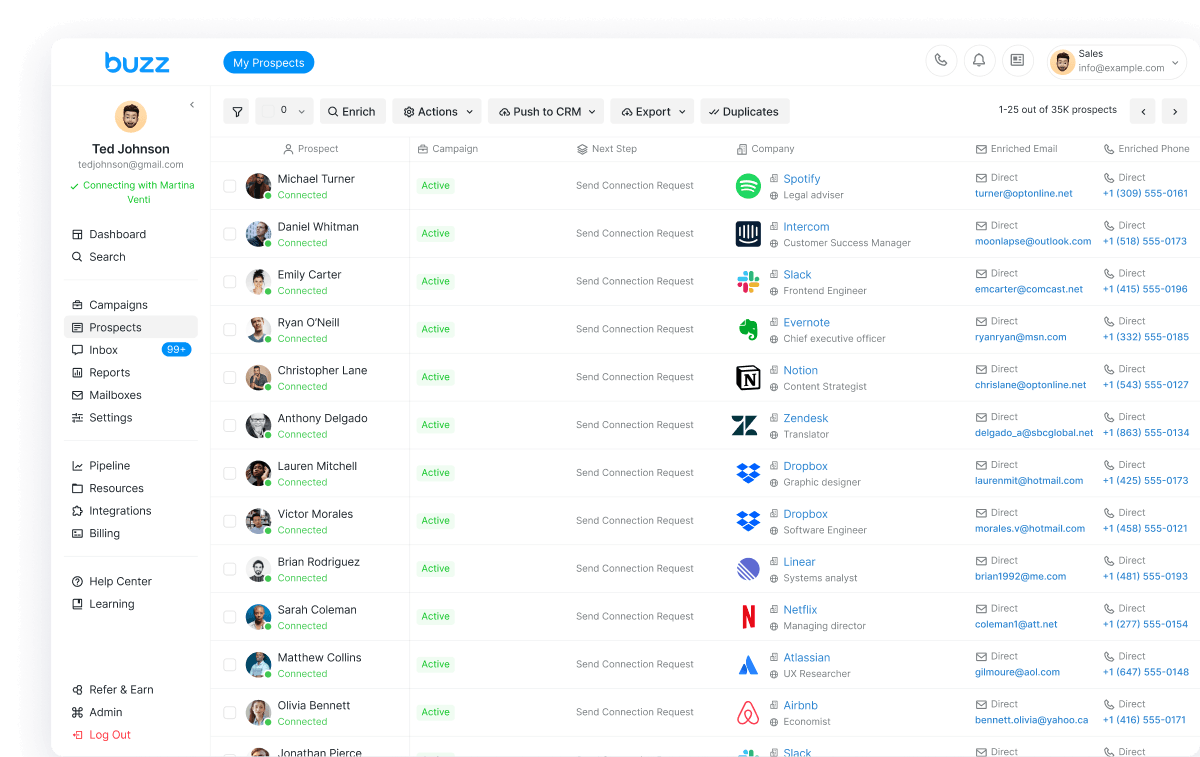
A single revenue system is not just "fewer tools." It is one shared workspace for your entire go-to-market team.
At the center is one source of truth for prospects. That means:
- Prospect data, engagement history, and account context live together
- Information updates in real time as reps send emails or make calls
- Everyone sees the same record, from SDR to AE to manager
From that same place, reps can work every channel. They can send an email, launch a social message, make a call, or record a quick video without jumping tools. Every touch is tracked automatically, so the next person who opens that record sees the full story in seconds.
Automation supports the team without making things feel cold. For example, a prospect fills out a form for a guide, then:
- Their record is enriched and cleaned up
- They are added to a smart, multichannel sequence
- The right rep is assigned based on rules you set
- Key steps are prewritten, but still easy to personalize
Because everyone works inside the same workspace, collaboration gets easier. Managers coach off the same playbooks and metrics. SDRs and AEs follow the same handoff rules. RevOps designs workflows once, instead of rebuilding them in five different tools.
The outcome is not just a cleaner tech diagram. It is more qualified meetings, faster follow-up, fewer dropped handoffs, and a pipeline you can actually trust heading into the second half of the year.
From Point Tools to Platform Thinking
So how do you move from a pile of point tools to a real system?
First, map your current chaos. Have your team list:
- Every B2B lead generation tool in use
- What job it is supposed to do
- How often people actually use it
- Where it overlaps with other tools
You will quickly see where data gets duplicated, where it goes to die, and where reps are doing the same work twice.
Next, change the question you ask in buying meetings. Instead of "Which outbound tool should we add next?" shift to "What does our whole revenue system need to do for marketing, SDRs, AEs, and customer success?"
From there, focus on integration and simplicity. A modern platform should:
- Connect cleanly with your CRM
- Share one data model across channels
- Support multichannel engagement from one place
- Give admins clear controls without endless setup
Change management does not have to be all or nothing. Start with one team or region. Move one critical workflow first, like outbound prospecting sequences. Once you see more meetings and cleaner data from that group, expand.
Through all of this, leadership alignment is key. CEOs, CROs, and RevOps leaders need to agree on:
- What a qualified lead means
- Which shared metrics matter most
- How the platform will support those rules across the funnel
Without that shared view, even the best platform will feel like "just another tool."
Designing a Revenue System That Scales with Your Goals
Your revenue system should not lock you into one way of selling. Markets shift. Ideal customer profiles change. Territories get reshaped. A durable system makes those changes easier, not harder.
That starts with data quality by design. An all-in-one platform can:
- Enrich contacts as they are added
- Validate emails before sequences start
- Standardize company records
- Flag duplicates so reps do not trip over each other
With clean data and all activity in one place, coaching gets sharper. Leaders can see which sequences, channels, and messages actually turn into meetings, then:
- Double down on what works
- Cut what does not
- Roll out new playbooks across the team with confidence
Experimentation also becomes less scary. Testing subject lines, channel mix, or cadence timing can all happen inside one system, without breaking daily workflows. When something wins, it becomes the new standard with a few clicks.
There is also less hidden risk. Fewer vendors mean fewer logins to secure, fewer tools to train new reps on during growth pushes, and fewer moving parts to worry about during seasonal campaigns or leadership reviews.
Your Next Step to a Unified Revenue Engine
If you are heading into the back half of the year with a sense that your tools are running you, not the other way around, this is the right moment to reset. Set a clear 90-day goal to replace redundant B2B lead generation tools and pull your key workflows into a single system before Q3 is in full swing.
Start simple. Unify one high-impact workflow, like outbound prospecting. Bring identification, enrichment, and engagement across email, social, calling, and video into one workspace. Then align your team around one shared playbook inside that system so everyone sells the same way and learns together.
As you look at platforms, do not get stuck in feature checklists. Ask a tighter question: will this help us build one coherent revenue system, where data, outreach, and automation live together, or will it just be another tool on the list?
At Buzz AI, we built our platform specifically to bring those pieces into a single workspace, so sales teams can stop juggling tools and start running a real revenue engine.
Turn Qualified Prospects Into Revenue Faster
If you are ready to build a predictable pipeline, our B2B lead generation tools give your team the data and automation needed to act on high-intent opportunities. At Buzz AI, we help you focus on the right accounts instead of wasting time on cold, unqualified outreach. Start your next campaign with confidence by letting our platform handle the heavy lifting. Have questions about the best setup for your sales team, or need a custom plan? Simply contact us and we will walk you through the options.