Turn Your Sales Intelligence Stack Into Executive ROI
Most sales intelligence platforms do not fail because of the tech. They fail because the people who should use them never really change how they work. By the time that shows up in missed quota, it is too late for a quick fix. The good news is that executives can spot adoption trouble much earlier if they know what to look for.
Right now, revenue teams are swimming in tools for email outreach, social outreach, calling, video, and AI lead generation. Yet pipeline conversion often stalls. The gap is not features; it is adoption quality. So in this article, we are sharing an Executive Adoption Scorecard, ten leading indicators across instrumentation, incentives, enablement, and governance that predict if your sales intelligence platforms will actually pay off.
Why Adoption Beats Features Every Quarter
When leaders pick a sales intelligence platform, they usually focus on demos. The interface looks clean, the AI sounds smart, the reports look sharp. What is missing is a harder question: what behaviors will this actually change on the front line?
Poor adoption shows up in small, painful ways, like:
- Reps skipping the approved email tool and sending from personal inboxes, which kills deliverability
- Outreach based on stale or missing data because enrichment is “optional” and often ignored
- Everyone running their own sequences, so prospects get mixed messages and your CRM turns into a mess
To fix this, we use four simple pillars to frame adoption:
- Instrumentation: what you measure and see in real time
- Incentives: what you reward, tolerate, or penalize
- Enablement: how people are trained and supported in the new workflow
- Governance: who owns data, process, and standards
As leadership teams tune mid-year plans and look ahead to heavy selling seasons, this is a perfect time to audit adoption health. A small shift in each pillar now can save you from ugly surprises later in the year.
Instrumentation That Makes Adoption Visible
If you cannot see it, you cannot manage it. Adoption starts with instrumentation that gives you a clear, shared picture of activity and outcomes.
Leading Indicator 1: Unified Activity Visibility
Can you see email, social, phone, and video engagement in one place for each rep and account? Or are those touches scattered across different tabs and tools? When activity is unified, you can answer simple but powerful questions like, “How many quality touches did we put against this deal before it slipped?” and “Which reps are actually using the platform daily?”
Leading Indicator 2: Deliverability and Response Health
Most teams talk about email volume, very few track email health. At a minimum, leaders should see:
- Deliverability, bounce, and spam trends by rep and domain
- Reply rates and positive response rates by segment and sequence
- Flags when a sequence or sending domain starts to underperform
This is where adoption and ROI connect. If reps ignore approved sending practices, they slowly hurt domain reputation and engagement drops. With good instrumentation, you spot the slide early, not when open rates are already in the gutter.
Leading Indicator 3: Data Quality and Enrichment Coverage
Sales intelligence platforms shine when data enrichment is built into everyday work. Ask:
- What share of active accounts and contacts are fully enriched with titles, firmographics, and buying signals?
- Is enrichment automatic in the workflow, or do reps have to remember an extra step?
If you cannot answer, “Who is actually using the platform?” and “Is our data and outreach getting better each week?” then you are flying blind on adoption.
Incentives That Align Reps with the Platform
People follow the money and the manager. If your platform is not wired into compensation and coaching, adoption will slide the moment things get busy.
Leading Indicator 4: Comp Plans That Reward Platform-Led Activity
Look at your KPIs for meetings set, qualified opportunities, and sourced pipeline. Are those clearly tied to activity that runs through your sales intelligence platform? Reps should know that:
Following approved sequences and enrichment flows counts toward their goals
Shadow processes that sit outside the platform do not get the same credit
Leading Indicator 5: Manager Coaching Expectations
Front-line managers decide what “real work” looks like. Strong adoption shows up when:
Weekly pipeline reviews are run from platform dashboards, not exports pasted into slides
Managers review sequence performance, social activity patterns, and data hygiene, not just deal amounts
Leading Indicator 6: Policy on Shadow Tools
There will always be interesting side tools. The danger comes when they fragment your process and pollute your CRM. You want:
A clear policy on personal lists, side databases, and unapproved outreach tools
Controlled exceptions, like research tools, that still feed data back into the core engagement workspace
If reps can hit quota while ignoring your platform, your incentives are quietly telling them it is optional.
Enablement and Governance That Turn AI Into Everyday Workflow
Even the best AI will sit idle without hands-on enablement and clear rules of the road. This is where many sales intelligence platforms stall after the pilot.
Leading Indicator 7: Role-Based Onboarding and Playbooks
SDRs, AEs, and managers do different jobs, so they need different playbooks. Strong teams:
Define exactly how each role uses the platform for prospecting, follow-up, and AI lead generation
Embed sequences, email templates, and social messaging examples right inside the workspace
Leading Indicator 8: Live Coaching on Real Accounts
Training works best when it feels like selling, not school.
Run sessions that use live accounts, active sequences, and real prospects
Review performance by key segment, such as B2B mid-market or specific industries, with joint tweaks to campaigns
Leading Indicator 9: Continuous Micro-Training
Platforms change often. Reps forget. Short, regular refreshers can cover:
- Email deliverability habits, like send volume, timing, and list quality
- Subject line testing and simple copy tweaks
- Data enrichment hygiene and outbound sequencing best practices
- New AI features, explained with clear “when and why to use this,” not just product tours
When reps feel the platform saves time this week, not someday, adoption goes up fast.
Leading Indicator 10: Clear Ownership for Data and Process
Governance turns good intentions into consistent behavior. Strong governance usually includes:
- A cross-functional council, often RevOps, Sales, Marketing, and Enablement, that owns data standards, territories, and outreach rules
- Guardrails to prevent over-sending, like daily email caps, spacing rules across channels, and domain protection guidelines
- Clear criteria for prospect targeting, such as firmographic bands, buying groups, and intent signals, so AI-powered lead generation stays focused
- Bi-directional sync with the CRM so every email, call, social touch, and video step is tied back to accounts and opportunities
Alerts and coaching when records are incomplete or stale, instead of just quiet frustration
This is how your sales intelligence platform becomes the single source of truth for pipeline creation, not just another tab in the browser.
Put the Executive Adoption Scorecard to Work
Now bring it all together. Take the ten indicators and score each from 1 to 5:
- Instrumentation: unified activity visibility, deliverability and response health, data quality and enrichment
- Incentives: comp alignment, manager coaching, shadow tool policy
- Enablement: role-based onboarding, live coaching on real accounts, continuous micro-training
- Governance: clear ownership for data and process
You will end up with a simple adoption health score you can use in your next quarterly review. Apply it to each of your sales intelligence platforms and even to your CRM setup. The gaps will show up quickly.
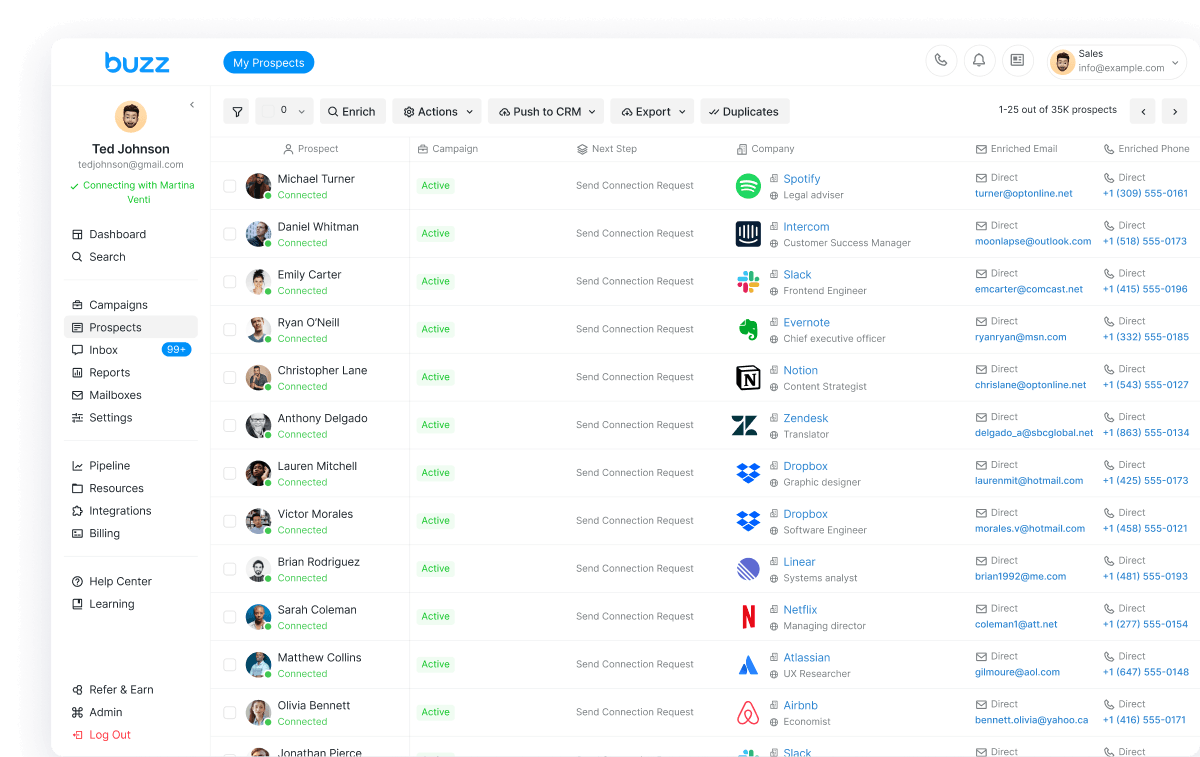
At Buzz AI, we built our sales engagement platform around these same ideas: one workspace for email outreach, social outreach, calling, video, data enrichment, and AI-powered prospecting, paired with the instrumentation leaders need to steer. Technology alone will not fix pipeline problems. But with the right instrumentation, incentives, enablement, and governance, your sales intelligence stack can finally deliver the ROI your revenue targets demand.
Transform Your Sales Team With Data-Driven Decisions
If you are ready to move beyond guesswork and fragmented prospect data, our sales intelligence platforms give your team the insight and context they need to win more deals. At Buzz AI, we help you unify signals across your accounts so your reps always know who to reach out to, when, and with what message. Talk with our team to explore how we can align the platform with your sales process and goals, or contact us to schedule a personalized walkthrough.