Turn Sales Data Into Decisions, Not Headaches
Sales leaders are buried in tools and numbers but still stuck with the same questions: Which leads matter, what should we say, and what should we do next? The data is there, but it often lives in different tabs, reports, and spreadsheets that do not agree with each other. That makes it hard to steer the team, especially when goals get tighter in the second half of the year.
Sales intelligence software is simply software that turns raw contact, company, and behavior data into clear, ranked guidance for your team. Instead of random lists, your reps see who to talk to, what to mention, and when to follow up. You do not need to be technical for this to work. Modern tools do the heavy lifting in the background and surface the few things that matter right now.
As days stay long, and travel and vacations pick up, focus time gets shorter. This is when better decisions beat bigger activity. We will walk through what sales intelligence software does, how to read the signals your team is missing, how to choose a platform without a technical background, and how to turn all of this into daily sales habits that stick.
What Sales Intelligence Software Actually Does
At its core, sales intelligence software takes messy data and turns it into a clear priority list. Think of it as a smart layer on top of your CRM that keeps information fresh and points your team toward the next best action.
Most platforms center on a few simple jobs:
- Data enrichment: filling in missing pieces about contacts and accounts
- Buying signals: spotting behaviors that suggest someone is ready to talk
- Prioritization and scoring: ranking who is hot, who is warm, and who is not ready
Data enrichment means your reps are not wasting time hunting for basic facts. The software can add helpful details like company size, industry, tech stack, office locations, and likely decision-makers. When a rep opens an account, they see context, not blanks.
Buying signals are the digital clues buyers leave behind, such as:
- Email opens, clicks, and replies
- Site visits and content views
- Event or webinar signups
Prioritization and scoring pull it all together. The system looks at your ideal customer profile and behavior, then marks some accounts as higher priority. This shows up as a daily list: start here, then move down the list, instead of guessing or sorting spreadsheets.
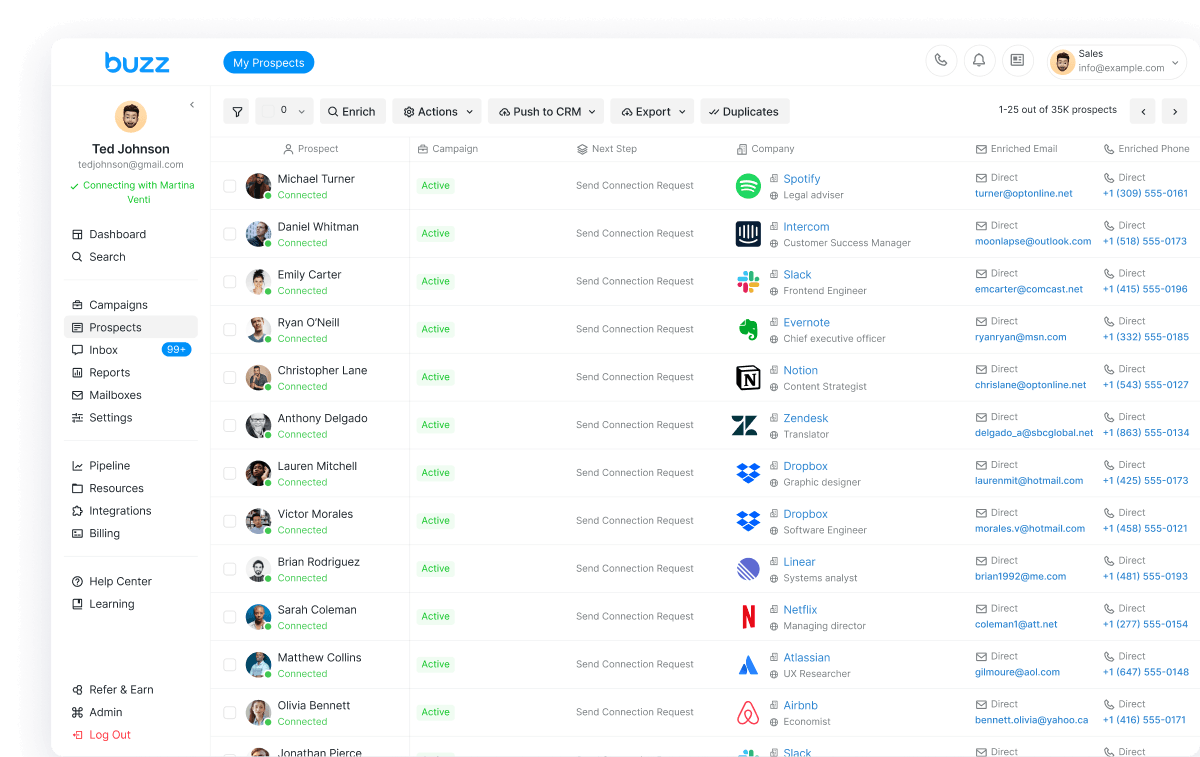
Where an all-in-one platform like Buzz AI matters is in the workspace itself. Instead of juggling separate tools for enrichment, email outreach, social messages, calling, and video, teams can work from one place. They can:
- Find and enrich contacts
- Launch multi-channel sequences
- Track replies and meetings across channels
The business impact is simple: new reps ramp faster, fewer warm accounts fall through the cracks, and you can grow pipeline more consistently without adding more tools or more headcount.
Reading the Buyer Signals Your Team Is Missing
Most sales teams only see the obvious signals, like a direct reply. Sales intelligence software pulls in quiet signals that usually get missed.
Common types of signals include:
- Digital behavior, such as repeated email opens, website visits, and content views
- Company triggers, like hiring growth, new funding, or leadership changes
- Engagement patterns, such as which sequences and channels lead to booked meetings
Non-technical leaders do not need to stare at detailed reports. Instead, ask for simple dashboards that answer questions in plain language, like:
- Which 50 accounts are most likely to convert this month?
- Which social and email outreach is most likely to lead to meetings?
- Where are we sending messages that never get a response?
For example, your team might see that a target account has a growing leadership team in late summer, plus higher activity on your website. That combo is a strong sign to move them to the top of the call list. Or you might see that short video messages perform better than long text emails for larger deals, which tells you to shift your outreach style.
As late summer and early fall planning cycles kick in, buyers are deciding how to spend remaining budget. Reading these signals well can mean the difference between being in the final round or never even hearing about the deal.
Choosing the Right Platform Without a Technical Degree
You do not need to speak in data jargon to pick good sales intelligence software. You only need a simple lens for judging tools.
Start with three areas:
- Clarity: Can you understand the main dashboard in under a minute?
- Coverage: Does it cover email, social, calling, and video in one place?
- Data quality: Does it keep prospect and account data clean and current for your markets?
If you need an analyst just to explain the home screen, it is not the right fit. Ask vendors to walk you through a normal workday instead of a flashy demo. Useful questions include:
- Show me how a brand-new rep would plan their day in your tool
- What decisions can frontline managers make faster because of your data?
- How does your platform keep our data clean and compliant?
Use Buzz AI as one example of an all-in-one workspace that supports contact enrichment, multi-channel sequences, and engagement analytics from a single screen. Non-technical leaders can see the big picture, while reps focus on their next set of actions.
Integration also matters, but you can keep that simple too. Ask if the platform syncs with your CRM so everyone is working from one shared view, not separate lists and private spreadsheets.
Turning Intelligence Into Daily Sales Habits
Software only helps if it shapes daily behavior. Sales intelligence should not sit in a separate tab that nobody opens.
Set a few simple, non-technical rhythms:
Daily, reps:
- Start their day inside the sales intelligence tool
- Work the prioritized list of contacts across email, calls, and social
- Log quick notes so the data stays fresh
Weekly, managers:
- Review pipeline health and engagement trends
- Adjust messaging, cadences, and target groups
- Coach reps using real examples, not old stories
Monthly, leadership:
- Look at conversion rates, sales cycle times, and influenced revenue
- Tune territories and segments
- Decide where to invest more effort in the next month
A platform like Buzz AI can support these rhythms with unified timelines for each prospect, consistent sequences across channels, and fast views of what is moving and what is stuck. As travel picks up and people split time between office and remote work, having one simple home base helps the team stay on track without extra meetings.
Make Sales Intelligence Your Competitive Edge
Sales intelligence software is not about fancy terms or complex charts. It is about answering three very human questions: Who should we talk to today, how should we reach them, and what should we say?
Over the next few weeks, leaders can move fast with a simple plan:
- Audit: Spot where your team loses the most time, like research, list building, or manual follow-ups
- Align: Get sales and marketing in one room to define your ideal customer profile and top buying signals
- Select: Shortlist a few platforms, including options like Buzz AI, and run a focused pilot with a small group
- Scale: Roll out the winning platform along with clear habits, manager views, and success metrics
As you move through the back half of the year and start planning next targets, teams that treat sales intelligence as a core part of selling will have a quieter mind and a clearer view. They will forecast with more confidence, coach with better data, and win deals that other teams never even saw in their pipeline.
Turn Real-Time Buyer Insights Into Revenue Growth
Unlock deeper customer understanding and prioritize the accounts most likely to close with our sales intelligence software. At Buzz AI, we combine accurate data with actionable insights so your team can focus on conversations that truly move the needle. If you are ready to sharpen your pipeline strategy and shorten sales cycles, contact us today.