Rethinking Outreach Beyond More Emails, More Deals
Many B2B teams send more email outreach every quarter, but pipeline does not really move. Replies feel weak, unsubscribe rates creep up, and everyone asks for new sequences and more tools. Yet the core question is still fuzzy: which of these efforts actually create new deals and which would have happened anyway?
This is where leaders start to feel stuck. Do we double down on email only, or layer on social, phone, and video? Is multichannel outreach really working, or does it just give us nicer-looking dashboards? To answer that, we need a simple way to measure what is truly incremental, not just what looks busy.
In this article, we will walk through a practical framework that blends attribution and incrementality. We will talk about holdouts, lift, and real pipeline impact, so you can compare single-channel and multichannel outreach with clear eyes and make better calls with your team and your board.
What Actually Changes with Multichannel Outreach
Single-channel outreach is when you rely mostly on one path to reach people. For many B2B teams, that is email outreach. It can work well when you have:
- A clear ideal customer profile
- Warm or opt-in lists
- A known brand people already trust
- Direct buying roles with simple needs
It is simple to run, easy to report on, and fast to change. One channel, one main set of metrics.
Multichannel outreach adds more ways to reach the same prospect or buying group. Along with email outreach, you may layer on:
- Social outreach and messages
- Phone calls or voicemail drops
- Short custom videos sent by email or social
- Occasional direct mail, events, or webinars
Teams shift to multichannel because buyers are busy and spread across platforms. People skim email between meetings, scroll on their phones, and respond to different formats at different times of day.
The tradeoffs are real:
Single-channel:
- Simpler workflows
- Cleaner reporting
- Fewer tools to manage
- Easier to train new reps
Multichannel:
- More chances to be seen
- Better coverage of buying committees
- More natural, human-feeling touch patterns
- Higher coordination effort and more complexity
A big misconception is that more channels always equal better results. Without an incrementality lens, it is easy to confuse vanity signals, like opens or likes, with real impact. A prospect may like a social post and still never take a meeting. On the other side, a quiet email reply from a small group of people might create most of your revenue. We need a smarter way to score what is actually working.
Attribution Made Simple for Busy Revenue Leaders
Attribution just means, which touch or channel gets credit for the meeting or the deal? This matters when you decide:
- Where to put more budget
- Which roles to hire or grow
- Which tools to keep or drop
Common attribution models are:
- First touch: The first channel that engaged the prospect gets all the credit.
- Last touch: The last touch before the meeting or opportunity gets all the credit.
- Linear: Every touch gets an equal slice of credit.
Think about simple examples. A prospect first responds to an outbound email. Later, they watch a video you send and then book a meeting. First touch gives full credit to email outreach. Last touch gives credit to video. Linear splits it.
Or, someone sees a social message from a rep and does nothing. A week later they reply to a follow-up email and take a meeting. Social warmed them up, but email carried the last mile.
All of these models help, but they miss one key question: would this meeting or opportunity have happened without that channel in the mix? That is where incrementality comes in.
Incrementality 101: Holdouts, Lift, and Real Impact
Incrementality is the extra meetings, opportunities, or revenue that happened because of a specific channel or campaign, above what would have happened anyway. It is less about credit and more about net new impact.
- Holdout groups make this clear. The idea is simple: when you launch a new multichannel program, you randomly keep a slice of your target list out of that program. That holdout group still gets your normal baseline outreach, but not the new test sequence.
Then you compare results over a clear period:
- Reply rates
- Meetings booked
- Opportunities created
- Pipeline value
If the treated group, the one that got multichannel outreach, beats the holdout group, the gap is your lift. That lift is your incrementality.
A simple mini-playbook:
- Holdout size: Big enough that results feel stable, but not so big it hurts your targets. Many teams start with a small but meaningful percentage.
- Time frame: Long enough to see meetings turn into real pipeline. Often, several weeks, not just a few days of replies.
Metrics to track for each group:
- Positive reply rate
- Meetings held, not just booked
- Qualified opportunities created
- Forecasted pipeline
You can run the same style of test for pure email outreach versus email plus social, phone, and video. The key is to keep everything else as steady as possible.
How to Test Single-Channel vs. Multichannel Outreach
Here is a simple way to test in the real world. Take one clear audience segment and one main offer, for example, a strategy call before a common summer slowdown or a Q3 pipeline push.
Set up two groups:
- Group A: Email outreach only.
Group B: The same emails plus planned social outreach, phone calls, and maybe a short video touch.
Make the sequences comparable:
- Same core message and value
- Similar total number of touches
- Similar timing across weeks
- Same sender style and from address
The only big difference should be the mix of channels.
When you review results, do not stop at opens or clicks. Compare:
- Quality of replies
- Meetings actually held
- Opportunities accepted by sales
- Estimated pipeline and win rate by group
Common patterns teams often see:
- A small lift from adding one extra channel, like social before email.
- A bigger lift when channels support each other, like social touch, then email outreach, then phone, then a quick reminder video.
- Diminishing returns when you stack too many touches or channels at once and prospects start to tune you out.
The weather and the season can even matter. During warm months when people travel more, adding social or mobile-friendly touchpoints can help you stay present when inboxes pile up.
From Insights to Budget, headcount, and Playbooks
Once you see clear lift numbers, decisions get easier. You can choose:
- Which channels to scale and which to pause
- how to structure roles, such as more email-heavy reps versus reps who shine with social outreach and video
- Which types of accounts should get single-channel versus full multichannel treatment
Out of this, you can build focused playbooks:
- A tight email outreach flow for high-intent leads who already know you.
- A richer multichannel sequence for colder or strategic accounts that need more warming and more human touches.
AI and data enrichment turn this into something you can actually scale. Clean lists, up-to-date contact data, and smart recommendations on when and how to reach out keep your team from drowning in manual work.
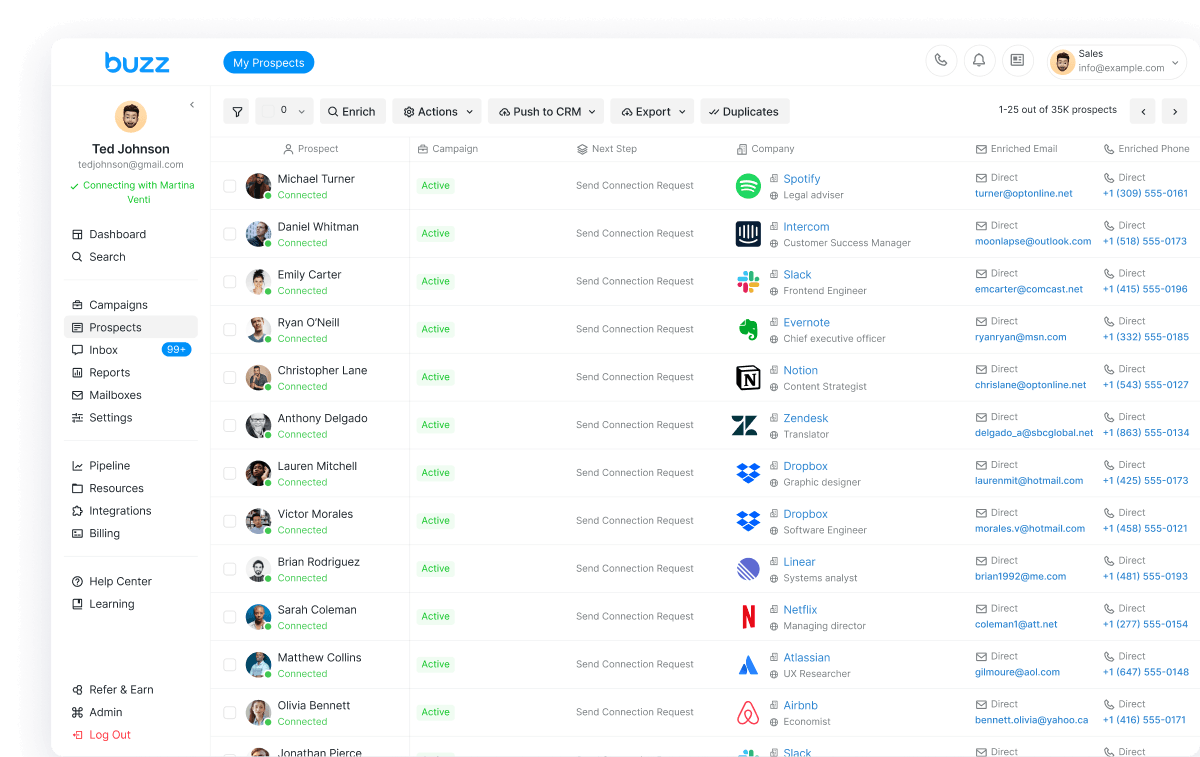
A centralized sales engagement platform brings it all together. It lets you run tests, store sequence versions, compare groups, and keep measurement consistent across email, social, phone, and video. At Buzz.AI, the platform is designed around that idea, so teams can cut tech bloat and still run serious outreach experiments without getting lost in spreadsheets.
Start Turning Cold Prospects Into Warm Conversations Today
If you are ready to get more replies and better opportunities from every campaign, our email outreach tools can help you do it with less effort and more consistency. At Buzz AI, we design workflows that make it easy to personalize at scale while keeping your message on brand. Tell us about your goals and we will help you map out a practical path from first send to booked meetings. Have questions or need a custom plan tailored to your team’s workflow? Just contact us to get started.