A sales rep sends a perfectly crafted cold email. The prospect opens it, reads it, and then... nothing. No reply, no meeting booked, no next step. Most reps move on, convinced the silence speaks volumes. The top performers? They're just getting started.
80% of sales require five follow-up calls after the initial meeting, yet 44% of salespeople give up after one follow-up. This gap between persistence and abandonment explains why some reps consistently hit quota while others wonder why their "perfect" emails go nowhere. 92% of salespeople stop after four attempts, missing the window where 50% of sales actually happen—after the 5th contact.
Strategic follow-up sequences with proper timing, personalization, and automation deliver 3x more responses and convert 22% more prospects. The difference between average and exceptional sales performance isn't talent or territory. It's a systematic approach to staying in front of prospects until they're ready to engage.
Why Follow-Up Emails Make or Break Sales Performance
The Follow-Up Gap That's Costing You Revenue
Only 2% of sales are made on first contact. The remaining 98% require multiple touches, with 80% of sales occurring between the fifth and twelfth contacts. If you're treating follow-up as optional, you're essentially volunteering to lose 98% of potential deals.
The data tells a clear story: the first follow-up email improves overall reply rate by 50%. Even more striking, 55% of cold email campaign replies come from follow-ups, not initial messages. Every abandoned prospect after one or two attempts represents revenue you've gift-wrapped for your competitors.
What the Data Reveals About Persistence
Speed matters as much as persistence. 35-50% of sales go to the vendor that responds first, and following up within 5 minutes makes you 9x more likely to engage web leads. This creates an interesting paradox: you need to respond immediately while also maintaining a multi-touch cadence over weeks.
Sales development reps average 94.4 daily activities including 36.2 emails, 35.9 phone calls, and 15.3 voicemail messages. These activities lead to 14.1 meaningful conversations per day and 23.1 appointments set. The volume required to succeed demands automation and systematic processes—unless you enjoy manually tracking hundreds of follow-ups in spreadsheets.
Why Most Sales Reps Give Up Too Early
48% of salespeople make only a single follow-up attempt after a cold call. Fear of seeming annoying drives premature abandonment despite overwhelming evidence that prospects expect and respond to persistent outreach. Turns out, the only thing more annoying than a follow-up email is losing a deal because you were too polite to send one.
Sales reps spend only 30% of their time selling versus administrative tasks. Without structured processes and automation, follow-up becomes another time-consuming task that gets deprioritized. The lack of a clear framework makes it easy to rationalize moving on to "warmer" prospects who are probably just as cold, but newer.
When to Follow Up: Timing Strategies That Maximize Reply Rates
The Optimal Waiting Period Between Follow-Ups
The first follow-up should arrive 2-3 business days after your initial email. This window keeps you top-of-mind while respecting the prospect's schedule and avoiding the appearance of desperation. Too soon feels pushy; too late and you've lost momentum to whoever actually followed up.
Your second follow-up should land 5-7 days after the first attempt. Strategic 2-3 day delays between early touches can increase reply rates by 11%. The third follow-up deserves a longer gap—2-3 weeks after the second attempt—signaling respect for their time while maintaining presence.
Best Time to Send Cold Emails and Follow-Ups
8AM and 3PM consistently achieve the highest open rates. Morning emails catch prospects as they review their inbox with fresh attention. Mid-afternoon messages arrive when energy dips and people seek productive distractions from their primary work.
Tuesday emails have the highest open rates versus other weekdays. Avoid Monday mornings, which are reserved for internal meetings and urgent matters that accumulated over the weekend. Weekend emails show significantly lower open rates as most B2B buyers disconnect from work communications—and rightfully so.
Industry-Specific Timing Considerations
The average B2B sales cycle spans 84 days—12 weeks from first contact to close. Your follow-up cadence needs to match this reality rather than treating every non-response as disinterest. B2B buyers complete 57-70% of their research before contacting sales, meaning your follow-ups often arrive while they're still in education mode.
77% of B2B buyers prefer email for follow-up communications, but only 23.9% of sales emails get opened. This combination demands both volume and quality: enough touches to break through inbox noise while maintaining relevance that justifies each message.
How to Build High-Converting Email Sequences
The Anatomy of Effective Email Sequences
Campaigns with 4-7 emails receive 3x more responses than campaigns with 1-3 emails. The optimal number for cold outreach is 3-5 follow-up emails, balancing persistence with deliverability concerns. Cold email campaigns with three total emails achieve 9.2% reply rates—which beats the 0% reply rate of emails you never send.
High-growth organizations average 16 touchpoints per prospect within 2-4 weeks. This doesn't mean 16 emails—it includes phone calls, social media interactions, and other channels. The multi-touch approach recognizes that different prospects prefer different communication methods, and you're not a mind reader.
Sample 7-Touch B2B Sequence Framework
Day 1 introduces your value proposition with credibility markers that establish why the prospect should care. Day 3 dives deeper into industry-specific pain points, demonstrating understanding of their challenges. Day 5 delivers a case study or social proof relevant to their situation.
Day 7 offers a soft CTA with a low-commitment next step like a brief call or resource download. Day 10 addresses common objections with data-backed responses before they become barriers. Day 14 provides a value-add resource—guide, whitepaper, or tool—with a clear CTA.
Day 21 sends the break-up email, signaling this is your final outreach attempt. These messages often generate the highest response rates as prospects realize they're about to lose access to your solution. Nothing motivates action quite like scarcity.
Cold Lead vs. Warm Lead Sequence Differences
Cold leads require 10-15 day sequences with multiple touches per week to build familiarity from zero. Warm leads need just 3 emails over roughly 2 weeks for initial engagement since they already have context about your company or solution.
Longer sales cycles demand 30-60 day sequences with spaced touches that maintain presence without overwhelming prospects. Recruiting outreach follows a similar pattern: 4-5 touches over one month provides optimal cadence for candidates evaluating opportunities.
Multi-Touch Outreach Cadence Beyond Email
SDRs using email, phone, and social have 28% higher MQL-to-SQL rates than those relying on single channels. SMS text messages achieve 98% open rates versus email's 22%, making them powerful for time-sensitive follow-ups. Text message follow-ups deliver 112.6% higher conversion rates.
Multi-channel approaches see 2x higher response rates because you meet prospects where they prefer to engage. Sales reps using social selling are 50% more likely to meet quota, particularly when LinkedIn touches complement email sequences.
Crafting Follow-Up Emails That Get Responses
Personalization Techniques That Drive Engagement
Personalized emails deliver 6x higher transaction rates, and 93% of buyers are more likely to engage with personalized content. Including the prospect's first name in the subject line boosts open rates by 29.3%. Yet only 5% of sellers consider bulk emails effective—which means 95% know better, but many still do it anyway.
Reference recent news about their company, mutual connections, or specific details from previous conversations. Generic emails signal mailbox providers to route messages to spam folders, damaging deliverability even when technical setup is correct.
Subject Line and Email Length Best Practices
Optimal subject lines contain 41 characters or seven words. Longer subjects get truncated on mobile devices, where most emails are first viewed. Keep the promise specific and curiosity-inducing without resorting to clickbait that would make a tabloid editor blush.
Best email length is 50-125 words with social proof or statistics that build credibility. Conversion rates plummet after 300 words as busy prospects skim rather than read. Clear, single CTAs outperform multiple asks per email by reducing decision fatigue.
Value-Add Content That Builds Credibility
Each follow-up must offer something of value: an insight, relevant article, case study, or provocative question. Avoid "did you see my last email?" without adding new value. This lazy approach signals you have nothing substantive to contribute beyond reminding them you exist.
Include industry-specific pain points backed by data or research that demonstrates expertise. Reference specific details from the prospect's company website, recent press releases, or LinkedIn activity to prove you've done your homework.
Automating Your Follow-Up Process with Sales Engagement Platforms
Why Email Automation Tools Are Non-Negotiable
Email marketing automation delivers $38 ROI per dollar spent, with top performers achieving $70 returns. Automation reduces time on non-selling tasks by 66%, freeing reps to focus on conversations rather than administrative work.
71% of companies report automation increases revenue and retention. Triggered emails result in 8x higher open rates than bulk emails because they arrive based on prospect behavior rather than arbitrary schedules.
Sales Engagement Platform ROI and Impact
Sales engagement platforms increase productivity by 25-30% and improve conversion rates by 15-25% on average. 92% of sales development organizations rank these platforms as critical to their team's success. Organizations see 16% increases in win rates and 14% larger deal sizes after implementation.
60% of companies report significant sales productivity increases after deploying engagement software. The combination of automated sequencing, performance analytics, and multi-channel coordination transforms follow-up from a manual chore into a systematic revenue engine.
Case Study: How Strategic Follow-Up Transformed LeadFuze's Revenue
The Challenge and Initial Approach
LeadFuze aimed to scale revenue through systematic cold email outreach without drowning their team in manual email sending. They needed automated processes that maintained personalization while reaching hundreds of prospects weekly. The balance between persistence and value delivery required a structured framework rather than ad-hoc outreach.
The Follow-Up Sequence Framework Implemented
Their sequence started with an initial outreach email establishing value proposition and credibility. Follow-up #1 added value through a relevant blog post or case study addressing the prospect's likely challenges. Follow-up #2 delivered additional value via a news article or different case study, maintaining distinct messaging.
Follow-up #3 sent a break-up email notifying prospects they wouldn't receive further outreach. This final touch often generated responses from prospects who had been interested but not yet ready to engage.
Results and Revenue Impact
LeadFuze scaled to $30,000 per month within one year of implementing their systematic sequence. Automation eliminated manual email sending while ensuring consistent value delivery across all touches. The structured approach converted better than inconsistent manual outreach ever had.
Key Takeaways for Sales Teams
Each follow-up must provide distinct value rather than repeating the initial message with different wording. Automation scales personalized outreach without proportional time investment, making it possible to maintain quality while increasing volume. Break-up emails set clear boundaries while maintaining professionalism, often triggering responses from fence-sitters.
Common Follow-Up Mistakes to Avoid
Sending Generic, Non-Personalized Sequences
Generic emails trigger spam filters and get ignored by prospects who receive dozens of similar messages daily. Personalization can boost revenue by 76% when properly implemented, yet most reps default to templates that scream "mass email."
AI-powered personalization tools now make it possible to customize at scale, referencing specific company details, recent news, or industry trends relevant to each prospect. The technology removes the excuse that personalization takes too much time.
Giving Up After Too Few Attempts
80% of sales require 5+ follow-ups, but most reps stop at 1-2 attempts. Reply rates increase with every follow-up attempt, and 60% of customers say no four times before saying yes. Stopping at 4 attempts means missing 92% of potential sales—which is a creative way to ensure you never hit quota.
Poor Timing and Cadence Planning
Immediate follow-ups appear desperate while waiting too long loses momentum. Inconsistent spacing between touches reduces sequence effectiveness as prospects forget previous interactions. The average B2B sales cycle of 84 days requires sustained, planned cadence rather than sporadic outreach whenever you remember.
Building Your Follow-Up System for Long-Term Success
50% of sales happen after the 5th contact. This single statistic separates top performers from average reps who abandon prospects too early. The difference isn't talent or territory but systematic follow-up that maintains presence until prospects are ready to engage.
Implement 4-7 email sequences with 2-3 day initial spacing, personalization at scale, and multi-channel touches for 2x response rates. Each message should provide distinct value rather than repeating previous outreach. Test timing, content, and cadence continuously to optimize for your specific audience and industry.
Deploy sales engagement platform automation to achieve $38 ROI per dollar while reducing non-selling tasks by 66%. The technology exists to scale personalized follow-up without proportional time investment. The question isn't whether to automate but how quickly you can implement systems that turn follow-up from a weakness into your competitive advantage.
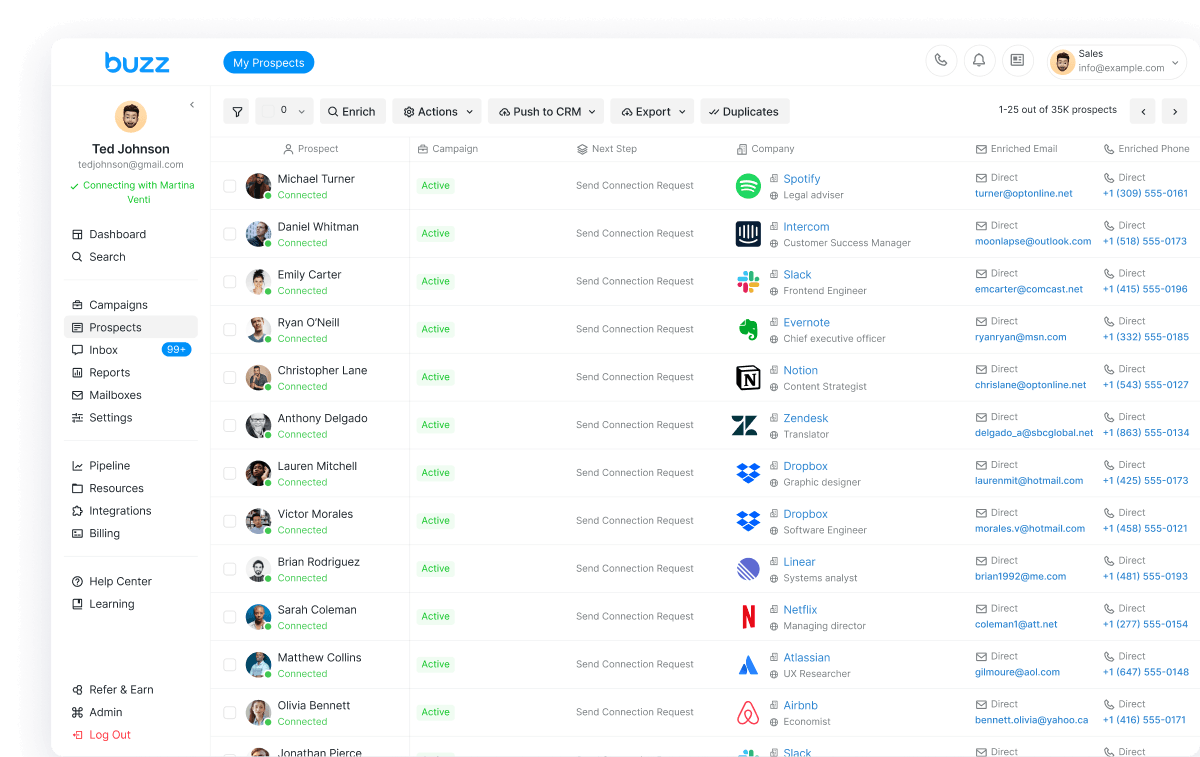
Ready to elevate your follow-up strategy? Book a demo with Buzz to see how AI-powered sales engagement can help you automate personalized sequences, optimize timing, and convert more prospects without adding headcount.
See why top-performing teams trust Buzz to turn systematic follow-up into predictable revenue.