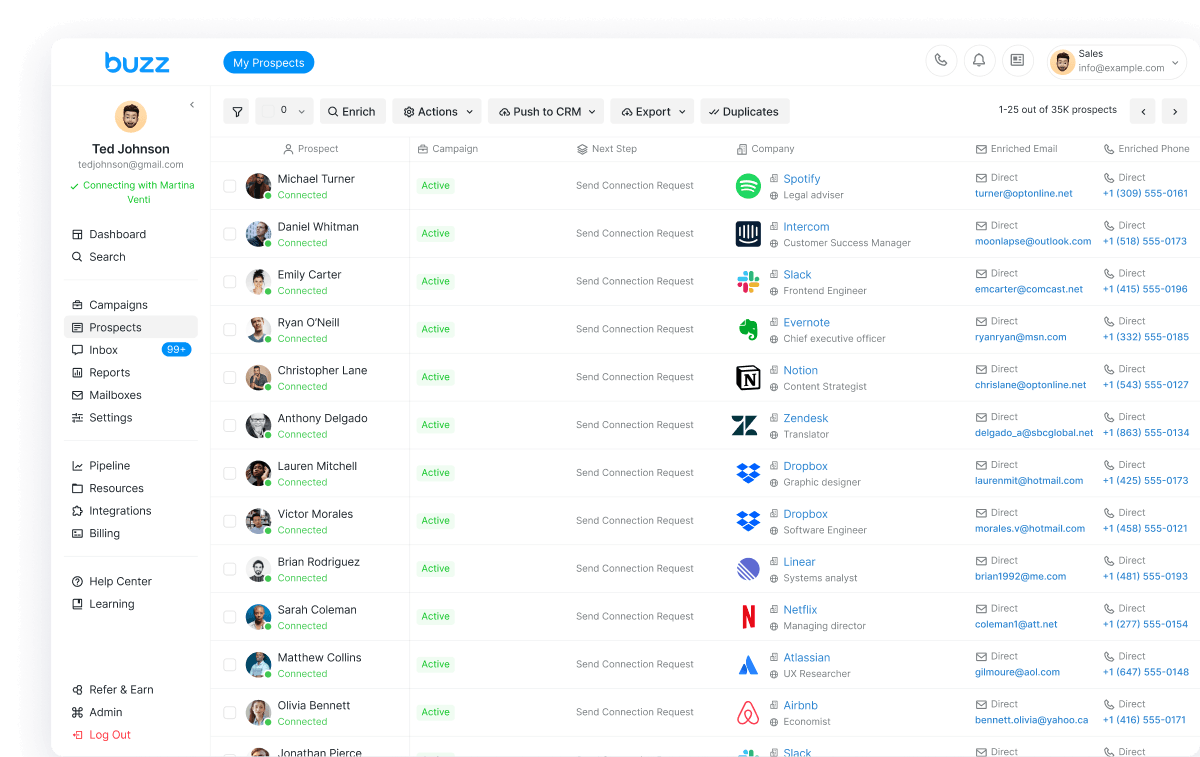
Turning Raw Sales Intelligence Into Revenue-Ready Emails
Strong email outreach should not feel like guessing. Most teams have more data than ever, yet replies are flat and inbox placement keeps slipping. Reps feel pressure to send more, but more volume with weak targeting just adds to the noise and hurts domain health.
This is where sales intelligence comes in. By sales intelligence, we mean every useful signal about a prospect, like who they are, what their company is doing, what tools they use, and when they might be ready to talk. When those signals actually shape your email outreach, you get better replies, fewer spam issues, and a calmer sales team. Mid-April is when Q2 gaps start to show, so it is a perfect time to rethink how you turn raw data into revenue-ready emails.
Why Your Email Outreach Is Not Landing
When email outreach falls flat, it usually is not because your reps are lazy. It is because the system around them is broken.
Common problems include:
- Misaligned targeting
- Weak deliverability basics
- One-size-fits-all messaging
- Channels that do not work together
If your lead list is old or scraped from random sources, your emails will feel off from the first line. Wrong role, wrong company size, wrong market, or people who left the job months ago. That leads to low opens, high bounces, and more spam complaints.
Then there is deliverability. Spammy subject lines, no domain warm-up, sending too fast from cold domains, and poor list hygiene all keep emails out of the inbox. If your messages never land, it does not matter how clever they are.
On top of that, many teams send the same copy to everyone. A finance leader in a large company does not think like a founder in a small startup. Cold prospects, warm inbound leads, and past customers all need different angles. When everything sounds the same, people ignore it.
Finally, email, social outreach, and calling often sit in separate tools. Prospects get a random email, then a random social message, then a random call, with no clear story. It feels pushy instead of helpful.
Building a Strong Data Foundation for Better Emails
Before we talk about writing better email outreach, we need to fix the data underneath it.
First, you need clean, centralized lead data. That means:
- One place where contacts and accounts live
- Clear owner for each lead
- Past emails, calls, and social touches tied to the same record
When your CRM, enrichment tools, and engagement tools are all over the place, reps waste time and repeat work. A clean base makes targeting easier and cuts mistakes.
Next is data enrichment. Good enrichment adds:
- Firmographics, like size, industry, and location
- Technographics, like tools and platforms in use
- Verified work emails and social profiles
With that, you can segment by real traits instead of guessing. You can aim at the right people, reduce bounce rates, and avoid sending to dead inboxes.
Real-time sales intelligence is the next layer. Think about:
- Hiring spikes in certain teams
- New funding or big expansion news
- Product launches or new service lines
- Recent content engagement or event activity
These signals help you time your email outreach. You can speak to current moves, not last year’s press release.
Finally, AI lead generation helps fill the gaps. AI can scan markets, spot lookalike accounts that resemble your best customers, and flag high-fit prospects that human research might miss. That keeps your pipeline fresh without spending hours on manual searches.
Turning Signals Into High-Performing Email Outreach
Once your data is in good shape, it is time to turn signals into better sequences.
Instead of grouping only by title or industry, build segments based on triggers like:
- New role or promotion
- Office or team expansion
- Tool stack change or new integration need
- Seasonal projects that tend to kick off in spring and summer
For each trigger, you can write a tighter story about why you are reaching out now.
Personalization at scale does not mean writing a long custom email for every person. It means using sales intelligence to fuel:
- Subject lines that reference a real trigger
- Openers that show you know their world
- Value props tied to their current goals or issues
AI can draft first versions of these emails so reps only need to tweak a few lines. You get speed plus relevance.
Smart sequencing pulls email, social outreach, light video touches, and calls into one plan. For example, a short, targeted email can be followed by a polite social connection request, a quick voicemail, then a tailored follow-up email that builds on any signal you saw in between.
Because your lists are cleaner and your messages are more aligned to each person, you also help deliverability. Better targeting means:
- Fewer bounces
- More opens and replies
- Fewer spam complaints
- Stronger domain reputation over time
Using AI to Supercharge Sales Engagement
AI is not here to replace your reps; it is here to give them better starting points.
With AI-powered prospecting, you can scan large markets and find accounts that match your ideal profile. AI looks at things like size, tools, hiring patterns, and public signals, then scores leads on likely fit and intent. Reps start their day with a ranked list instead of a blank page.
For messaging, AI can suggest:
- First-pass cold emails tailored to a segment
- Variant subject lines for A/B tests
- Follow-up templates based on previous replies or silence
Reps then edit, add personal touches, and send. Admin time drops, and they can focus more on real talks with real people.
AI can also study opens, replies, bounces, and spam complaints to suggest sending timing and frequency. Should you email in the morning or afternoon? Three touches or five? AI learns from your own history, not just generic rules.
Over time, AI builds feedback loops. It learns which angles work for which segments, which offers land in which industries, and which tones fit which roles. That intelligence then shapes your next campaigns, so every sequence gets a little sharper.
Orchestrating Email and Social for Maximum Impact
Email outreach works best when it does not stand alone. Prospects move between inbox and social all day, and your sales engagement should reflect that.
A unified prospect view lets reps see:
- Every email sent and opened
- Social connection requests and replies
- Calls, voicemails, and video touches
- Notes from other team members
This stops over-contacting, like sending a bump email right after a great social chat, and keeps each touch relevant.
Instead of random messages, you can run coordinated plays. For example:
1) Send a short email tied to a clear trigger.
2) A day later, send a polite connection request on social that references the same idea.
3) Follow with a brief voice call for high-intent leads.
4) Close the loop with a follow-up email that mentions any engagement so far.
Keep the core insight the same across channels. If the trigger is a recent funding round or a new product line, echo that in email, social messaging, and calls. This makes your story stick and shows that you are paying attention to what matters to them.
For leaders, centralized analytics across channels, reps, and sequences reveal where outreach drives real pipeline. You can see which plays move the needle, which reps need support, and where to invest next as the weather warms and deals start to pick up.
Transform Your Cold Emails Into High-Value Conversations
If you are ready to turn more prospects into booked meetings, our email outreach solution gives you the data, personalization, and automation you need. At Buzz AI, we help you launch campaigns that feel tailored, not templated, so your messages actually get opened and replied to. Reach out to our team to explore the best strategy for your goals, or contact us to get a tailored walkthrough.