Why Agentic AI SDRs Are on Every CEO's Radar
Sales is getting harder. Deals take longer, buying groups keep growing, and boards still expect revenue to keep climbing. At the same time, sales costs rise while your team spends a big chunk of the week just researching, drafting emails, and following up. That mix is exactly why agentic AI SDRs are suddenly showing up in planning talks.
Agentic AI is simple to explain. It is software that can understand a goal, decide what to do next, and take action across tools without being told every tiny step. Instead of just helping a human write one email, it can run the whole SDR motion end to end. The promise: an AI SDR platform that finds, qualifies, and engages B2B accounts at scale while your team leans into high-stakes conversations and strategy.
This shift is not about replacing your sales team overnight. It is about building a hybrid model where AI handles the repetitive, rules-based work, and your people keep the relationship-driven selling that actually wins complex deals.
What Agentic AI SDRs Actually Do Day-to-Day
Think about what an SDR really does in a week. The tasks usually look like this:
- Research accounts and contacts
- Map the buying committee
- Enrich data from different tools
- Send first-touch messages on email and social
- Track opens, clicks, and replies
- Respond to basic questions and route good fits to reps
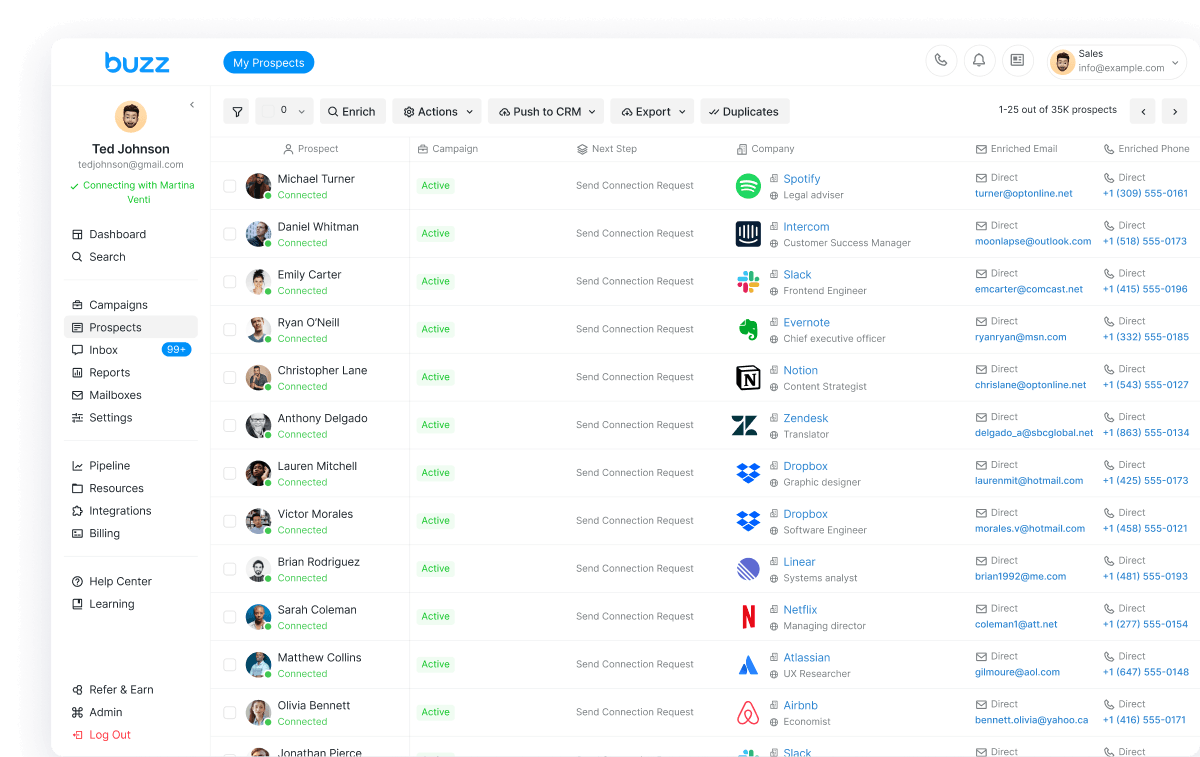
An agentic AI SDR platform can take that list and run it like a playbook. It can search across data sources to find new prospects that match your ICP, enrich those records, and score who should be contacted first. Then it writes outreach that matches your brand voice, picks the right channel, and sends on a smart schedule.
For complex sales cycles, this matters more. For example, the AI can:
- Reach multiple contacts inside a target account with messages tailored to each role
- Notice when someone shows buying intent in a reply and keep the thread moving
- Hand off any nuanced or high-value conversation to a human rep with full context
The lines are pretty clear today. AI can reliably own first-touch outreach, light qualification questions, basic objections, and steady follow-up. Humans still own deal strategy, pricing, custom proposals, and all late-stage negotiation. CEOs who set those boundaries early see smoother adoption and fewer surprises.
Why Complex B2B Cycles Need a Different Kind of AI
Not every sales motion is the same. A simple transactional sale often has:
- One main decision-maker
- Short evaluation time
- Lower contract value
- A small number of touches
Complex B2B deals are different. You might have a buying group with several functions, months of back and forth, and deep product questions. Basic automation and simple scripts usually break in that world. Generic cadences, one-size-fits-all messaging, and zero account context leave prospects cold and can even hurt your brand.
Agentic AI is built to carry more context. It can track every touch across email and social, learn which job titles tend to reply, and adapt the tone and content over time. If one contact keeps clicking on technical content while another opens business value stories, the AI can adjust what it sends next to each person.
Risk has to be part of the design. A modern AI SDR platform should:
- Respect region-specific rules and internal compliance policies
- Honor opt-outs and suppression lists across all channels
- Flag any gray-area conversations for human review
- Keep a clear log of what was sent, to whom, and why
That kind of control is what lets you apply AI to long, complex cycles without losing sleep over brand or legal exposure.
Evaluating an AI SDR Platform as a CEO
Choosing an AI SDR platform is not just picking another sales tool. You are reshaping how pipeline gets created, how data flows through your stack, and how you think about headcount and territories over the next several quarters.
Key questions to ask:
- Does this platform act like a true agent, or is it just firing fixed workflows?
- Can it plan, adapt, and reprioritize accounts as new data comes in?
- How cleanly does it plug into your CRM, email, and social accounts?
- Can it reflect your ICP rules, territories, and compliance model?
When you run a pilot, focus on metrics that match how your board thinks:
- Meetings booked per target account
- Cost per qualified opportunity compared to your current model
- Time-to-first-touch on new leads
- Hours of SDR and AE time freed each week
Late summer is a good window to treat your pipeline like a live test bed. You can trial AI on one region or segment, learn what works, and have real data before the next big planning cycle with your board.
Risk, Control, and Brand Safety with AI SDRs
Many CEOs share the same fears about agentic AI. What if the AI goes off-script and hurts our brand? What if it blasts low-quality outreach to everyone in our market? What if we cannot see what it is saying in our name?
Modern guardrails help keep control:
- Approved messaging frameworks your team signs off on
- Tone settings so the AI speaks like your brand, not a robot
- Extra review steps for high-stakes segments or industries
- Full audit trails of every AI-driven interaction
On top of that, you need a clear governance model. Sales leadership, RevOps, and legal should define the policies once, then bake them into the platform. That includes rules for email, phone, and social outreach, plus clear escalation paths.
Change management is just as important as the tech. SDRs and managers need to learn how to work with AI counterparts, measure new kinds of performance, and shift focus toward higher-value selling. When reps see that AI is taking busywork off their plate instead of threatening their role, adoption goes much smoother.
Turning Agentic AI SDRs Into a 12-Month Advantage
The teams that win with agentic AI do not flip a switch and hope. They roll it out in stages over several quarters.
A simple path might look like this:
- Start with one region, product line, or vertical
- Prove the AI can hit clear targets on meetings and reply quality
- Expand to more accounts and use cases as playbooks harden
- Keep raising the bar on what work humans focus on
Used this way, AI is a force multiplier. Human SDRs can shift to strategic accounts, new markets, or partner plays, while AI gives steady coverage to the long tail. Leaders get more qualified meetings from the right accounts, lower acquisition friction, and steadier forecasting because outreach happens on time, every time.
At Buzz AI, we focus on that kind of hybrid model. Our goal is simple: give you an AI SDR platform that finds, enriches, and prioritizes B2B prospects, then runs personalized multichannel outreach and response handling, so your team can spend more time in real conversations and less time wrestling with busywork.
Accelerate Qualified Pipeline Growth With AI-Powered Outbound
Transform how your team books meetings by letting our AI SDR platform handle the heavy lifting of research, personalization, and outreach at scale. At Buzz AI, we help you focus on closing deals while we continuously optimize your outbound performance. If you have questions about fit, integration, or onboarding, simply contact us to talk with our team.