Why AI Sales Agents Are Your Next Growth Channel
AI is changing how sales teams go to market, not in theory, but in the day-to-day work of finding and winning deals. Acquisition costs keep climbing, inboxes are crowded, and leaders are asking smaller teams to hit bigger targets without burning out.
That is where AI sales agents come in. In plain terms, an AI sales agent is a digital teammate that researches, qualifies, and contacts prospects for you. It follows rules you set, learns from results, and keeps working while your human team focuses on higher-value conversations.
The big shift is this: AI sales agent software is no longer just a productivity booster. It is becoming a new go-to-market channel, like email, paid ads, or events. When used well, it can lower cost per meeting, speed up testing of new segments, and make outbound more predictable without adding headcount.
What AI Sales Agents Actually Do Day to Day
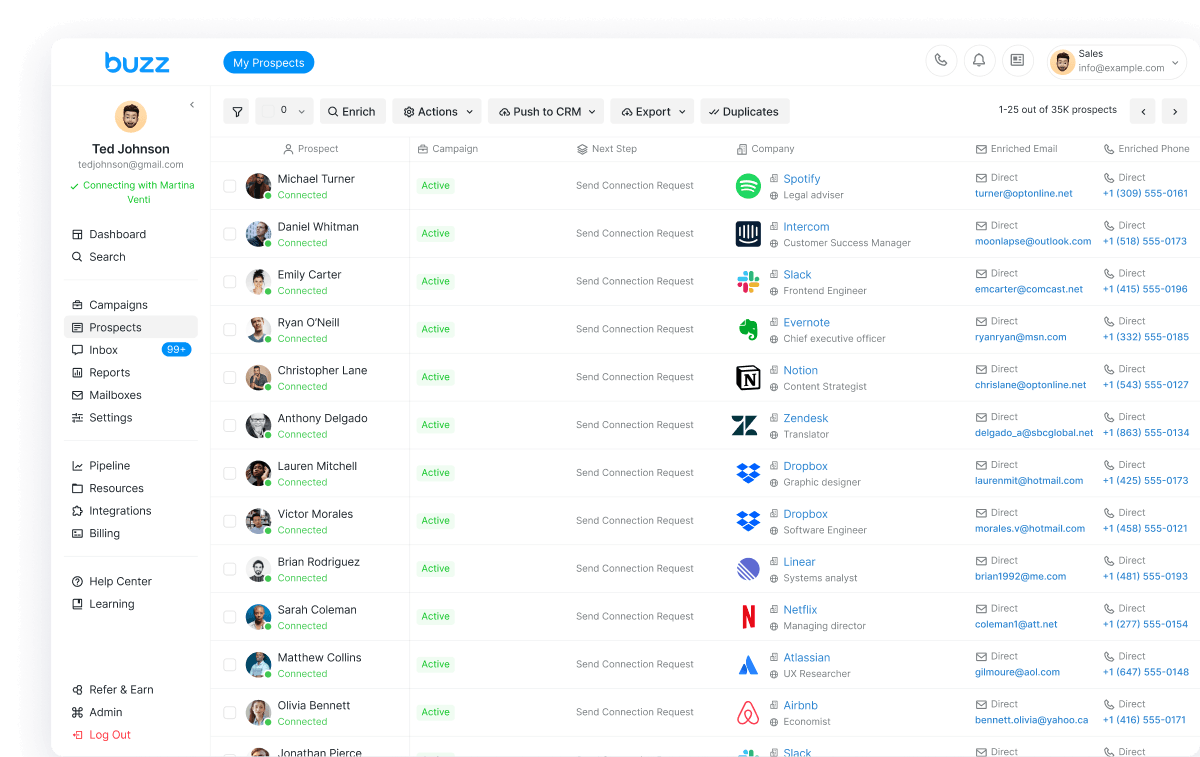
Let us make this concrete. An AI sales agent has three main jobs: find the right people, learn about them, and reach out in a smart way.
On a normal day, the agent can:
- Search for B2B prospects that match your ideal customer profile
- Enrich each contact with role, company size, tech stack, and recent triggers
- Score and prioritize leads based on fit and likely buying intent
Once it knows who to talk to, the AI shifts into outreach mode. It can:
- Write and send tailored emails that speak to each prospect’s industry and pain
- Run social outreach, like connection messages or thoughtful comments
- Adjust tone and content based on where the prospect is in the funnel
Modern AI sales agent software follows your playbooks, not its own agenda. You tell it:
- How many times to follow up and on which channels
- When to hand off to a human rep
- When to book meetings directly on a calendar
- When to stop outreach so you respect the prospect’s time
Picture a SaaS company testing a new vertical. Instead of spending weeks building a list by hand, the AI agent can spin up a targeted set of accounts, try a few different message angles, and quickly surface what gets replies. Your sales leader can look at the patterns, double down on what works, and shift your human reps toward warm conversations instead of cold research.
Why AI Sales Agents Deserve a Seat in Your GTM Strategy
AI sales agents are not here to replace your SDRs, marketing tools, or partners. They behave more like a new channel that works alongside the rest of your go-to-market system.
Think about the economics. An AI agent can:
- Handle research and list building without slowing down your closing reps
- Keep outbound consistent during busy quarters when humans are overloaded
- Run follow-ups on time, every time, even when calendars are packed
The result is a lower cost per opportunity because humans spend less time on repetitive top-of-funnel tasks and more time on discovery, demos, and negotiation.
CEOs and revenue leaders also get strategic advantages:
- Faster experiments in new markets and segments
- Campaigns that start in days, not months of planning and hiring
- Clearer insight into which messages and offers actually convert
Of course, you also have fair concerns. You might ask: Will the AI stay on brand? Will it follow compliance rules? Will our data stay safe?
Well-designed systems let you:
- Lock in tone and brand guidelines
- Approve templates and sequences before they go live
- Set firm rules around how data is used and stored
- Control volume and timing so you protect your sender reputation
When those guardrails are in place, AI agents can work as a trusted part of your sales engine instead of a loose cannon.
Building an AI-Ready Sales Engine in Your Organization
Before turning on AI, you need a solid foundation. AI can move fast, but it still needs clear direction.
Start with the basics:
- A clear ideal customer profile and target segments
- Clean CRM data so the AI is not learning from bad inputs
- Simple handoff rules between AI and human reps
Next, think about integrations. An AI sales agent works best when it connects with your core tools, like your CRM, calendar scheduling, and communication channels. Every touchpoint, from first email to booked meeting, should flow into one source of truth. That way, your team can see the full story of each account.
For change management, keep it light and focused. Many teams do well when they:
- Start with one region, product line, or segment
- Set a few clear KPIs, like meetings booked and pipeline created
- Review results weekly and tweak messaging and rules
Just as seasons change and teams adjust their plans, your sales process will shift as AI learns. The goal is not to flip a switch and walk away; it is to build a feedback loop between humans and the AI.
As you roll this out, your reps will need some upskilling. The good news is, their work gets more interesting. Instead of grinding through lists and manual research, they lean into:
- Deeper discovery calls
- Strategic deal planning
- Long-term relationship building with key accounts
The AI handles the first touch and the busywork. Your people do what humans do best: listen, think, and close.
How to Evaluate AI Sales Agent Software Vendors
Not all AI sales agent software works the same way, so picking a partner carefully matters. When you evaluate vendors, look at a few core areas.
On the data side, ask about:
- How they find and refresh prospect data
- What enrichment fields they support, like role, tools, and signals
- How they prioritize leads and accounts
On the outreach side, check:
- Which channels they cover, like email and social
- How quickly you can set up a new campaign
- How they manage replies, routing, and meeting booking
True personalization is a big deal. You want more than mail merge with a first name. Look for systems that:
- Read prospect context, like industry and recent changes
- Adjust wording based on role and seniority
- Switch angles depending on past engagement
Operationally, leaders should ask for:
- Clear reporting across meetings, replies, and pipeline
- Easy A/B testing of subject lines and body copy
- Compliance with email and data rules in your regions
- Controls for outreach limits so you do not burn domains
A practical way to test is to run a short pilot. Set up one campaign with the AI agent and a similar one with a human-only approach. Compare meetings booked, replies, and sales cycle quality. This gives you a grounded view of impact, not just a promise in a slide deck.
Turning AI Sales Agents Into a Competitive Advantage
AI sales agents are quickly moving from “interesting experiment” to core channel. Teams that treat them as a side project will move slower than teams that bake them into planning and territory design.
A simple 90-day plan could look like this:
- Pick one or two priority segments where you want more meetings
- Choose an AI sales agent software partner that fits your data and tools
- Launch a focused outbound program with clear guardrails
- Review results, refine the playbook, then roll out to more segments
At Buzz AI, we see that companies that operationalize AI in their go-to-market learn faster and adapt messaging quicker. They spot new opportunities before others and give their reps more time in real conversations.
As AI sales agents keep improving, the real edge will not be the technology itself. It will be how thoughtfully you design the human plus AI model inside your business, with clear roles, shared data, and a steady rhythm of learning and adjustment.
Turn Conversations Into Revenue With Smart AI Agents
If you are ready to capture more leads and close deals around the clock, our AI sales agent software is built to help you get there faster. At Buzz AI, we combine real-time conversation intelligence with automation so your team can focus on high-value opportunities. Tell us about your goals and we will help you design the right setup for your pipeline. Have questions or want a tailored walkthrough of what is possible for your sales process? Just contact us today.