Build AI Sales Agents That Think Like Your Closers
Designing AI sales agents that act like your best reps is not about sending more messages. It is about better judgment. Right now, late summer planning is in full swing. CEOs and sales leaders are trying to lock down Q4 pipeline while hiring and ramping humans keeps getting slower and heavier. It feels like the calendar is moving faster than your headcount. See how a Buzz AI sales agent runs outbound for you.
This is where AI sales agent software comes in, but not the firehose kind that blasts the same email at every contact. The real edge comes from AI that mirrors the timing, tone, and choices of your top closers. That means teaching software to notice buying intent, to know when to push and when to pause, and to shift message and channel based on subtle signals. Teams that ignore judgment and just scale volume risk burning markets. Teams that design AI agents around smart judgment will build trust and pipeline at the same time.
Our goal here is simple: show you how to design AI sales agents that act less like robots and more like your seasoned sellers, without requiring you to become a data scientist.
What Your Best Reps Already Know That AI Must Learn
Your best reps are not magic. They just make better small choices all day long. To bring that into AI sales agent software, we start by mapping those moments.
Key judgment points to capture include:
- Who to prioritize each day
- What angle to lead with for each role and industry
- When to follow up, and when to let a thread cool off
- When to route to an AE or closer
- When to disqualify with respect and keep the door open
These micro-decisions are what separate top performers from everyone else. They are the blueprint for how AI should behave.
Next, we focus on patterns, not personalities. We are not trying to clone one star rep. We are trying to encode repeatable moves like:
- How they open a conversation with a CFO vs a sales leader
- How they react to strong buying signals vs polite brush-offs
- How they shift messaging when there is a clear trigger event
Call recordings, email threads, and CRM notes are full of these patterns. Look for approaches that consistently lead to meetings, not just clever one-liners.
Then we turn tribal knowledge into clear rules. Sales leaders can sit with their best reps and ask simple “if this, then that” questions. For example:
- If a VP of Sales opens three emails in a week but does not reply, what happens next?
- If a prospect clicks pricing but no-shows a call, what do you do?
- If a director forwards your email to a C-level contact, how do you respond?
These rules turn gut feel into guardrails. They become the starting point for how your AI agent should act across email, phone, and social.
Turning Gut Feel Into Data AI Can Actually Use
Good judgment starts with good targets. So we begin with your best accounts and wins. Build an “ideal signal profile” using your highest-value customers, including:
- Firmographics, like size and region
- Buying triggers, like new hires or tool changes
- Buyer titles and typical buying groups
- Tech stack that tends to pair well with yours
- Rough timing patterns by segment
This lets your AI sales agent software focus on prospects that look like real buyers, not just any name in a database.
Next, we translate behavior into signals. Top reps read between the lines when someone:
- Opens every email but never clicks
- Clicks a product page twice in a day
- Replies with a soft objection instead of a hard no
- Shows up prepared to a first meeting
- Engages after a demo or shares materials with teammates
In AI terms, these are signals with different weights. An AI agent should learn when a cluster of actions means “escalate now,” when it means “nurture,” and when it means “move on.” The goal is to act like a sharp rep who knows where to invest their next hour.
To support that, your CRM has to be a source of truth, not a graveyard. Clean, enriched data gives AI context like:
- Typical deal sizes by segment
- Common win and loss reasons
- Average sales cycle length
- Buying roles that really matter vs FYI contacts
If your data is messy or half-empty, automation will feel clumsy and off target. The more real-world context your AI sees, the more natural its choices will feel.
Designing AI Sales Agents with Real-World Guardrails
Good AI in sales needs clear lanes. Not every task should move to software. A simple split looks like this:
AI should own:
- Prospect research and list building
- First-touch outreach and early follow-ups
- Multichannel sequencing across email, phone, and social
- Basic objection replies and reschedule requests
Humans should own:
- Live discovery calls
- Complex objections and internal politics
- Pricing and custom terms
- Final negotiation and closing
These lanes protect your brand and keep sensitive moments in human hands.
Next, build your “house style” into the system. That means giving your AI specific rules for:
- Tone: formal or casual, short or detailed
- Boundaries: topics and claims that are off-limits
- Value props: which benefits to lead with by role and industry
- Channel mix: how you show up in inboxes, on calls, and on social
When you do this well, your AI agents sound like your company, not like generic templates.
Human override also needs to be part of the design. Set clear escalation rules, such as:
- Senior executive replies
- High-value accounts showing strong intent
- Complex objections that touch on roadmap or contracts
Think of AI as the co-pilot, not the cowboy. It handles volume and spotting patterns. Your team steps in when stakes are high or nuance really matters.
Coaching Your AI Agents Like You Coach Your Team
Even the best AI sales agent software is not “set and forget.” It needs coaching. That means building feedback loops like:
- Marking good and bad AI replies
- Tagging edge cases that need new rules
- Updating playbooks when you add new products or segments
Many teams find it helpful to do monthly “AI performance reviews.” In those sessions, you can review:
- Campaigns that booked the most meetings
- Segments where AI underperforms humans
- Message angles that hit or miss by role
One more mindset shift: optimize for meetings booked, not messages sent. It is easy to chase vanity metrics like total emails. Instead, track outcomes such as:
- Meetings created by AI-driven outreach
- Opportunity rate from those meetings
- Pipeline quality and progression to later stages
Modern AI agents can learn which channel and timing patterns lead to real conversations. They can then shift spend and effort toward what actually works.
Seasonality also matters, especially around late summer and heading into Q4. Buying behavior changes during vacation weeks and planning periods. That means adjusting:
- Cadence and tone when decision-makers are out of office
- Budget and timing angles as teams set next year plans
- Vertical-specific wording when contracts tend to renew
Treat seasonality as a regular tuning knob, not a one-time setup detail.
Putting AI Judgment to Work in Your Sales Org
The most effective way to start is with one focused segment. For example, you might pick mid-market SaaS accounts in a single region. Then run a 60 to 90 day pilot where you:
- Define success metrics before launch
- Turn on AI-driven outbound for that slice
- Compare results to your current sequences
- Collect feedback from reps and managers
This limits risk, lets you learn fast, and gives you a clear story when you expand.
Bringing AI into outbound is a cross-functional job. The strongest rollouts align:
- Sales, to define qualification and handoff rules
- Marketing, to sharpen messaging and angles
- Revenue operations, to manage data and tools
When AI is treated as a core strategy, not a side project, it has room to compound.
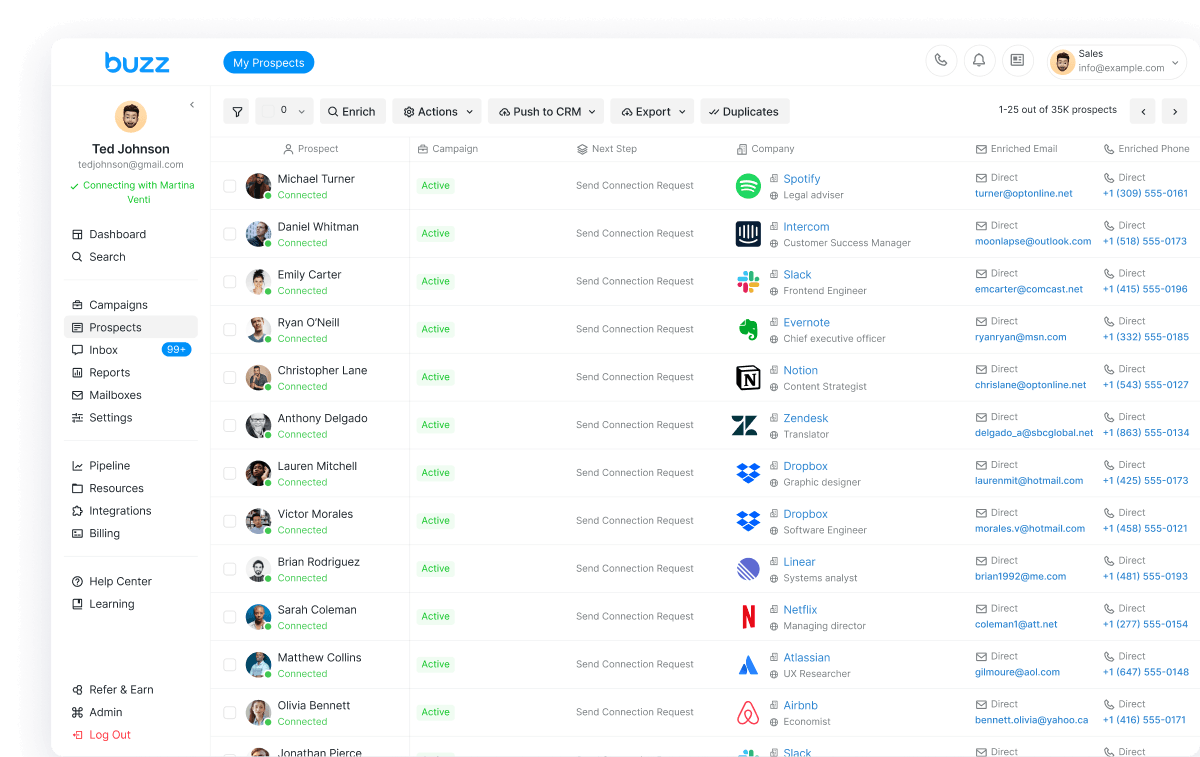
This is the gap we focus on at Buzz AI. Our AI-powered outbound sales platform finds, enriches, and prioritizes prospects, then runs personalized multichannel campaigns to book more meetings automatically. By baking your best reps’ judgment into targeting, messaging, and follow-up across email, phone, and social, we help your team act bigger than your headcount without feeling robotic. Over the next few years, the winners in outbound will not be the teams that send the most messages, but the ones whose AI agents consistently think and act like their top salespeople.
Turn Every Lead Into A Sales Conversation
If you are ready to stop losing qualified prospects to slow response times and inconsistent follow-up, our AI sales agent software can help you engage leads instantly and around the clock. At Buzz AI, we build tools that plug directly into your current workflows so your team can focus on closing, not chasing. Tell us about your goals and we will show you exactly how our platform can fit your sales process. Have questions or need a tailored recommendation? Just contact us and our team will walk you through the next steps.
Ready to try it? Start free or talk to sales about an AI Employee.