Stop Wasting Sends: Why Verification Protects Revenue
Email should be one of the most reliable ways to build pipeline. But when inboxes are crowded and budgets are tight, every bad send hurts. A bounce, a spam flag, or a dead inbox is not just a small mistake; it is wasted time, wasted spend, and lost momentum for the whole team.
Email verification is a simple idea. It is the process of checking if an email address is real, safe to send to, and likely to reach a person who can actually respond. For CEOs and sales leaders, this means higher deliverability, cleaner dashboards, and better use of every SDR hour on the calendar.
When we follow strong email verification best practices, we see real outcomes: more booked meetings, healthier domains, fewer surprises when leaders review end-of-quarter reports. Revenue teams stop arguing about whether "outbound is broken" and start fixing the data that feeds it.
In the rest of this article, we will talk through how to clean your lists, avoid risky data, protect your sending reputation, and bake verification into daily sales and marketing workflows so it becomes a habit, not a one-time cleanup project.
How Dirty Data Quietly Destroys Your Pipeline
On paper, a big list can look exciting. Tens of thousands of contacts from scraped sites, old event exports, or purchased databases feel like a fast path to more meetings. In practice, they often create a slow leak in your pipeline that is hard to spot at first.
When those lists are full of outdated or fake addresses, every send sends a signal to inbox providers. Too many bounces or sends to low-quality data looks a lot like spam behavior, even if your message is thoughtful and targeted. Over time, that can push more of your mail into promotions or spam, or get your sends throttled.
Dirty data also drives hidden costs:
- Higher bounce rates and spam traps hurt your domain reputation
- SDRs waste time chasing contacts who will never reply
- Conversion rates look worse than they are, because the base list is inflated
- Forecasts and attribution get fuzzy, so leaders lose trust in the funnel
The impact does not stop with one outbound sequence. Poor data flows across marketing, sales, and RevOps. Campaign results become hard to compare. Pipeline coverage looks stronger than it really is. When you sit in a revenue meeting and the numbers do not match what people feel in the field, low-quality data is often behind that gap.
Email Verification Best Practices for Clean, Safe Lists
Strong email verification best practices are not only for large teams. Any company can set up simple rules that keep lists clean and sending safe.
Start with a few basics:
- Always verify new email lists before a campaign or sequence goes live, especially before big pushes like late summer or end-of-year sprints
- Run verification on older segments every 60 to 90 days to catch job changes, bounced addresses, and shut down domains
- Automatically verify new leads from forms, webinars, and imports before they ever enter your outbound sequences
It helps to understand a few simple terms in plain language:
- Invalid emails: addresses that do not exist or cannot receive mail
- Disposable domains: short-term addresses often used for signups, not real work conversations
- Role-based emails: things like info@ or sales@ that rarely connect you with a decision-maker
- Catch-all domains: domains set to receive mail for any address, which can be risky if not checked carefully
These types of emails tend to perform poorly and can hurt your sender reputation. Good verification tools flag them so your team can decide how strict to be. Some teams will fully block them. Others might allow a small share of role-based emails for specific campaigns, but track them separately.
Manual checks or guesswork are not enough. Quick online searches, pattern guessing, or asking reps to "trust their gut" leads to uneven rules and missed problems. A reputable verification tool gives you consistent results, clear labels, and a simple way to balance safety with reach so you keep volume high without burning your domain.
Protecting Sender Reputation and Deliverability at Scale
Your sender reputation is like a credit score with inbox providers. When you send to clean, verified lists and people open and reply, your score stays strong. When you send to bad data and bounce or get flagged, your score drops, and your emails start to land in the wrong place.
A few practical habits go a long way here:
- Warm up new domains and IPs slowly instead of blasting a cold list on day one
- Set daily send caps per inbox, especially for newer SDRs or during heavy seasonal pushes
- Segment risky audiences like old lists or large event imports and send to them in smaller waves
Email verification fits into this picture as a first filter. It removes known bad addresses before you send, so the rest of your deliverability work has a stronger base. From there, keep to the basics: send on a steady schedule, write relevant content for each audience, and always include clear opt-out options. Honoring unsubscribes quickly is part of keeping your sender reputation healthy.
Sales and marketing leaders should watch a few simple metrics as early warning signs:
- Bounce rate
- Spam complaint rate
- Open rate and reply rate on key sequences
If any of these move in the wrong direction, the first place to look is data quality and verification habits.
Building Verification Into Your Sales Engagement Workflow
The real win comes when verification becomes part of how your team works every day, not a one-time cleanup before a big campaign. That starts with your CRM and sales engagement tools.
Some simple workflow upgrades:
- Enrich and verify leads as they are added to your CRM, instead of days later
- Trigger automatic verification when reps upload CSV files from events, webinars, or list vendors
- Require a "verification passed" check before high-volume campaigns like holiday offers or major product launches can go live
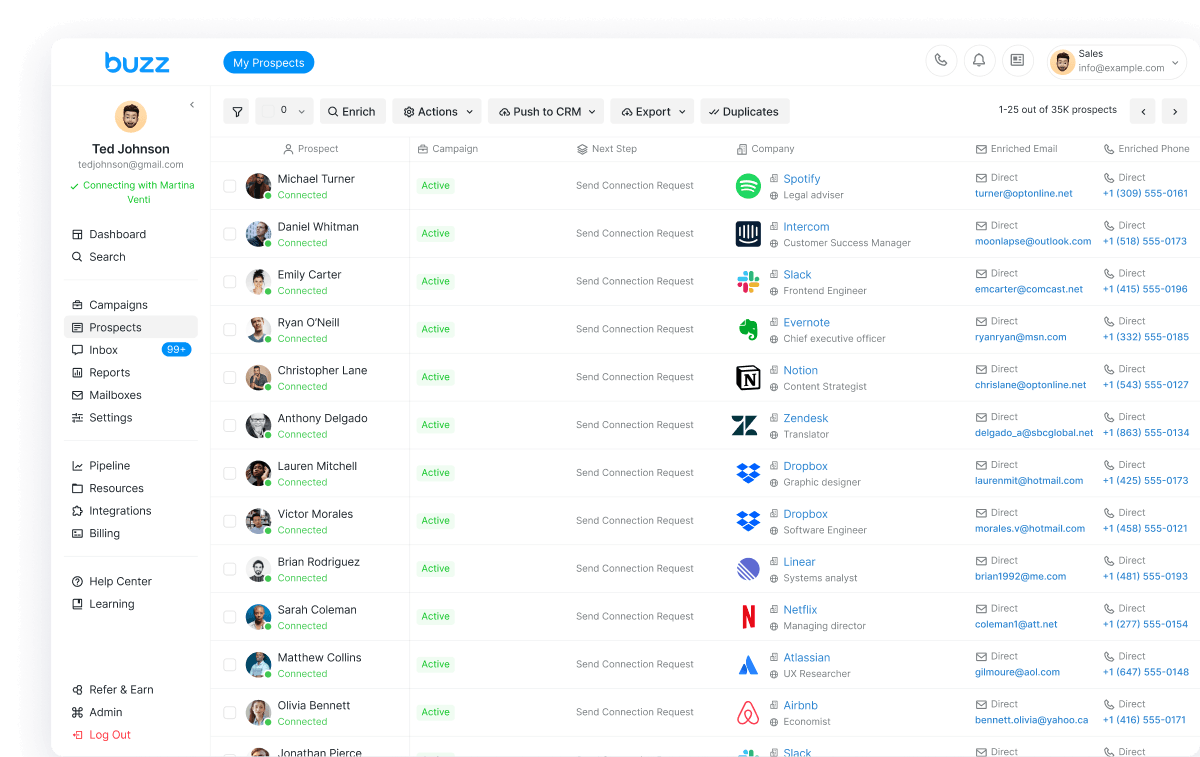
This is where AI-powered platforms like Buzz AI can help. When verification, enrichment, and multichannel outreach all live in one workspace, you can keep data fresh without asking reps or ops to juggle a stack of tools. Leads can be checked, cleaned, and routed into the right sequence in one flow.
The multichannel angle matters too. A verified email plus thoughtful outreach on social and phone leads to higher connection rates than any single channel alone. When data is clean, it supports smarter touch patterns instead of random guessing.
To keep everyone aligned:
- RevOps can own the rules and set the automation
- Marketing can manage list hygiene and segment strategy
- Sales can follow clear playbooks on what they are allowed to send and when
That way, each team knows their role in protecting the pipeline.
From Risky Sends to Reliable Pipeline
Strong email verification best practices are a revenue protection strategy. They give you fewer bounces, a stronger domain, clearer reporting, and more predictable meetings on the calendar. Instead of arguing about whether outbound still works, teams can trust that when emails do not perform, the problem is message and fit, not bad data in the background.
A simple checklist leaders can start with:
- Review current bounce and complaint rates on core sequences
- Pick one verification provider and use it across all teams
- Set verification rules inside your CRM and sales engagement tools
- Train reps on why unverified lists and shady data sources put the whole pipeline at risk
When verification becomes a normal part of building and running campaigns, every send has a better chance to reach a real person who can buy. At Buzz AI, we focus on helping teams identify prospects, enrich and verify data, and run coordinated outreach across email, social, phone, and video from one place so your pipeline is built on clean, trusted data from the start.
Boost Email Deliverability With Proven Verification Strategies
If you are ready to clean your lists and protect your sender reputation, start by exploring our comprehensive guide to email verification best practices. At Buzz AI, we combine accurate validation with practical workflows so your campaigns reach real people, not spam traps or dead inboxes. We will help you streamline verification, reduce bounces, and improve engagement across every send. If you have questions about implementation or need tailored guidance, simply contact us.