Turn AI Email Into a Predictable B2B Growth Engine
AI email marketing tools can turn a soft pipeline into something much more steady and predictable. When paid channels feel tapped out, customer acquisition creeps up, and leadership starts asking for “more from email,” it is time to upgrade how email works inside your B2B funnel.
Right now, many teams are locking in plans and targets for the back half of the year. That makes this a perfect window to step back, look at how your email engine runs, and decide what needs to change before Q3 ramps. In this guide, we will walk through how AI email marketing tools work, what to look for, and how to judge them by pipeline and revenue, not vanity stats.
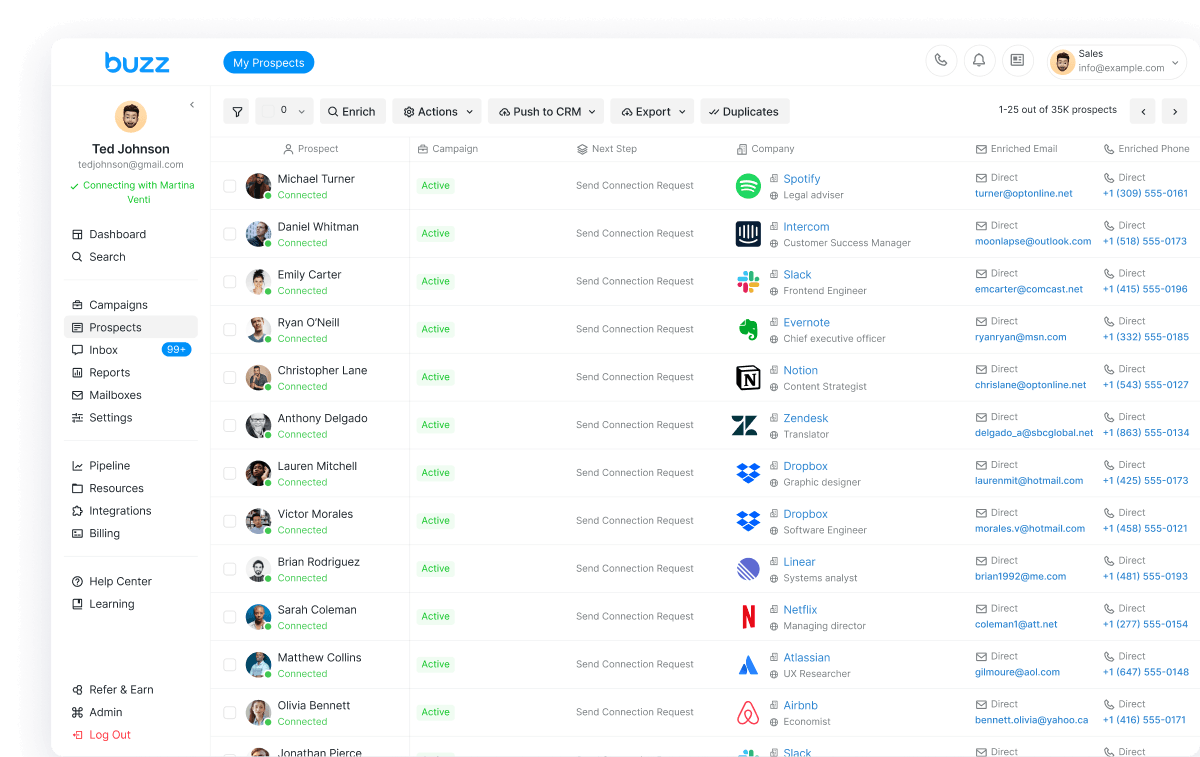
When we say AI email marketing tools, we mean simple, practical software that uses artificial intelligence to research, personalize, send, and improve email outreach at scale. The goal is not fancy tech for its own sake. The goal is more meetings, cleaner handoffs, and better alignment between marketing and sales from a single, shared workspace.
How AI Email Tools Change the B2B Sales Playbook
Old-school email meant big lists and batch-and-blast campaigns. Everyone got the same generic message, and the best you could do was tweak a subject line. AI flips that model. It lets you move toward focused, account-based outreach where each prospect gets something that feels like a one-to-one note.
Good AI email tools help you:
- Build dynamic segments that update as people change roles or show new behavior
- Trigger campaigns based on signals, like a form fill or a repeat website visit
- Personalize copy at the prospect level, not just swap first names
Email also stops being a lonely channel on the side. The right platform connects AI email with social outreach, phone calls, and even quick video touches. Reps can see the full history of contact attempts, keep timing consistent, and avoid double-tapping the same person with different messages.
For a CEO, the impact shows up in outcomes that matter:
- Faster speed to lead, so new inbound or intent signals get touched quickly
- More efficient SDR teams that spend less time researching and more time in real conversations
- Better forecast predictability, because you can see how email and social touches move deals forward
- Cleaner attribution, so you know which sequences and channels actually push revenue
The Four Pillars of Effective AI Email Marketing Tools
To turn AI into reliable B2B pipeline, we see four core pillars that need to work together.
First, personalization at scale. AI can read firmographic and behavior data and turn it into context-aware messages. For example, emails can:
- Reference a company’s recent hiring trend or new office
- Call out a tool in a prospect’s tech stack
- Match tone depending on seniority or function
This is the kind of detail that used to demand heavy manual research. Now it can be done in seconds, across hundreds of contacts.
Second, sales intelligence and data enrichment. If your data is messy or out of date, no AI model can save it. Strong tools pull in and refresh things like role, industry, tech used, and likely buying signals. That cuts down on bounces, wrong contacts, and wasted touches.
Third, email deliverability and compliance. It does not matter how sharp your copy is if your emails land in spam. At a simple level, you want:
- Warmed domains and healthy sending reputation
- Thoughtful sending volumes so you do not spike activity
- Clear handling of unsubscribe and compliance needs
Any platform that ignores deliverability is a risk to both revenue and brand.
Fourth, workflow integration. AI email tools should plug into your CRM and sales engagement workflows. That keeps contact records clean, prevents duplicate outreach, and gives leaders one source of truth on what is happening across email, social, phone, and video.
Must-Have Features When Evaluating AI Email Platforms
When you start comparing AI email marketing tools, features can blur together fast. Here is a practical way to sort signal from noise.
On deliverability and infrastructure, ask vendors:
- How do you warm new domains and manage sending reputation?
- Do you support multiple sending domains and IPs?
- What reporting do you provide on spam complaints, bounce rates, and inbox placement?
For intelligent targeting and segmentation, look for tools that support dynamic lists based on:
- Firmographics, like industry, size, or region
- Engagement history across email and social
- Automated exclusion logic for current customers and open opps
Next, content generation and optimization. AI-assisted copywriting is helpful when it comes with guardrails. You want:
- Tone controls that match your brand
- Simple approval workflows so humans still review key messages
- Subject line and send time testing, instead of guesswork
Finally, sequencing across channels. The strongest setups let reps:
- Run email, social outreach, phone, and video steps in one workspace
- See all touches on an account in a single view
- Adjust messaging in real time based on replies or behavior
Evaluating Tools Through a Pipeline and ROI Lens
Open and click rates are fine as early signals, but they do not pay the bills. When we look at AI email tools, we focus on clear pipeline and revenue outcomes.
Some practical metrics to track:
- Meetings booked per rep and per sequence
- Reply rate and positive reply rate
- Time to first touch on new leads
- Cost per meeting across outbound channels
Your go-to-market motion also matters. A high-volume SMB motion needs different tooling than slow, complex enterprise sales. In SMB, speed, volume control, and easy templates might matter most. In enterprise, account views, multi-threading across stakeholders, and deep CRM sync often win.
Do not ignore implementation and adoption risk. If the interface is confusing, training is weak, or documentation is thin, you might drag out rollout for months. That means delayed value and frustrated teams. A tool is only as good as your team’s willingness to live in it daily.
Avoiding Common Pitfalls with AI Email in B2B
AI should make your team sharper, not reckless. One of the biggest risks is over-automation. Fully automated outreach without human review can lead to tone-deaf emails, odd phrasing, or messages that do not match your brand. Set clear guardrails, decide what always needs a human eye, and keep leadership close to the strategy.
Dirty data and list fatigue are another trap. Stale lists lead to:
- Higher bounce rates
- Spam complaints and deliverability damage
- Frustrated SDRs who feel like they are shouting into the void
Regular data hygiene, verification, and sunset rules for cold, unengaged contacts will protect your sending reputation and your team’s morale.
Misaligned messaging across channels is also common. If email says one thing and social outreach says another, prospects get confused fast. A shared messaging framework and unified reporting can keep marketing and sales in sync on themes, offers, and timing.
Seasonal and buying cycles matter too. Late spring and early summer can be tricky, with vacations and planning cycles in full swing. AI-driven cadences should respect fiscal year timings, holidays, and industry rhythms, not push hardest when buyers are checked out.
As we build Buzz AI, our focus is on helping teams run all of this from one place. Email, social, phone, and video work better when they are connected and informed by the same AI-driven intelligence. When those pieces line up, AI email marketing tools stop being a nice experiment and start acting like a steady engine for B2B pipeline.
Transform Your Email Strategy With AI-Driven Personalization
Unlock smarter, higher-converting campaigns by putting our AI email marketing tools to work for your business. At Buzz AI, we help you automate personalization, optimize send times, and refine your messaging with data-backed insights. If you are ready to see how this can fit your current workflow, contact us to discuss your goals. Let us partner with you to turn every email into a more meaningful, measurable touchpoint.