Manual SDR Playbooks Are Quietly Costing You Growth
Many revenue teams still lean on the same SDR motion they set up years ago. Reps pull lists, write cold emails by hand, log every touch in the CRM, and grind through calls. On the surface, it looks active. Underneath, it quietly limits growth. See how a Buzz AI Employee runs outbound for you.
The hidden cost is not just payroll. Manual prospecting eats ramp time, burns people out, and creates uneven results. Your best sellers get stuck doing copy-paste work instead of talking with buying groups and senior leaders. By the time late summer hits and you start planning next year's targets, that drag adds up.
Right now is when leadership reviews pipeline, headcount, and tools before budgets lock. This is the window to ask a simple question: if prospecting is the start of your revenue engine, why is the earliest, most repetitive part still mostly manual? AI prospecting automation is often the missing lever.
When you automate the boring parts of pipeline creation, human reps can finally do what humans do best: build trust, handle nuance, and move complex deals forward. The result is a sales system that feels calmer, more predictable, and easier to scale quarter after quarter.
Why Manual SDR Models No Longer Scale
Buyer behavior has changed. People do their own research, switch across channels, and expect every message to feel relevant to their role and timing. They delete anything that looks generic or off-target in seconds.
That creates the classic trap for manual SDR teams:
- If they crank up volume, personalization drops and reply rates suffer
- If they slow down to research deeply, volume falls and pipeline goals slip
Neither path is built for aggressive goals. On top of that, most SDR motions are weighed down by:
- Fragmented tools and tabs
- Lists from vendors that need cleaning
- Manual enrichment in spreadsheets
- Data updates that never quite stay current
From the dashboard view, everything looks fine. You see dials, emails, meetings, and maybe some pipeline numbers. What you usually do not see is the silent gap: all the high-fit accounts and contacts your team never touches because their time is capped.
As the year moves toward Q4 and inboxes get noisier, this gap becomes painful. Manually built campaigns take longer to launch, and by the time they hit, competitors may already be in the deal. The model is straining, even if the reports look green.
What AI Prospecting Automation Actually Does
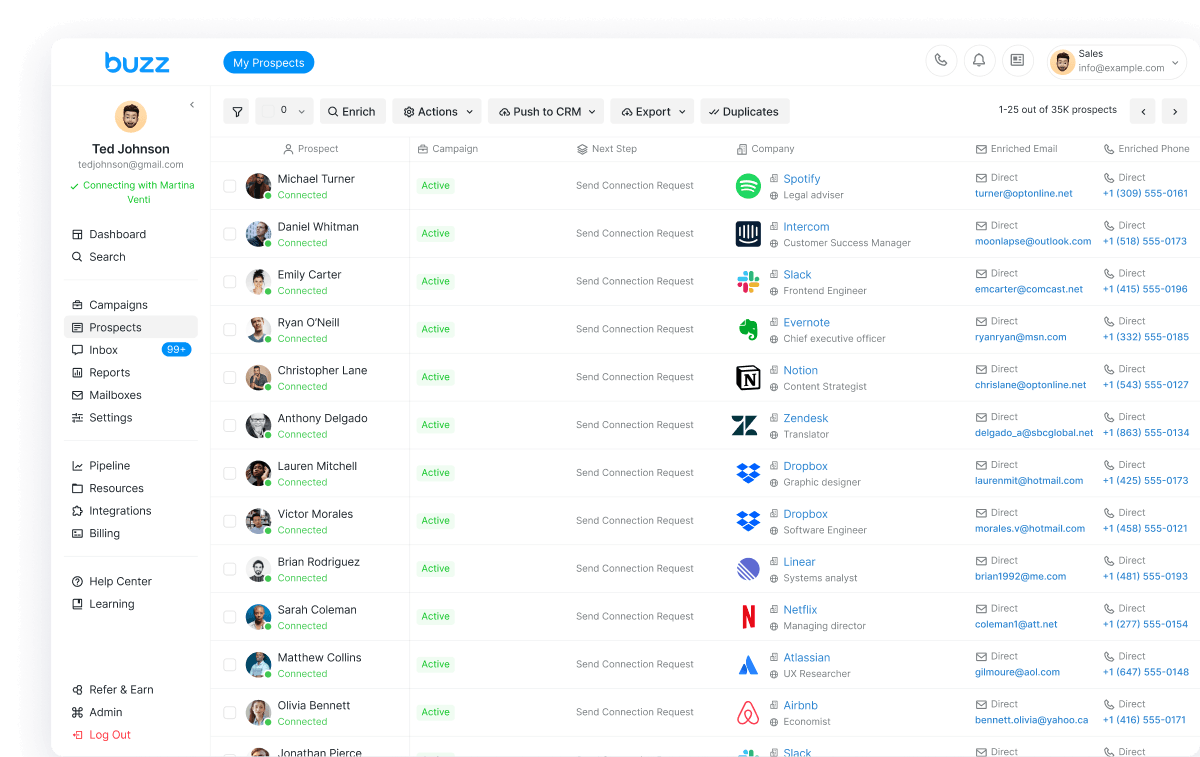
AI prospecting automation is simple to explain. It is software that does the heavy lifting of prospecting: it finds the right accounts and people, enriches their data, scores who matters most, then runs coordinated outreach across channels with messaging that feels human.
At a basic level, it covers four big jobs:
- Intelligent prospect discovery based on your ideal customer profile and firmographic filters
- Automated enrichment so you are not paying humans to Google titles and company details
- Smart scoring that bubbles up those most likely to engage or convert
- Orchestrated outreach across email, phone, and social that stays personalized at scale
Traditional tools mostly give SDRs faster ways to do manual tasks, like a dialer or a better template folder. AI prospecting automation flips that. It builds and runs campaigns in the background, so reps can act more like closers and consultants.
Executives still keep tight control. You set strategy, target definitions, compliance rules, and messaging guardrails. The AI works inside those lines. The payoff is clear: more qualified meetings, faster speed from signal to outreach, and steadier pipeline without adding more and more seats.
Comparing ROI of Headcount Versus Automation
A simple way to compare manual SDR work and AI prospecting automation is to look at cost per qualified meeting. That keeps the focus on actual output instead of just activity.
Manual SDR models include:
- Salary and benefits
- Management and enablement time
- A growing stack of tools
- Months of ramp and training
- Burnout and turnover, which restart the cycle
AI prospecting automation changes the shape of that picture. When research, list building, and first-touch outreach run in the background, each SDR can handle more real conversations in the same number of hours. Your team can keep campaigns running when people are on vacation, out sick, or still ramping.
One common pattern we see is this: a mid-market team keeps its headcount steady, but shifts part of the SDR group into higher-value work like partner development, expansion, or strategic accounts. With automation filling the top-of-funnel, the net number of new qualified meetings can still rise.
You do not need to bet the whole team on this right away. Leadership can run low-risk tests, like:
- One pod using traditional manual prospecting
- One pod supported by AI prospecting automation
- A fixed 60 to 90 day window, same segment and similar messaging
Then you compare cost per qualified meeting, show rates, and pipeline created. It becomes a clear, concrete decision instead of a theory.
Turning SDRs Into Strategic Operators with AI
We should also talk about the people side. Many SDR teams feel like they are doing "human automation" all day. That is draining and does not build the skills they need for long careers in sales.
With AI prospecting automation, the SDR role can shift into something sharper. A modern day might look like this:
- Start the day in an AI-prioritized queue of accounts and contacts
- Skim enriched profiles and context already prepared
- Add personal touches for top targets where nuance matters
- Move quickly into calls, replies, and social outreach instead of admin
This change only works with clear communication from leadership. The message needs to be: AI is here to multiply your impact, not to replace you. Success metrics should follow that story too. Less focus on raw activity counts, more on qualified meetings, pipeline, and revenue influence.
Training also needs to evolve. SDRs should learn how to:
- Read and question AI scores
- Feed good and bad examples back into the system
- Spot patterns where human creativity beats automation
When that happens, executives get better forecasting, clearer attribution, and more leverage from every sales salary they already pay.
How to Modernize Prospecting Before Targets Reset
If you want prospecting to look different before next year's targets land, you do not need a massive overhaul. A focused 90-day plan can make a real difference.
Weeks 1 to 2:
Audit your current SDR flow. Map tools, handoffs, and funnel metrics. Agree on your ideal customer profile and the signals that show someone might be in a buying window.
Weeks 3 to 6:
Run a pilot of AI prospecting automation on one segment or region. Let it handle discovery, enrichment, scoring, and multichannel outreach. In parallel, keep a traditional SDR pod on a similar segment for comparison.
Weeks 7 to 12:
Double down on what works from the pilot. Refine targeting rules and messaging. Start shifting SDR goals and daily work toward higher-intent conversations and strategic outreach.
As you look at different platforms, focus on a few things:
- Strength of data and enrichment
- Quality of email, phone, and social outreach support
- Ease of connecting into your CRM and existing stack
- Reporting that makes sense for board and executive updates
At Buzz AI, we built our platform specifically to solve these prospecting gaps for revenue teams that are tired of endless manual work. AI prospecting automation, done right, lets you treat pipeline creation as a repeatable system instead of a labor project, so your people and your strategy can finally work at the same speed.
Turn Cold Outreach Into Qualified Conversations Faster
If you are ready to spend less time chasing leads and more time closing them, our AI prospecting automation is built to help you get there. At Buzz AI, we streamline your outreach so your team can focus on the highest intent prospects. Let us help you create a predictable pipeline that runs efficiently in the background. Have questions or want to see what this could look like for your team? Just contact us to get started.
Ready to try it? Start free or talk to sales about an AI Employee.