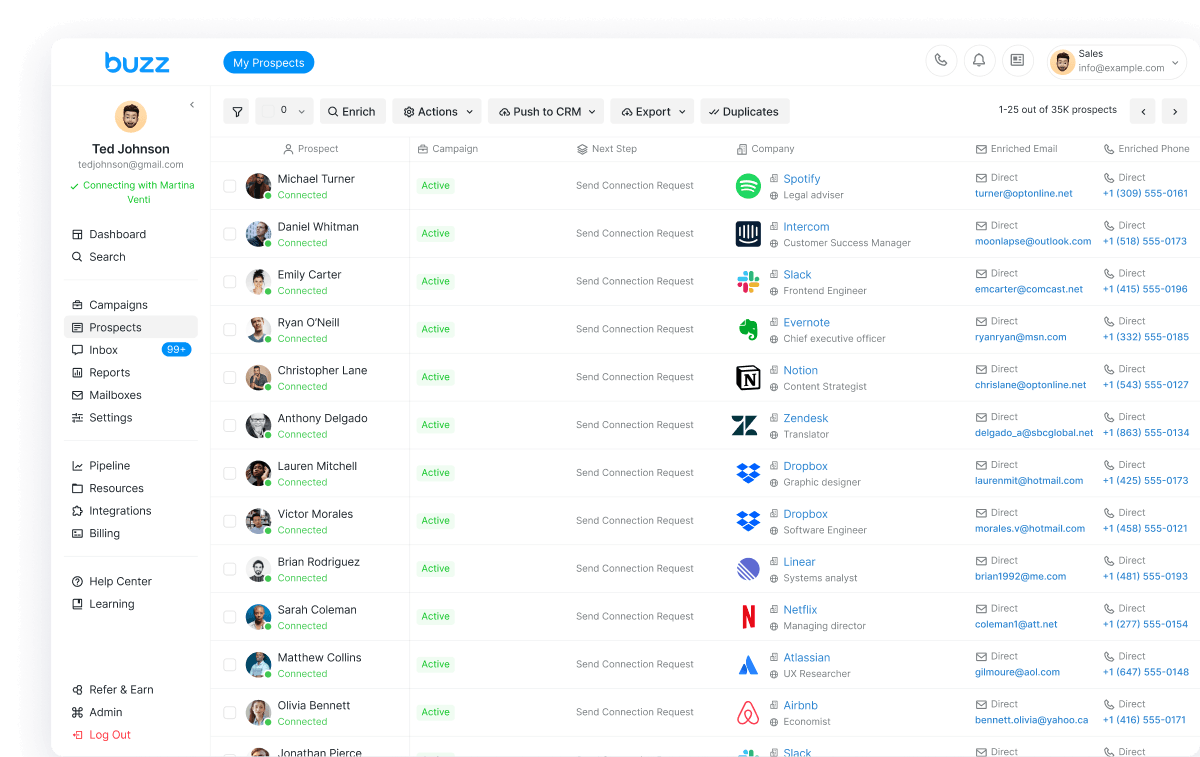
Turn AI Into a Scalable Sales Team, Not a Toy
AI in sales is not just a shiny add-on anymore. If we treat it like a small feature inside one tool, we get small results. If we treat it like a real sales team with clear jobs, rules, and goals, we can scale outreach across email, social, phone, and video without losing quality.
That shift matters most when volume spikes, like in late Q2 and in early Q3 when everyone is pushing hard to fill pipeline. Leaders need AI sales employees that protect the brand, keep email outreach clean and deliverable, and help reps spend more time in live conversations instead of grinding through busywork.
At Buzz.ai, we think of AI as a staffed team that owns specific outreach tasks. Just like human reps, these AI employees should have defined roles, KPIs, quality checks, and clear escalation paths when things get complex or risky.
Defining Your AI Sales Org Chart
The easiest way to plan AI in outreach is to mirror your human org chart. Start by asking, "Which parts of this role are repetitive, data-heavy, and rules-based?" Those are AI jobs. The parts that need deep trust and judgment stay with humans.
Here is how common roles translate into AI jobs (comparison):
- SDR / BDR: AI Prospector and AI Outreach Architect
- AE: AI Researcher and AI Copy Specialist to prep notes and first drafts
- RevOps / Sales Ops: AI Data Enricher and AI Analyst
For multichannel outreach, four core AI roles tend to cover most of what teams need. The AI Data Enricher cleans, validates, and enriches contact and account data so email outreach hits real inboxes and matches the right persona. The AI Outreach Architect designs the channel mix across email, social, phone, and video based on segment, intent, and region. The AI Copy Specialist writes first-touch and follow-up messages tailored to the channel, from short social notes to voicemail scripts. The AI Analyst watches performance, flags issues, and suggests changes to targeting, pacing, and messaging.
Governance is where leaders keep control. You can make this concrete by setting clear boundaries for what AI can do alone versus what requires human sign-off:
- AI can: adjust send times, tweak subject lines, swap out low-performing steps.
- AI cannot: launch new sequences for strategic accounts or change messaging for regulated industries without review.
Tone, compliance, and brand voice must be locked in, especially when the team is cranking up volume in peak season.
Building AI Workflows That Respect the Buyer
Good outreach starts with good data. If the database is messy, no AI system can save email deliverability or reply rates. Before AI sends a single message, it should complete a basic data readiness checklist:
- Verify domains and emails to cut bounces.
- Update titles, locations, and company details.
- Fill in missing fields like industry or team size that matter for segmentation.
Once the data is clean, AI can design buyer-centric journeys. Rather than blasting one channel, it can stagger touchpoints in a way that feels more natural and respectful to the buyer:
- Early touches on email, followed by a soft social message.
- Timed calls during business hours in the buyer’s time zone.
- Short video follow-ups for warmer prospects who clicked or replied.
Pacing rules are key, because the same message can feel helpful or spammy depending on timing and frequency. AI should obey:
- Cooldowns between sequences.
- Limits on total touches per prospect.
- Quiet hours and local holidays to avoid tone-deaf timing.
Personalization is another area where structure matters. Surface-level tricks are not enough; dropping a company name or a random hobby from a profile can feel cute but shallow. AI sales employees should lean on real signals that make the outreach relevant:
- Role and team, and the problems that job usually owns.
- Industry shifts that might be causing pressure right now.
- Public company events like launches, hiring trends, or location changes.
This kind of relevance helps drive more honest replies, better meetings, and fewer unsubscribes from email outreach.
Setting Metrics and KPIs for AI Sales Employees
If AI is a team member, it needs a scorecard. A simple way to do this is to split KPIs into two groups: output metrics (activity) and outcome metrics (impact).
Output metrics measure activity:
- Messages sent by channel
- Contacts enriched
- Sequences created or updated
- Research briefs generated for reps
Outcome metrics measure impact:
- Open and reply rates
- Positive replies and meetings booked
- Pipeline and revenue influenced
- Channel-level attribution across email, social, phone, and video
Each channel needs its own view, because what “good” looks like differs by channel (comparison):
- Email: deliverability, spam complaints, bounce rate, opens, clicks, reply quality, domain health.
- Social: connection accept rates, response rates on messages, meetings set from social first-touch messages.
- Phone and video: live connect rate, voicemail engagement, video views and replies when used after email.
Guardrails keep AI from running off course. Leaders should define red flags that automatically trigger a pause and review:
- A sudden drop in open rates.
- A spike in hard bounces or unsubscribes.
- Unusual patterns in reply sentiment.
Dashboards and alerts let managers see when AI needs help without reading every single message.
Quality Assurance, Brand Safety, and Escalation Paths
Quality assurance for AI outreach should feel a lot like QA for a new rep: start small, check often, then scale up. The goal is to protect brand safety and maintain consistency as volume increases, especially when new sequences or segments are introduced.
Good QA habits include:
- Spot checks of subject lines, first-touch emails, and social notes.
- Message sampling by segment before turning on a new sequence for the full audience.
- A library of approved templates and snippets that AI can remix while staying on-brand and compliant.
AI should never be left alone with complex or risky conversations, so it needs explicit routing rules for when to hand off to a human:
- Pricing, legal, or security questions.
- Strategic accounts or executive buyers.
- Any response that sounds frustrated, confused, or sensitive.
When that handoff happens, AI can still help the human respond quickly and accurately by summarizing key context:
- All previous touchpoints across email, social, phone, and video.
- Key data on the account and contact.
- Detected sentiment and intent.
Continuous improvement keeps the whole system sharp. On a monthly or quarterly rhythm, review what is working and what needs adjustment:
- Which subject lines led to qualified meetings, not just replies.
- Which steps in a sequence often cause drop-off.
- Which segments need new messaging or targeting rules.
As we do this at Buzz.ai, we see AI sales employees grow more reliable over time, just like human reps with good coaching.
Putting this all together, leaders get a clear playbook: give AI defined roles, clear KPIs, tight QA, and smart escalation paths. Then it can safely handle a large share of multichannel outreach while human sellers focus on real conversations and deals.
Boost Your Results With Smarter Email Outreach Today
If you are ready to turn more prospects into real conversations, we can help you streamline and scale your email outreach with less manual work. At Buzz AI, we combine reliable automation with data-driven insights so you can focus on the leads that matter most. Tell us about your goals and we will tailor a strategy that fits your pipeline and team. Have questions or need a custom setup? Just contact us and we will walk you through the next steps.