When Your Sales Pipeline Never Sleeps
AI prospecting automation changes how a sales day starts. Instead of teams opening their laptops to an empty calendar and a long list of research tasks, they see new meetings booked, fresh replies waiting, and updated lists of in-market accounts ready for real conversations. Pipeline starts moving before anyone has their first coffee.
This matters most when targets feel tight, like in the second half of the year when Q3 and Q4 pressure starts to build. Traditional outreach is stuck inside office hours, manual research, and missed follow-ups. AI that runs around the clock is not just about speed; it is about making pipeline more steady, more predictable, and less dependent on who stayed late. The real question for a CEO is simple: what actually changes when prospecting runs 24/7, and how do you scale it without flooding buyers with noise or putting your brand at risk?
From 9-to-5 Outreach to 24/7 Buyer Coverage
Most sales teams still live in a 9-to-5 outreach model. Reps spend a big chunk of their best-selling time looking up contacts, fixing data, and sending a handful of emails or social messages. By the time they are done with research, the day is half over and buyers are busy with their own work.
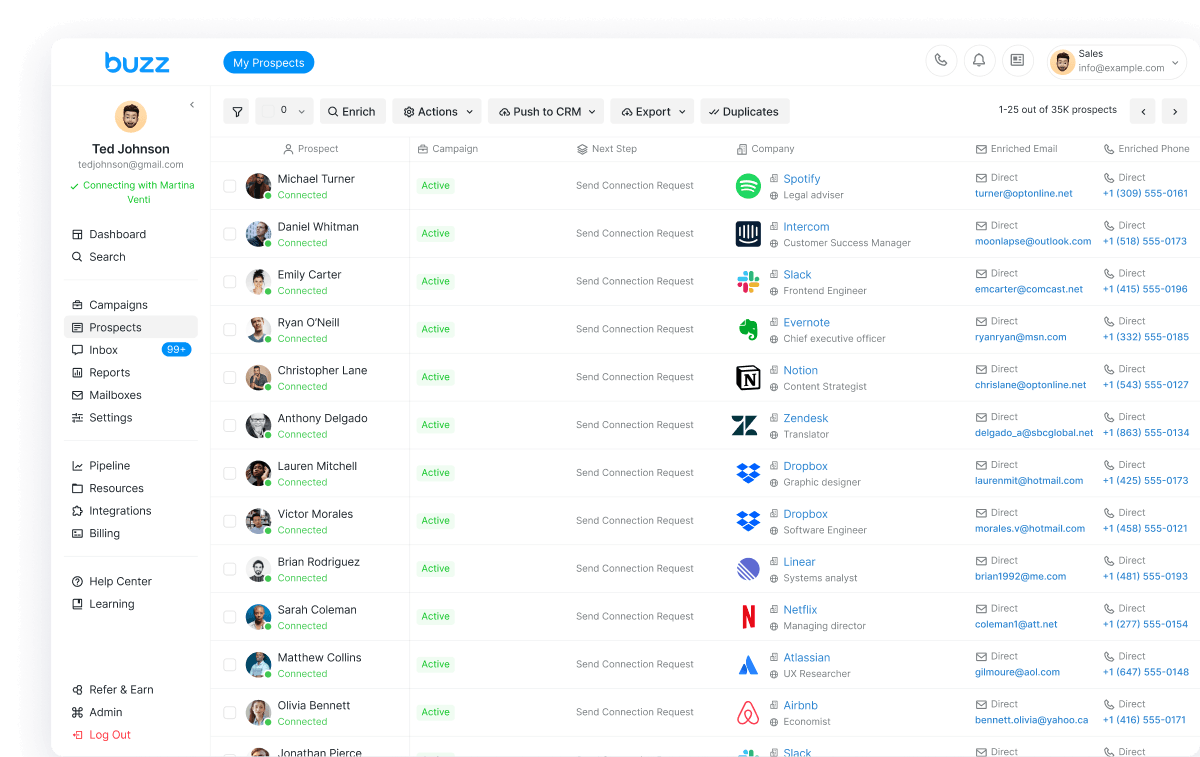
With AI prospecting automation, that balance flips. The system runs all the time, not just when your team is online. It can:
- Scan target accounts for new contacts and signals
- Keep a rolling list of in-market buyers across segments
- Queue and send outreach while reps focus on live conversations
This always-on motion really shows its value with global coverage. Prospects in Europe, APAC, and North America all get touched during their business hours, not only during yours. Late July planning for second-half pushes and global campaigns becomes less about squeezing everything into one time zone and more about steady engagement across all of them.
It is not just email either. A strong setup keeps a multichannel presence going:
- Email sequences tuned to local time and past engagement
- Call tasks created and ordered by intent, not alphabet
- Social activity that lands when buyers are usually online
Weekends, holidays, and vacation-heavy months stop killing momentum. The system keeps moving quietly in the background so leads do not go cold just because your team is out.
What Actually Happens Behind the Scenes, Hour by Hour
When AI is prospecting 24/7, most of the real work is invisible. Under the hood, the engine is always updating the picture of who your best buyers are and when they are ready to talk.
Continuous prospect discovery means the system keeps your data fresh while everyone sleeps. It can:
- Enrich accounts with firmographic and contact details
- Watch for company triggers like funding or hiring spikes
- Refresh contact info so bounced emails drop over time
On top of that, AI watches micro-signals. Website activity, job changes, new tech installs, content engagement, and similar hints all help score intent. A quiet account might move up the list at 3 a.m. because something changed, and by the time your team starts the day, that account is already in an active sequence.
Smart lead scoring pulls this together. Instead of waiting for a weekly spreadsheet review, AI models:
- Score fit and intent in real time
- Promote hot accounts into outreach automatically
- Push low-intent buyers out of active sequences
Then there is dynamic outbound orchestration. Message timing, channels, and follow-up change as prospects react. If someone opens, clicks, or replies, the system can:
- Speed up or slow down the next touch
- Switch from email to a social follow-up or a scheduled call task
- Pause automation and route to a rep when interest is high
If engagement turns negative, it can snooze or remove that contact, keeping your brand from feeling spammy.
The Day Your Reps Stop Doing Manual Prospecting
When AI handles most prospecting, the SDR and AE roles start to look different. Instead of spending hours building lists and fixing data, reps can spend more time on high-value work like discovery calls, deep deal strategy, and multi-threading into target accounts.
That shift usually leads to better morale. People sign up for sales to talk to buyers, not to copy and paste data. With automation carrying the heavy research load, reps can focus on the parts of the job that actually grow revenue and help careers.
Time use starts to change in a clear way:
- Fewer hours on research and data cleanup
- Fewer hours writing first-touch emails from scratch
- More hours in live calls and tailored follow-ups
- More meetings per rep without adding extra headcount
Human oversight still matters. AI does the heavy lifting, but people should own the strategy. Sales and marketing teams define the ICP, approve messaging, and set rules for sensitive segments and high-value accounts. Strong governance keeps outbound on-brand and compliant with your tone, risk posture, and internal policies.
The Real-World Business Impact of AI Prospecting Automation
Always-on AI prospecting builds a different rhythm for pipeline and revenue. Instead of a spike at the end of the quarter followed by a slump, you get a more stable flow of meetings and qualified opportunities. Forecast talks become a bit calmer when there is a steady stream of new pipeline coming in, day after day.
Leaders can track things like:
- Meetings booked from automated outbound
- Net-new pipeline added to the CRM
- Win rates on opportunities that started with AI-sourced outreach
Cost and efficiency gains show up as coverage, not as a quick discount. AI prospecting automation can touch far more accounts than a single rep, and it does not slow down for vacations or late nights. New reps also ramp faster when they walk into warm conversations and clear next steps, instead of weeks of manual list building.
On the buyer side, there is always the risk of spammy automation. That is what happens when messages are generic, timing is random, and intent signals get ignored. The better path is value-driven, personalized outreach that feels timely and useful. Intelligent throttling, good data, and tailored messaging make always-on outreach feel more human, not less.
How to Turn 24/7 Automation Into a Competitive Edge
Turning AI prospecting automation into a true edge starts with focus, not scale. A smart path is to launch a pilot with one or two clear ICP segments and a simple goal, like more net-new meetings for the second half. Sales and marketing agree on success metrics, review cycles, and who owns what, then refine from there.
A strong rules framework is just as important as the tech. Leaders should:
- Set frequency limits for each channel
- Define tone and style guidelines for messages
- Create exclusion lists for current customers and sensitive accounts
- Align with legal and security early, especially in regulated spaces
Then comes training. Reps need to know how to work with AI, not around it. That means:
- Handling fast handoffs when a prospect is ready to talk
- Triage and response rules for different types of replies
- Personalizing messages for high-potential accounts that raise their hand
Teams that treat AI as a partner, not a threat, usually lean into experimentation. Subject lines, sequences, and messaging themes can all be tested, measured, and tuned over time.
At Buzz AI, we built our platform to power that kind of always-on, human-friendly engine. The goal is simple: let AI handle the 24/7 grind of prospecting so your people can spend their best energy on real conversations, better deals, and a pipeline that does not sleep, even when they do.
Turn Your Cold Outreach Into Predictable Revenue With Smart Automation
If you are ready to replace manual list-building and follow-ups with a streamlined system, our AI prospecting automation is built to help you do it. At Buzz AI, we combine real-time data, intelligent scoring, and personalized messaging so your team can focus on conversations that actually move deals forward. See how our platform fits your sales stack and goals, or contact us to get a tailored walkthrough and implementation plan.