Stop Stitching Tools Together and Start Selling More
Sales teams are not short on tools. They are short on time. When your day is split across tabs for data, email, social, calling, and analytics, every simple task feels heavier than it should. The result is fewer real conversations and more hours spent being a part-time admin instead of a full-time seller.
At Buzz AI, we see this every day with B2B sales teams, agencies, and solopreneurs. The tech stack was built with good intentions, but it ends up fragmented and tiring to manage. An all-in-one AI sales platform changes that by bringing prospecting, enrichment, outreach, and analytics together in a single, connected experience. AI is not just a buzzword here; it is the engine that makes the entire sales motion smarter, faster, and more personal at scale.
Why Legacy Sales Stacks Are Holding You Back
Most revenue teams did not wake up one morning and decide to make their workflows complicated. They added tools one by one to solve specific problems: more data, better sequencing, social outreach, call recording, video prospecting, analytics. Over time, those point solutions started to feel like a patchwork quilt.
In a typical legacy stack, you will often see:
- One tool for data and enrichment
- Another for email sequencing
- A separate extension for LinkedIn workflows
- A call dialer that lives on its own island
- A video platform that never quite syncs correctly
- Spreadsheets filling the gaps between all of them
This creates silos and friction at every step. You get duplicate contacts in different systems, inconsistent messaging, and integrations that need permanent babysitting from sales ops. When tools do not talk to each other cleanly, basic questions like who engaged, what was sent, and what happened next are strangely hard to answer.
The hidden cost is time. Reps burn valuable selling hours:
- Manually researching accounts before every touch
- Copying notes between tools and the CRM
- Rewriting follow-ups that should be automated
- Double-checking data that should have been accurate from the start
In a B2B environment with longer buying cycles, more stakeholders, and higher expectations from buyers, that inefficiency shows up in missed quota, slower pipeline generation, and frustrated teams. You are not just paying for more tools, you are paying for the drag they create.
How an AI Sales Platform Transforms Daily Workflows
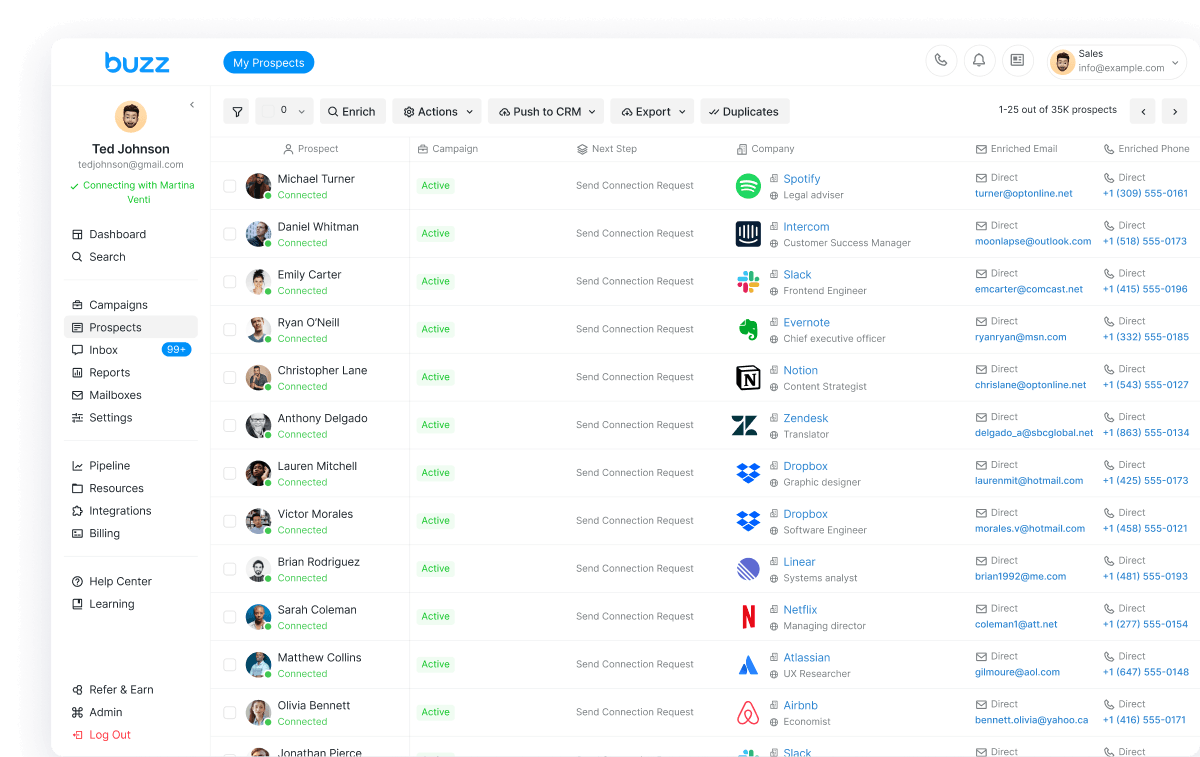
An AI sales platform like Buzz AI replaces that patchwork with a single workspace where reps can identify, enrich, and engage prospects across channels. Instead of bouncing from tab to tab, everything lives in one coordinated hub.
Here is what that unified experience looks like in practice:
- Prospecting: find and filter accounts and contacts that fit your ideal customer profile
- Enrichment: automatically fill in firmographic and contact details so data is complete and consistent
- Outreach: launch and manage campaigns across email, social, phone, and video in one place
- Analytics: see what is working across all channels without exporting into another system
AI sits at the center of this workflow. It takes on repetitive tasks that quietly eat your day, such as:
- Researching accounts and summarizing key insights
- Enriching contacts with missing information
- Drafting personalized emails and messages
- Prioritizing leads based on fit and recent engagement
- Suggesting next best actions based on activity and stage
Instead of spending time trying to remember who to follow up with and what to say, reps can focus on having actual conversations. Fewer clicks, fewer tools, and more time in live interactions with qualified prospects, backed by the confidence that they are working with accurate, up-to-date information.
Turning Data and Personalization Into Pipeline at Scale
More data on its own does not automatically turn into pipeline. The value comes from using the right data to reach the right people with the right message, over and over, without burning out your team.
An AI sales platform helps here by enriching leads with:
- Firmographic data like company size and industry
- Technographic data like tools and platforms in their stack
- Intent signals that show which accounts might be warming up
This makes it much easier to prioritize who to spend time on. Warm accounts and high-fit contacts rise to the top, and campaigns can be tuned around the segments that actually convert instead of guesswork.
Personalization is where AI really shines. Instead of having reps manually write custom outreach for every prospect, the platform can:
- Tailor subject lines and first lines based on role and industry
- Adjust talking points based on technology stack and use case
- Generate LinkedIn messages that feel context-aware
- Propose call talk tracks that match the prospect’s situation
- Suggest video scripts that sound natural and relevant
Dynamic personalization across channels means every interaction feels thoughtful and specific, even when you are reaching out at scale. Better targeting plus better messaging leads to higher reply rates, more qualified meetings, and a healthier pipeline without needing to add more headcount just to keep up.
Giving Sales Leaders the Visibility and Control They Need
When data lives in separate tools, it is almost impossible for leaders to get a clear picture of what is really happening. An AI sales platform centralizes performance data so everyone is looking at the same source of truth.
From a single place, leaders can see:
- Which ICP segments and territories are converting best
- Which sequences, messages, and channels are winning
- Where deals are stalling across stages and touchpoints
- How activity levels map to pipeline and revenue
That visibility makes it much easier to coach and optimize. AI-assisted tools can highlight patterns in calls and messages, suggest coaching moments, and recommend playbooks that help both new and experienced reps improve specific parts of their game.
There is also a control benefit. Instead of every tool having its own settings, admins can:
- Standardize core messaging and templates
- Set compliance rules and approval flows
- Give reps enough flexibility to be creative inside safe guardrails
The result is a team that sounds consistent, acts on accurate data, and still has the room to personalize and experiment where it matters.
Future-Proofing Your Sales Motion with AI
Buyer behavior is not standing still. Prospects are doing more of their own research, touching more channels, and expecting every interaction to feel relevant and respectful of their time. Sales motions that rely on static lists and one-size-fits-all templates are already starting to feel outdated.
AI-native platforms are built to keep pace with that change. Because AI is woven into the core workflow instead of bolted on, it is easier to add new channels, plug in fresh data sources, and adapt to evolving privacy expectations without tearing down what you already have.
Over time, an AI sales platform learns from every interaction:
- Which messages lead to positive replies
- Which patterns show up before deals close or stall
- Which sequences and touchpoint mixes perform best for each segment
That feedback loops back into your playbooks so your sales engine keeps getting smarter instead of staying static. Adopting an AI sales platform is less about swapping one tool for another and more about setting up a system that can evolve along with your buyers, your team, and your goals.
Turn Your Sales Data Into Predictable Revenue Growth
If you are ready to give your team sharper insights, faster follow-ups, and smarter prioritization, our AI sales platform is built to help you get there. At Buzz AI, we design tools that plug into your existing workflow so reps can focus on conversations that actually convert. Tell us about your goals and we will show you how to turn your current pipeline into a repeatable, data-driven sales engine. If you have questions or want a tailored walkthrough, simply contact us and we will respond promptly.