Why LinkedIn Touchpoints Fail Before the First Sales Conversation
Most teams are not struggling to stay active on social. They are struggling to turn all that activity into booked meetings. Connection requests, likes, comments, and DMs pile up, but the calendar stays stubbornly empty. The issue is not that reps are lazy or that buyers hate social. It is that the way social touchpoints are designed does not line up with how buyers actually make decisions.
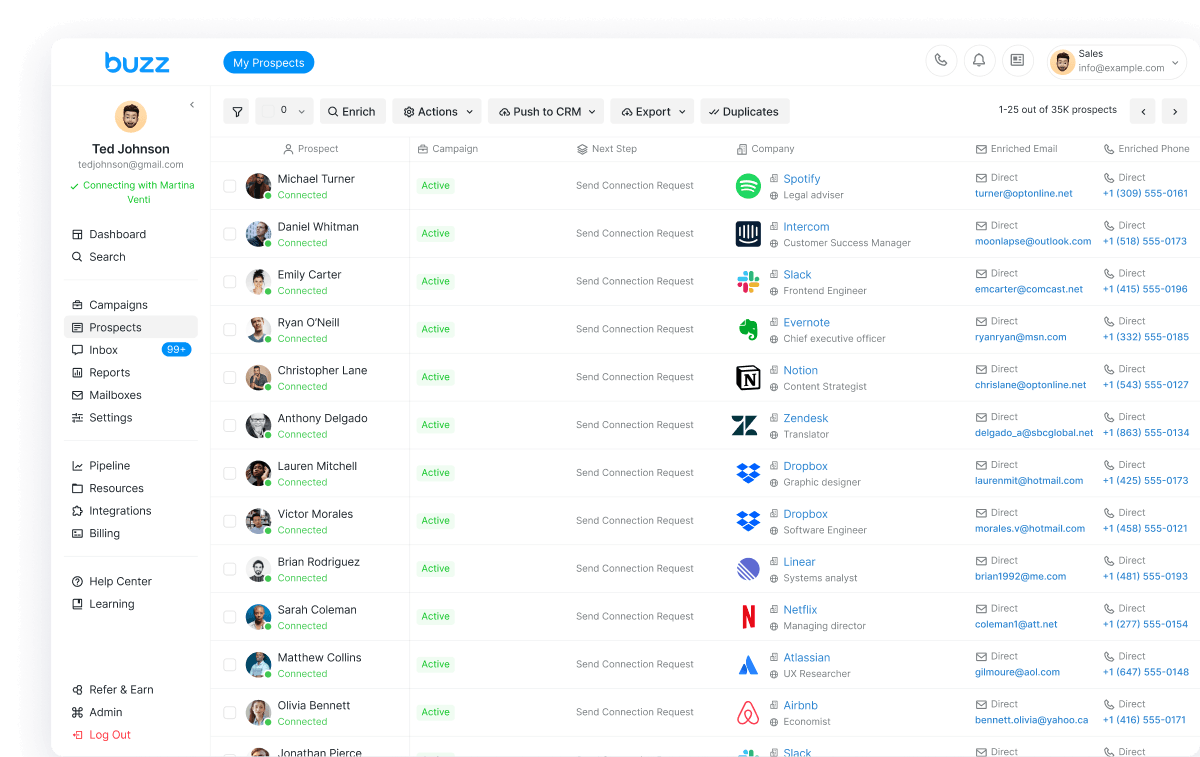
In this article, we will unpack why so many social touches die before the first real conversation. We will walk through intent, relevance, timing, message quality, and measurement, and we will show how an integrated sales outreach tool and the right social selling tools can turn social noise into a steady flow of qualified sales conversations.
Why Your LinkedIn Touches Are Not Turning Into Meetings
Most agencies and sales teams are active on social. Reps send connection requests, comment on posts, share content, and drop messages into inboxes. Activity is not the problem. Consistency and conversion are.
There is a hidden gap between how buyers experience these touchpoints and how sellers design them. Buyers see a stream of similar-looking messages interrupting their day. Sellers see “steps in the sequence” and feel productive because something is going out.
That disconnect shows up in common patterns:
- Lots of connections, very few replies
- Plenty of likes, almost no booked calls
- Strong personal brands, weak pipeline impact
When we understand why those touches fall flat, we can adjust strategy, configure our sales outreach tool more thoughtfully, and help reps use social selling tools to start real conversations instead of just creating more noise.
The Intent Problem: Talking at Prospects, Not with Them
The first failure point is intent. Many social touches are one-sided, even when they look friendly on the surface.
Generic “just checking in” messages, random likes, and vague “thought leadership” posts often feel self-serving. They are not clearly tied to a specific buyer problem or goal, so they read as either shallow networking or thinly veiled pitches.
We also see a lack of defined next steps. Messages end with lines like:
- “Let me know if this is interesting.”
- “Happy to connect.”
- “Would love to stay in touch.”
Buyers do not know what to do with that. There is no clear path, so the easiest response is no response at all.
To fix intent, we need to clarify the purpose of each touch:
- Awareness: make them recognize a problem or opportunity.
- Validation: show them they are not alone and there is a way forward.
- Micro-commitment: invite a small action, like replying to a question.
- Meeting: ask directly for time with a clear reason.
When we map these purposes inside a sales outreach tool, we can design sequences where every social interaction has a job to do and a defined next step. That is when reply rates and booked calls start to climb.
Relevance Miss: Wrong Message, Right Buyer
The second failure point is relevance. Many teams confuse personalization with relevance. Dropping a first name, company name, or reference to a recent post is easy. It signals that we did a quick scan, not that we understand what actually matters to the buyer.
True relevance speaks to:
- A specific challenge in their role
- The environment in their industry
- The timing of what might be happening in their business
A VP of Sales feeling pressure to grow pipeline will respond very differently than a founder trying to land the first ten customers. When they all receive the same “great to connect, open to exploring synergies?” message, they tune out.
Content sharing often misses the mark too. Reps send long whitepapers to people who have barely heard of the problem, or they share high-level brand content with buyers who are clearly evaluating options and need more concrete proof. The touchpoint feels random, not helpful.
To tighten relevance, we can use data we already have:
- Segment by industry, so examples and language feel familiar.
- Segment by role, so we speak to outcomes they own.
- Segment by recent activity (e.g., form fills or event attendance).
Inside a sales outreach tool, these segments can feed social selling tools so that messages, comments, and social interactions line up with what that buyer likely cares about right now.
Timing and Sequence: LinkedIn Touches in the Wrong Order
Even good messages fail when they arrive at the wrong moment or in the wrong order. Many teams run social, email, and phone in parallel without coordination. Buyers end up seeing:
- A connection request
- An email pitch
- A phone call
- A social DM
All in a short window, with no clear narrative tying them together. It feels like pressure, not progress.
There is also a tendency to push too fast. Asking for a full demo in the first message, right after a connection or follow, creates resistance. Trust has not had time to form, and the buyer does not yet see why a meeting is worth their time.
A smarter flow looks simpler and more respectful:
- Light social engagement: a relevant comment or like to show we pay attention.
- Low-friction social message: a short note with one insight and one small question.
- Follow-up email or call: referencing that interaction and proposing a brief call with a clear reason.
When this flow is structured inside a sales outreach tool, every rep follows a consistent, buyer-friendly rhythm. Social selling tools then make it easier to trigger the right next step based on what the buyer does or does not do.
Message Quality: Sounds Like a Template, Feels Like Spam
Many social messages fail on quality alone. Buyers have seen the same hooks hundreds of times. When our outreach sounds like a template, they treat it like spam.
Common issues include:
- Overused openers that feel generic
- Long, dense paragraphs that are hard to skim
- Tone that is either too stiff or way too chummy for a first touch
Tone matters more than most teams admit. Hyper-formal outreach feels cold and distant, like a form letter. Overly casual language with strangers can feel unprofessional or presumptuous.
A simple checklist helps raise the standard:
- One clear problem they might recognize
- One useful insight or question that adds value
- One specific, low-friction next step
Social selling tools can store these frameworks so teams can test versions, track performance, and improve without turning everything into a copy-paste template. The goal is consistency in structure, not sameness in voice.
Measuring What Matters: From Vanity Metrics to Real Pipeline
The last big reason social touchpoints fail is that teams measure the wrong things. It is easy to get distracted by likes, impressions, and follower counts. Those vanity metrics feel good but have a weak connection to actual revenue.
For sales, the real signals live closer to the calendar and the pipeline:
- Reply rates to social messages
- Qualified conversations started from social
- Meetings booked that started with a social touch
When all social outreach flows into a central sales outreach tool, leaders can finally see the full story. We can track which messages, channels, and sequences actually lead to first conversations, not just surface engagement. That makes it possible to double down on what works and quietly retire what does not.
Turning LinkedIn Noise Into Real Sales Conversations
The core shift is simple: move from random social activity to intentional, sequenced, relevant touchpoints that clearly lead toward a conversation. Every interaction should have a purpose, a buyer-centered message, and a defined next step.
For sales leaders and agency owners, that means:
- Aligning the intent behind each touchpoint
- Tightening targeting with existing data and segments
- Upgrading message quality with clear, testable frameworks
- Coordinating social, email, phone, and video inside a single sales outreach tool
- Measuring success by meetings and pipeline, not just impressions
When we treat social as a real sales channel, supported by the right social selling tools and consistent outreach strategy, those early touchpoints stop stalling out. They become what they were always supposed to be: the first step toward a meaningful, revenue-generating sales conversation.
Start Turning Targeted Outreach Into Consistent Revenue
If you are ready to make your outbound efforts more effective and predictable, our sales outreach tool is built to help you do exactly that. At Buzz AI, we focus on giving your team the data, automation, and insights needed to start more meaningful conversations with the right prospects. See how quickly you can improve reply rates and pipeline quality by putting our platform to work for your sales team. If you have questions or want a tailored walkthrough, just contact us and we will help you map it to your current process.